 Australian Labradoodle
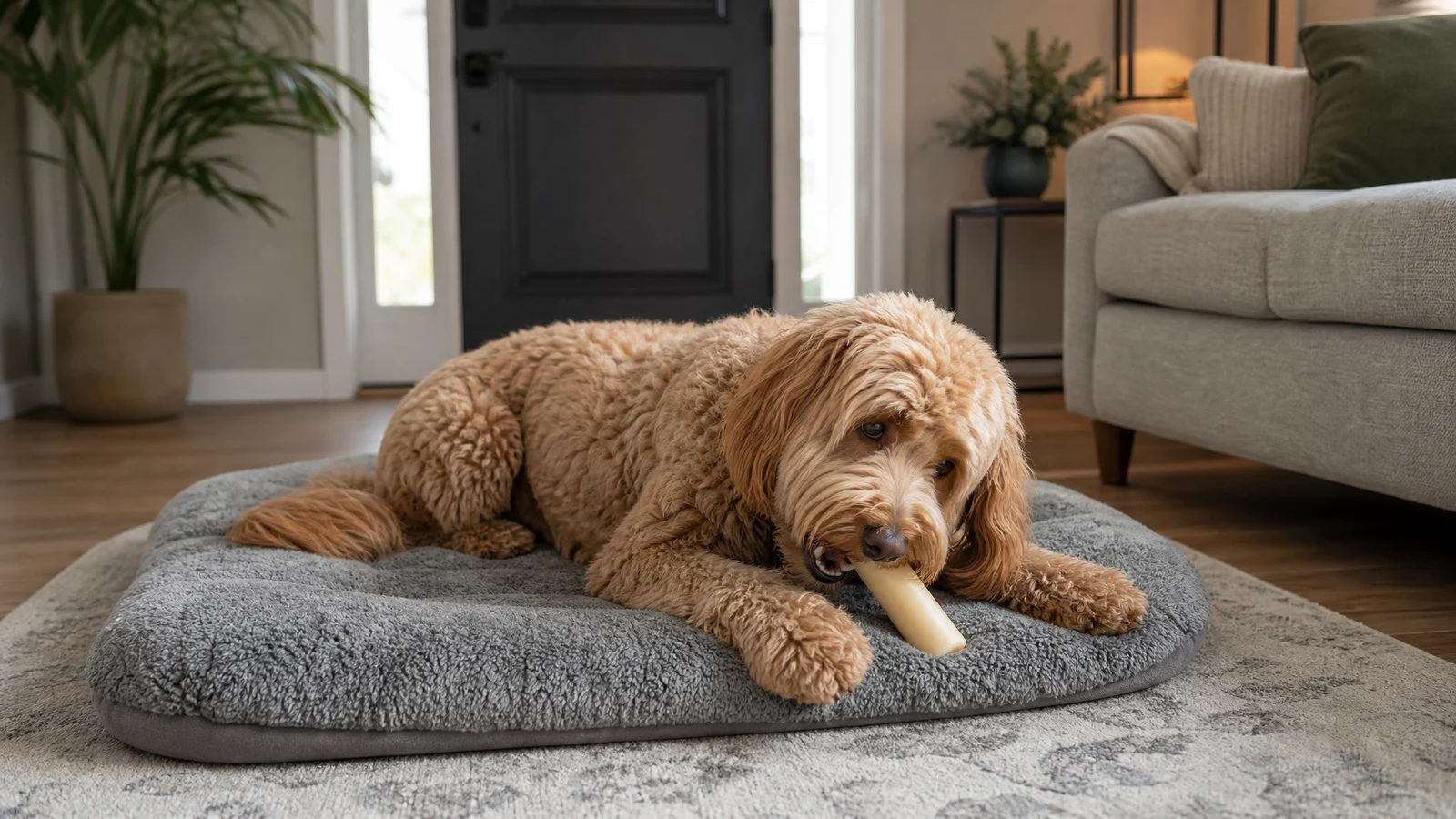
How do you get a dog to be okay when you leave? Owners ask this constantly, and the usual reply is to ignore the fuss, walk out and let the dog figure it out. For an Australian Labradoodle that advice falls short. The Labrador side is described as devoted and happiest when included in family activities, and the Poodle side is people-oriented, so a dog like this has often never practiced being apart. Waiting out the crying only shows you how long they can cope.
It matters because time alone that goes badly becomes something they dread, with barking, chewing and accidents by the door. Done in small steps, it gives you a dog who settles on their own and greets you calmly.
We specialize in the behavior and training of this breed, and the plan below is built for dogs who stay close to their people. Read on for how to pick a starting length, set up the room, decide when to add time, reward calm, handle whining, add real departures and tell progress from distress.
Choosing a Starting Point for Time Alone
Before you plan anything, find out where your dog actually is. Skipping this test is how owners start at a length that is already too long. Some dogs shrug at a closed door, and others begin to worry when you stand up. The test takes a few minutes and tells you which rung of the ladder to begin on.
- Settle your dog on a bed with something to chew and drop a treat as they lie down.
- Walk to the door and sit back down without leaving. Notice whether they lift their head, follow you or stay put.
- Step out of sight for a couple of seconds and come straight back before any fuss starts.
- Watch the body on your return. Loose and wagging means the step was easy, while stiff, pacing or panting means it was too big.
Your starting length is the longest one where the body stayed loose. If your dog follows you at step two, begin even earlier, with you moving around the room while they rest on the bed.
An adult who has never practiced begins at the same place as a puppy, because a mature body does not mean a mature skill. Plan on a few weeks of easy, boring repetitions before anything resembling a real absence, and expect a young puppy to need shorter sessions and more breaks than an adult.
Decision: begin at the last step your dog handled without tension. Treat anything beyond it as next week's work.
Setting Up the Room for Your Australian Labradoodle's Time Alone
The room you choose will carry the whole program, so settle it once and keep it the same. A familiar setup lets your dog focus on the one new thing, which is you being away. Decide on exercise, one spot and one chew before the first session.
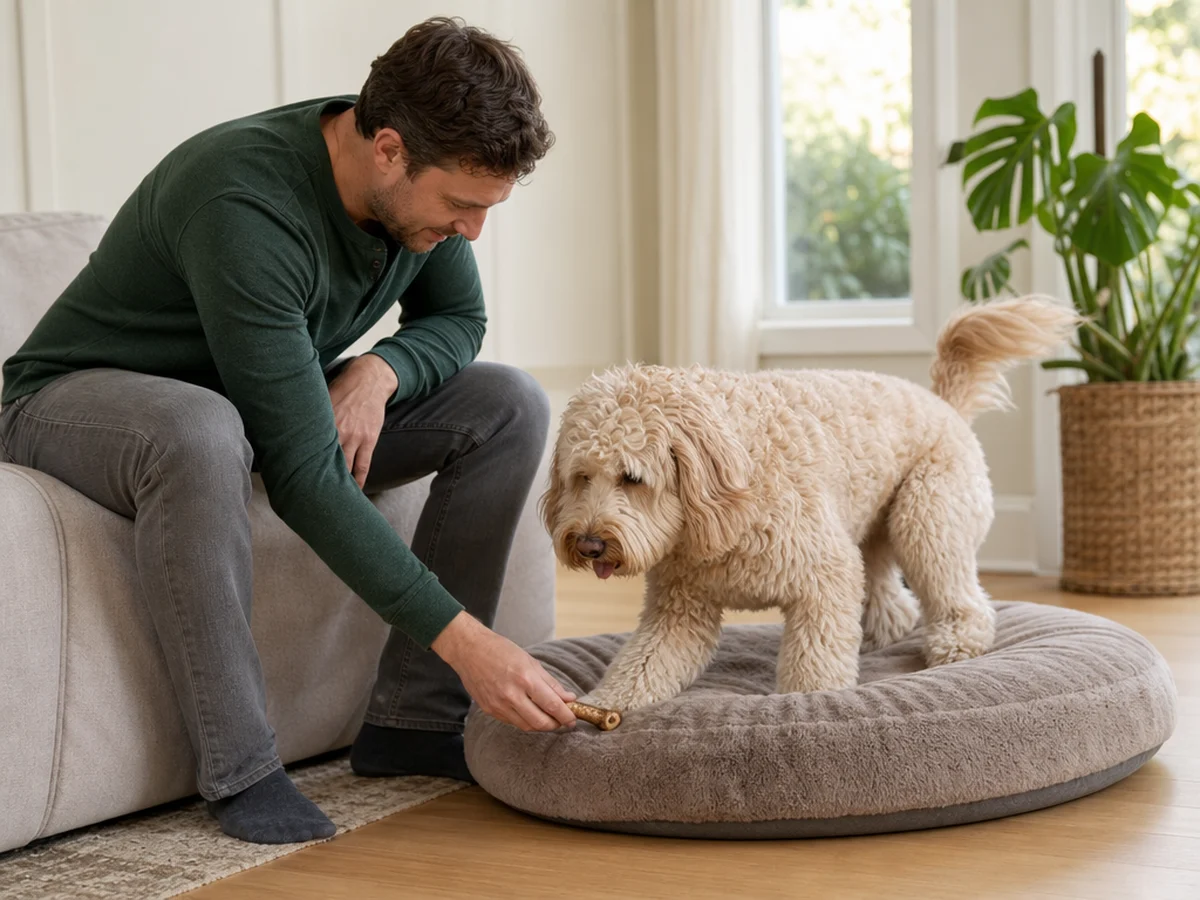
Exercise Comes First
A Labrador who gets too little exercise tends toward hyperactive or destructive behavior, and a cross may inherit that tendency. The Poodle side adds a strong need for mental work. Walk your dog before practice and add a sniffing or thinking game. You want a pleasantly tired dog who is ready to lie down, not one who is wound up and searching for you.
Pick One Spot
Choose a bed in a quiet part of the house, inside a gated area or an open crate your dog already naps in. If you use a crate, our guide to crate training a velcro puppy covers the introduction. Keep the spot away from front windows, because the Poodle side rates as vigilant and a dog who watches the street finds plenty to bark at. Soft background sound helps, and our page on sound sensitivity explains why some Labradoodles react to sudden noise.
Reserve the Chew and Teach the Settle
Offer a special chew only during practice, so it becomes the signal that quiet time has begun. Before you ever leave, reward your dog for lying on the bed while you move around. Drop a treat when they lie down, then when they stay down as you walk past, then when you sit across the room. A dog who cannot settle with you present will not settle with you gone.
Decision: use one bed, one chew and one calm start. Keep that setup the same each time.
When Do Seconds of Time Alone Become Minutes?
The clock should never decide this. Your dog's behavior does. Move up only after several relaxed repetitions in a row at the current length, and move back as soon as you see tension. One easy session proves little, since a dog can get lucky once.
A Sample Time-Alone Ladder
The table below shows a sample ladder. Repeat each row on different days and at different times before you climb, because a skill that works only on Tuesday mornings is not yet a skill.
| Step | Where you are | Move up when |
|---|---|---|
| 1 | Behind a closed door for a few seconds | The dog stays on the bed and does not check the door |
| 2 | Out of sight for a longer stretch of seconds | The chew continues while you are gone |
| 3 | Out of sight for a minute or so | The body is loose and the return is calm |
| 4 | Outside the front door for a few minutes | Greetings stay quiet for several repeats |
| 5 | Away from the house for longer errands | Calm throughout, with no signs of distress |
Mix lengths so your dog cannot predict a pattern. An easy repetition, a slightly harder one, then an easy one keeps confidence high and shows you where the ceiling sits. If an absence ever runs past what your dog can handle, they rehearse distress, and each rehearsal makes the next one easier to trigger. When your workday is longer than your dog's current ceiling, bridge the gap with a midday walker, a neighbor or daycare while training catches up.
Watch for changes in a dog who was doing well. Adult personalities generally stay stable from about 3 years, so without a frightening event a sudden behavior change is among the earliest signs of a physical problem. Book a vet visit before you adjust the training, and keep regular checkups on the calendar either way.
Decision: go up after several calm repeats and step back after any tension. Hold one level for a week whenever you are unsure.
Rewarding Calm During Time Alone
What gets paid is what grows. The reward in this plan goes to calm, not to your return, and that distinction is easy to lose. Poodles respond eagerly when sessions stay fun, Labradors have an eager-to-please nature, and a cross may inherit both, so you have plenty to work with. The Cocker Spaniel, another parent breed in some lines, is easily motivated by food, play and praise.
Reward three things: lying down, a loose body and quiet chewing. During short absences you cannot deliver anything, so the chew does the work while you are gone. On your return, step in quietly, say your marker word and place a treat on the bed, not in their paws at the door. This keeps the best moment of the day tied to settling instead of rushing.
Greetings deserve the same attention. A people-loving dog will launch at you, and rewarding that launch teaches them that your return is the main event. Wait until all four feet are on the ground, as in our guide to an Australian Labradoodle four-paws-down hello, then give calm attention. Keep farewells equally flat, since a long emotional goodbye raises arousal right when you want it lowered.
Decision: leave the chew while you are gone, then mark and reward calm on the bed when you return. Save attention until all four feet are down.
What Do You Do If Your Australian Labradoodle Whines?
Some fuss is normal on the way up the ladder. The useful question is what to do in the moment, and the answer depends on whether the noise is a short complaint that fades or an escalation that builds. You have three options: wait, return or reset.
Wait, Return or Reset
A brief whimper that fades in a few seconds is usually your dog working things out. Wait in the quiet and return at the first calm moment, even a short one, so your reappearance rewards silence. If the sound builds into steady barking, pacing or scratching at the door, the step was too big. Come back in calmly, settle your dog without fuss, end the session and use the previous, easier length next time.
Why Going Back Mid-Howl Backfires
Walking in during a howl teaches that howling opens doors, and a clever, people-focused dog learns that quickly. This is where plain ignoring falls short, because it never shows what earns your return. Reward the instant they quiet, even for a breath. Skip loud reassurance while the noise continues.
Telling Alerting From Distress
Check what triggers the sound. If your dog barks only when a passerby or noise appears and then relaxes, that is alerting, and our page on Australian Labradoodle barking at the door covers it. Change the spot or add background sound instead of adding practice. If the noise is steady and starts when you pick up your keys, treat it as distress and drop back a step.
Use this response plan in order. Keep each step calm and predictable.
- Pause and listen for a few seconds before you act.
- If the noise fades, wait for the first quiet moment and return then.
- If it builds, return calmly, settle your dog and end the session.
- Next time, repeat the last length that went well.
Adding Keys, Coats and Real Exits to Time Alone
Leaving cues carry the most meaning for a devoted dog. Many start worrying at keys and shoes long before you go, so these cues need the same slow treatment as the time itself. Start only after the ladder has reached longer stretches out of sight with a loose, calm dog.
Pick up your keys, put on your coat or open the door, then sit back down and reward calm. Repeated without leaving, these cues lose their sting. Mix several pretend departures in for every real one, and keep them dull. Then add the actual exit in the order of the ladder: through the door and back, a short wait on the porch, then a trip to the mailbox or the car.
Use this outline for a realistic first week. Repeat an easier day whenever your dog shows tension.
- Early in the week, spend sessions on cues only, with no exits, and reward a loose body each time.
- Midweek, add short real exits that last no longer than your dog's easiest step, one or two per day after exercise.
- Late in the week, vary the door, the time of day and the length, so leaving looks ordinary instead of a pattern to dread.
- On any day with tension, repeat the easy level and skip the new one.
Keep daily exercise and mental games steady throughout, because a dog with leftover energy settles poorly. Longer stretches grow the same way, in small steps with calm as the pay. A few extra weeks here save months of repair later.
Decision: practice leaving cues first, then add one short real exit per session. Let the week's hardest day set next week's pace.
Signs Your Australian Labradoodle Is Coping With Time Alone
Progress shows in your dog's body and habits more than in the clock. Here is what working looks like.
- The body stays loose, with soft eyes and relaxed ears, and they lie down within moments of your leaving.
- The chew is finished or half-finished when you return instead of abandoned by the door.
- Greetings are calm, with a wagging body and no frantic spinning or leaping.
- They nap on their bed even when you are home and go there on their own.
- Pretend departures no longer cause pacing, panting or following.
The red flags are different. House soiling, barking or destruction during absences, paired with drooling or visible anxiety as you get ready to leave, point to separation anxiety, not poor manners or a lack of house training. In an older dog, more anxiety, more barking, disorientation and house soiling can also come with cognitive dysfunction. If your dog refuses treats when you leave or panics at the earliest steps, stop practicing and ask for help.
Start with your veterinarian, who can rule out pain and other physical causes. After that, bring in a qualified behaviorist, who assesses and changes problem behaviors such as separation anxiety, which is different from the everyday skills a trainer teaches.
This article is general information, not veterinary advice. If your dog's behavior changes suddenly, or you suspect pain, anxiety or age-related decline, check with your veterinarian before deciding on any treatment or medication.
This slow, reward-based approach suits a dog whose devotion may also make them eager to learn. Meet their exercise and mental needs every day, build independence in steps small enough to succeed at, and your dog will learn that your absence is brief, boring and safe. When progress stalls or the red flags appear, ask for help sooner rather than later.
 Training basicsAustralian Labradoodle Recall That Holds Up Near Squirrels
 Puppy trainingAustralian Labradoodle Adolescence: Patience Through the Teen Months
 Training basicsSmart but Bouncy: Australian Labradoodle Temperament