 Australian Labradoodle
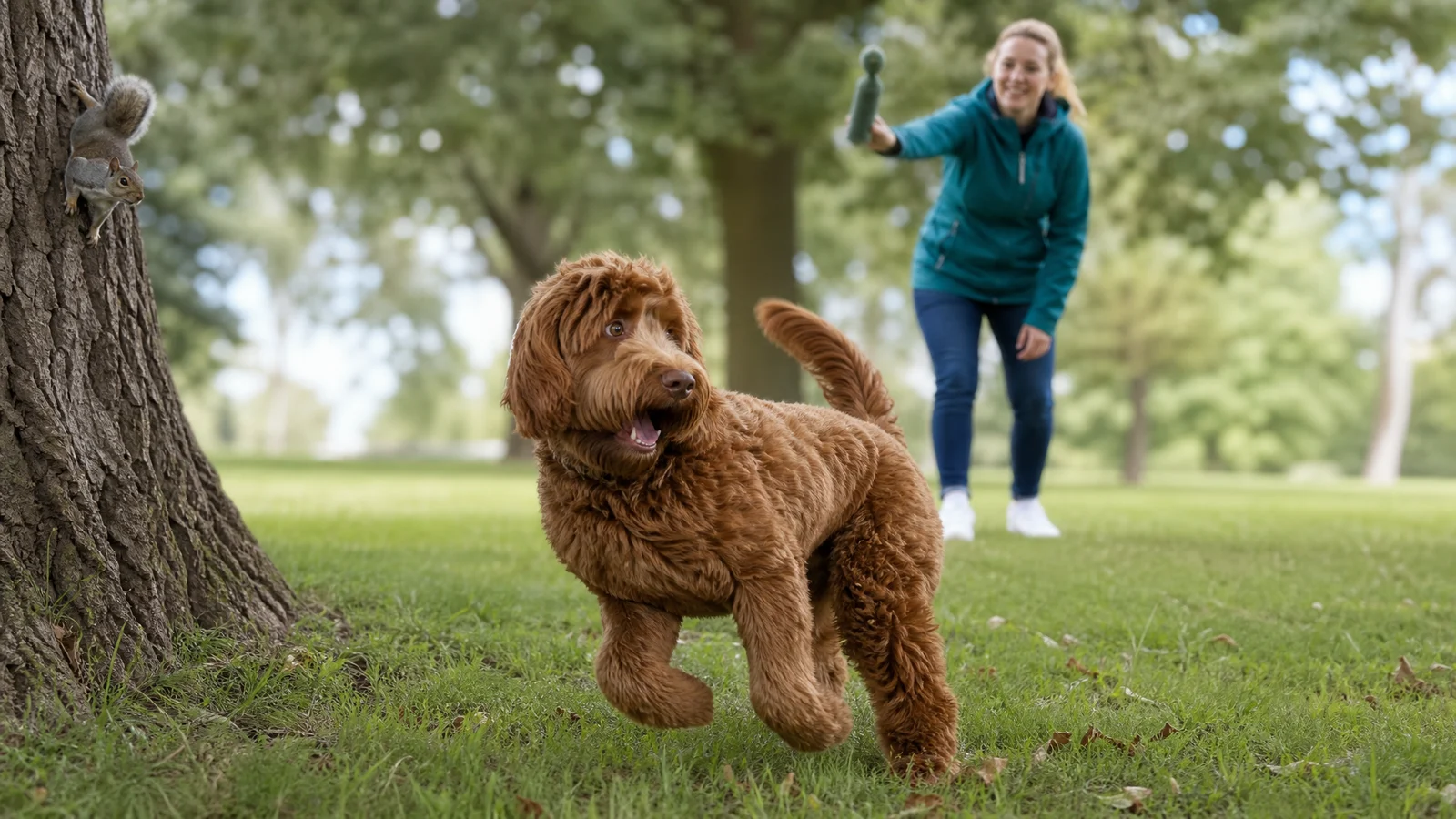
Standard recall advice assumes your dog already prefers your company and just needs a cue to show it. A friendly, curious Australian Labradoodle often finds people, other dogs and squirrels better company, so your payoff for coming back has to beat what waits out there.
Owners describe a dog who is calm at home but wild when a visitor arrives or another dog appears on a walk. Many report a dog who treats every dog as a playmate and gets frantic when told no, which makes coming when called the place where that excitement gets tested.
Behavior and training in this breed is our specialty, and the pattern holds. We'll walk you through the word and the rewards that beat the neighborhood, then the indoor foundation, the distraction ladder, distance and the long line, and finally what recall looks like as your dog ages.
A Word for Coming When Called Worth Protecting
Our verdict on the cue itself is one word, one bright tone, and nothing else attached to it. Pick something short like here or a whistle, and make sure every person who walks your dog says it the same way.
The reason is simple. If the word ever signals that fun is over, a social dog learns to hear it as bad news and finds reasons to stay away.
These rules protect the word from the first day. Apply all of them each time you practice.
- Say the word once, in a happy voice, then reward. Repeating it teaches your dog that the first call is optional.
- Call only when you can follow through. If your dog is too far away or too excited to respond, walk over instead.
- Keep the word out of scolding, baths, nail trims and leaving the park. Walk up quietly and clip on the leash without it.
- Pay every time while the habit is young, even when your dog was already heading your way.
The leaving-the-park rule matters most for this breed. A dog who comes back, gets leashed, and loses every playmate soon decides that coming back costs too much.
Call your dog in, reward, and release them to play again several times before the real goodbye. That way the word predicts more fun, not the end of it.
Greeting other dogs needs the same rehearsal as greeting people. If a dog who treats every dog as a playmate gets wild when stopped, reward a calm approach first and let play resume only after a calm moment.
Reward Value for an Australian Labradoodle Recall
Ordinary advice says to use treats. For a dog who finds every person and squirrel thrilling, value matters more than the treat itself, so the payoff has to be matched to the distraction.
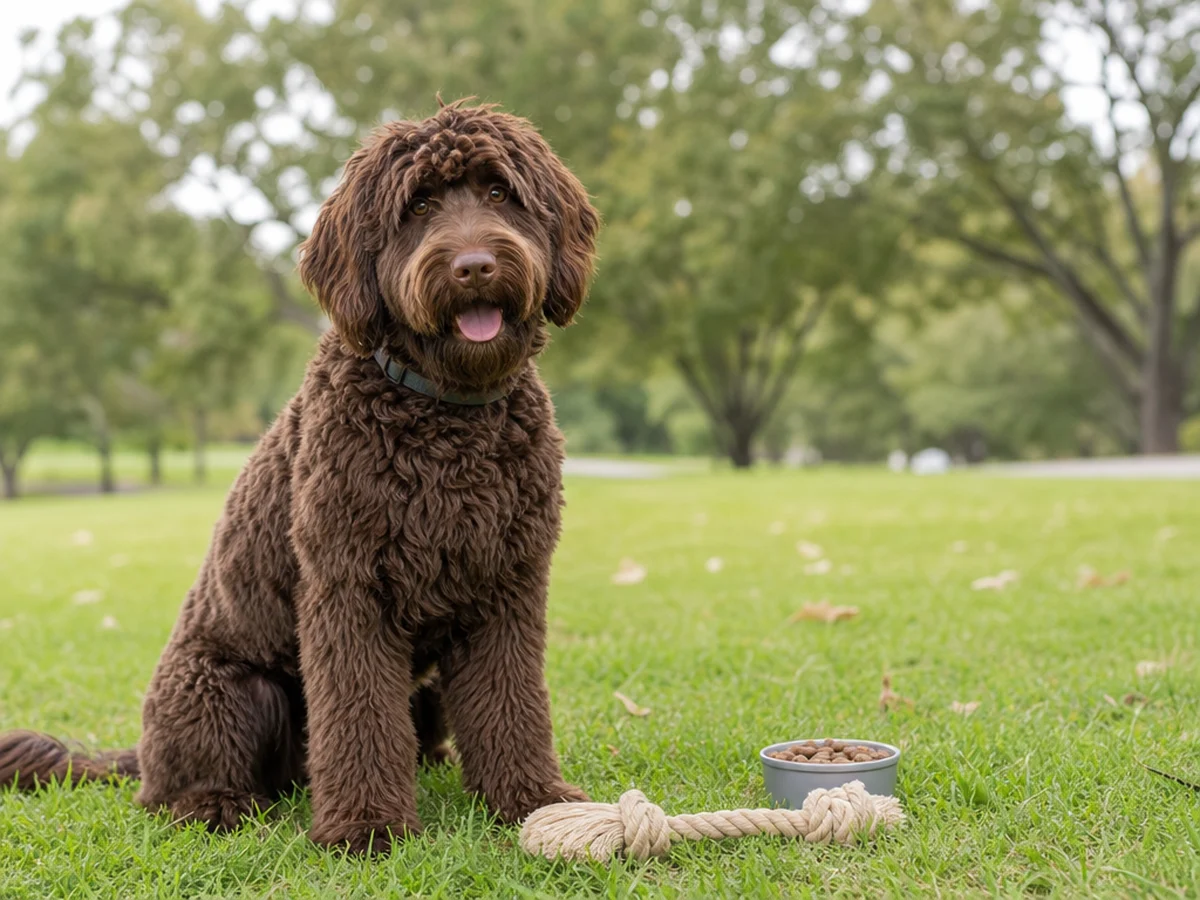
Ranking Treats, Tug and Chase
Rank what your dog loves, then spend the best reward on the hardest call. This table is a starting point, and your dog may order it differently.
| Reward | Value | Where to use it |
|---|---|---|
| Dry kibble or biscuit | Low | Quiet rooms and first lessons |
| Small soft treats such as cooked chicken or cheese | High | Yard, sidewalk and park |
| Tug with a favorite toy | High for tug lovers | When your dog is already looking at you |
| Chase game where you run away | High | Building speed toward you |
| Release to greet a friend or dog | Highest | After a calm arrival, when the other person agrees |
The parent breeds hint at why play and praise count. The Lab is described as high-spirited with a desire to please, and the Cocker is easily motivated by food, play and praise. A cross may inherit either.
If your dog loves tug, use it when they are already looking at you. If they ignore toys outdoors, go back to soft treats.
Making the Payoff Beat Squirrels and Strangers
Keep your best treat for recall only and pay it as a jackpot: several pieces in a row, with praise. A bigger reward for a harder call tells your dog the price is fair.
We'd push back on the advice to use one special treat every time. Vary tug, chase and different foods so the payoff stays interesting, but keep every option above what's out there.
Both the Poodle and Lab parents rate 5 of 5 for openness to strangers, so expect people to be a strong pull. Let the greeting itself be a reward when your dog arrives, touches your hand and sits, and release them with a cheerful go say hi if the other person agrees.
If your dog gets wild instead, back up, reward calm, and try again from farther away. The hello is earned by the calm return, not by the sprint.
Is Indoor Practice Enough for Coming When Called?
No. Indoor work builds the foundation, but a dog doesn't carry a skill from the living room to the park on their own. Treat the house as the place where the word gains meaning before it faces competition.
Begin with your dog close by in the quietest room you have. Say the word, step back, and reward at your hip while a hand touches the collar.
Then call from another room, around a corner and while you're busy in the kitchen. Each change makes the word work a little harder without adding outside excitement.
The Poodle parent is very people-oriented, so a cross may look flawless indoors just because nothing in the house competes with you. That is why the house is only the first test.
You are ready to go outside when your dog turns at the first word with no second call, and comes straight to you without a detour past a toy. They should also find you when you're out of sight and stand still for the collar touch before the treat arrives.
If your dog is slow indoors, stay inside and raise the reward. If they are perfect indoors but ignore you in the yard, that's normal, so restart outside with an easier setup.
Excitement when people arrive is a related puzzle. Our guide to Australian Labradoodle door excitement and barking gives you a separate practice plan.
Distraction Level for Coming When Called, One Notch at a Time
Think of the places you walk as a ladder, from boring to thrilling. Climb one rung only after your dog succeeds on the one below.
- A quiet room with only you in it.
- A busy room with family, toys and kitchen smells.
- A dull yard, with your dog on a long line.
- The yard with a squirrel or neighbor visible in the distance.
- A sidewalk or quiet park edge, with other people far away.
- A busier park, with other dogs at a distance.
- The same park with dogs and people closer.
Move up when your dog comes quickly at the first word in several separate sessions. If they miss, drop back a rung and raise the reward instead of repeating the word louder.
If your dog fixes on a squirrel and can't glance at you, you are too close. Add distance until they notice it but can still choose you, call when they look your way, pay well, and let them look again.
Other dogs follow the same logic. A dog across a fence is easier than one on the path, and each calm return from a distance builds the habit that greeting also needs practice.
If your dog returns and then bolts back toward the distraction, release them on purpose. Pay, say go play, and let leaving you be a choice you offer, not one they make alone.
How Far Away Can an Australian Labradoodle Come When Called?
Only as far as you have proven in small steps. Distance and distraction are separate challenges, so raise one at a time.
Stretching the Gap Slowly
In a quiet place, add a few steps whenever your dog succeeds, then hold that distance across several sessions. If they slow down at the new distance, you grew the gap too fast.
Make the long trip fun. Cheer, crouch or back away so your dog races toward you, and finish with a jackpot at your hand.
When Your Dog Fails at Range
Do not call again from far away. Walk toward your dog quietly, get their attention, and reward the first move in your direction.
Then shorten the gap for the next try. A miss at range tells you the distance outran the training, not that your dog is being stubborn.
If misses repeat, check the setting and reward before the distance. A dog who comes well in the yard but not at the park needs a lower distraction rung, because a dog wired to meet everyone sees extra distance as extra time to find a friend.
Long Line Safety Before Any Off-Leash Coming When Called
No dog earns off-leash freedom through age or good manners. They earn it by coming when called at the busiest place you practice, on a line, again and again.
As skills improve, many trainers build up to a line of 20 to 30 feet. It lets your dog feel free while you keep the connection, and a dependable on-leash recall should come before any off-leash request.
Clip the line to a harness, keep it free of tangles, and never wrap it around your hand. Let it trail or hold the end, and reward before your dog reaches the end.
Use it anywhere unfenced and anywhere with roads, other dogs or squirrels. Public guidance is to make sure your dog will come before going off leash, and for a social breed that check should be strict.
Drop the line only after your dog has shown every skill below. Test each skill in more than one safe place.
- Reliable returns on the line at the busiest place you practice, across many sessions.
- Coming away from squirrels, people and dogs at close range.
- Returning from a greeting, then being released to play again.
- Success inside a fenced area first, before any open ground.
If any of these slip, keep the line on. Nothing is lost by waiting, and a lot can be lost to a dog sprinting toward a road.
Australian Labradoodle Recall Through the Years
Recall is never finished. It stays reliable only while coming back keeps paying off, so keep rewarding it well even after the habit looks solid.
Expect dips in adolescence. A teenager who suddenly ignores you has not forgotten the word, and a step back on the ladder with better rewards usually fixes it.
Keep daily exercise generous, since the Lab parent is described as very energetic and a cross may inherit that. The Poodle parent rates 5 of 5 for mental stimulation needs, so add sniffing games and short training sessions on top of walks.
In adulthood, recall becomes maintenance. Keep a few jackpots in your pocket, practice in new places, and treat each unfamiliar park as a higher rung for a day or two.
Schedule regular vet visits, and if your dog stops answering a call they once knew, ask about hearing or comfort before blaming training. Reliable return also opens doors, since agility, obedience and therapy visits all depend on it, as in our look at Australian Labradoodle sports and therapy work.
Plan to keep paying for coming back for your dog's whole life. A friendly Australian Labradoodle will always find the world interesting, so occasional jackpots, regular long-line practice and calm greetings keep you the best thing around. That steady upkeep, not a few weeks of lessons, is what holds up near squirrels at every age.
 Puppy trainingAustralian Labradoodle Adolescence: Patience Through the Teen Months
 Training basicsSmart but Bouncy: Australian Labradoodle Temperament
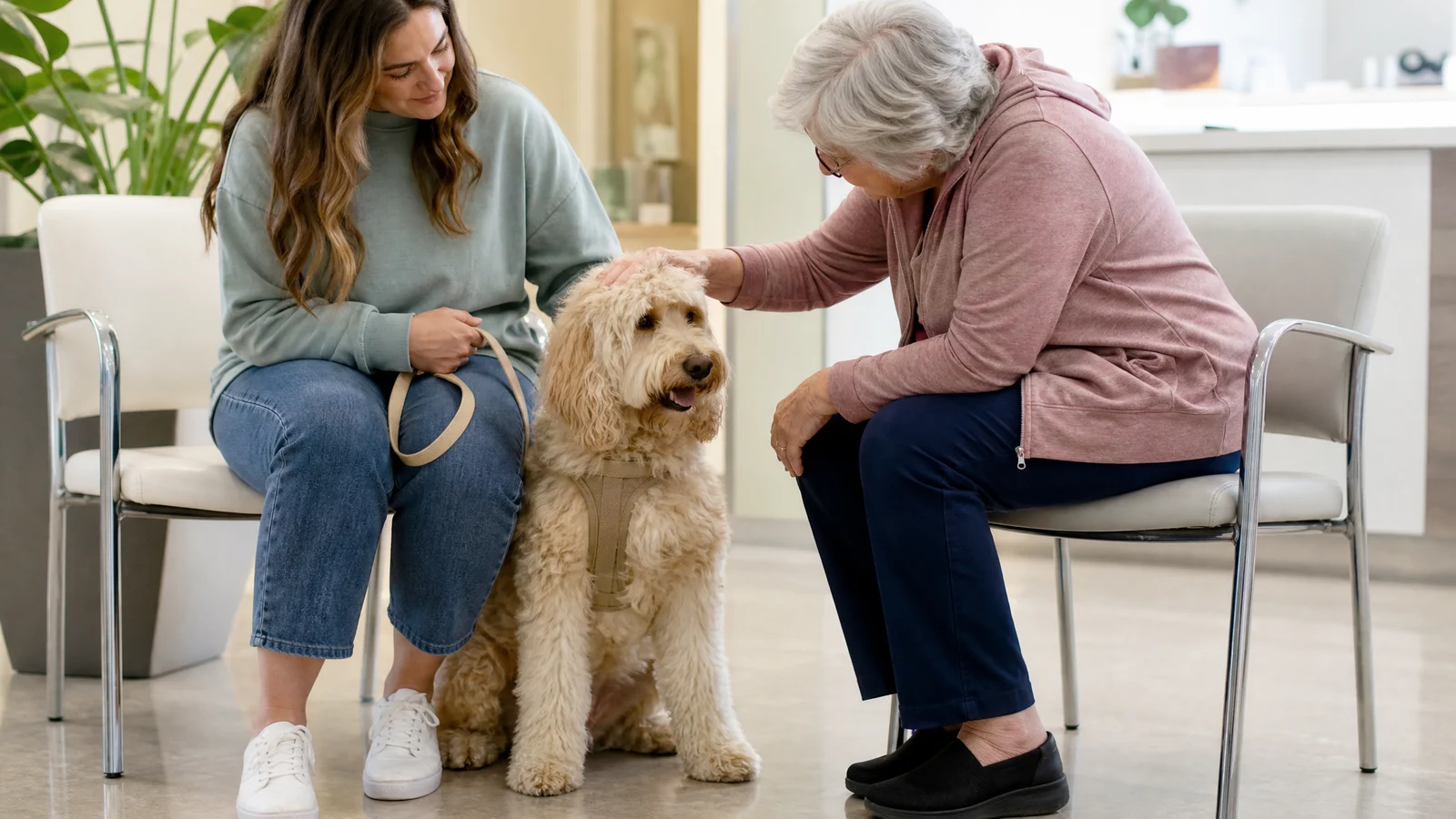 Exercise and jobsWhich Therapy Dog Skills Come Easily to an Australian Labradoodle?