 Australian Labradoodle
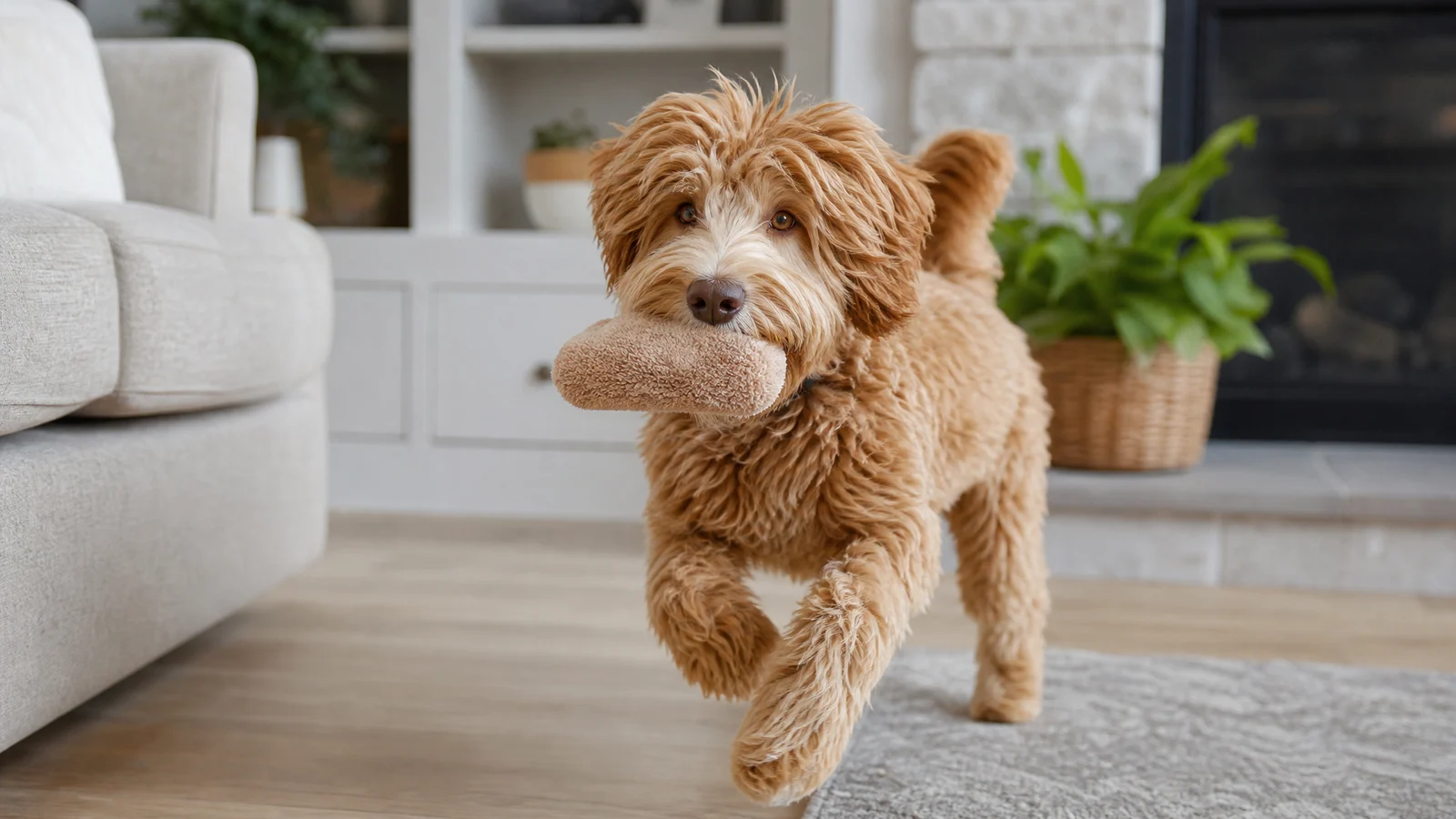
Yes, a teenage Australian Labradoodle often seems to forget skills they knew well, and the reason is the brain and body changes of adolescence scrambling focus, not training that failed. The skills are still in there, but a distracted, bouncy teenager reaches them less easily.
This mix draws on Labrador, Poodle and Cocker Spaniel parents, so many are eager, social and playful, and every smell, dog and friendly stranger now competes with you. If you searched with a four-month-old in mind, you are most likely still in the puppy stage, because adolescence is individual and may begin at about eight months and continue until about two years.
This article looks at common myths about the teenage months, so you can tell a normal phase from a real problem, keep rewards generous and sessions short, and settle into a simple weekly routine of training, exercise and rest.
Forgotten Skills in the Teenage Months
The belief goes like this: your sweet, sit-on-cue puppy has turned into a stranger, so months of work must have vanished. Look closer and the skills are almost always still there. What has gone missing is your dog's ability to reach them while the yard smells of squirrels, the grass is wet and fascinating, and every passing jogger is a possible new best friend.
Why Skills Wobble
Poodles and Labradors are both described as quick to please, and a Labradoodle may inherit that. A dog like this who ignores a cue they have known for months is rarely refusing to learn. More often the teenage body is buzzing, the nose is busier than ever, and attention narrows to the most exciting thing in range. Your cue loses the contest.
Now look at what changed around the dog instead of inside the lesson. A sit in the hallway is easy. The same sit at the park gate, where a Labrador-style love of everyone and everything pulls hard, is a much bigger question. Your dog hasn't unlearned sit. The difficulty went up and nobody told the training plan.
Poodle intelligence adds one more wrinkle. A very smart dog can get bored with dull, identical repeats, so vary the setting, the reward and the order of what you ask. Fresh versions of an old skill keep a clever mind interested.
Rebuilding Step by Step
Treat this as a reset, not a relearning. Go back to the easiest place you ever practiced and climb back up from there.
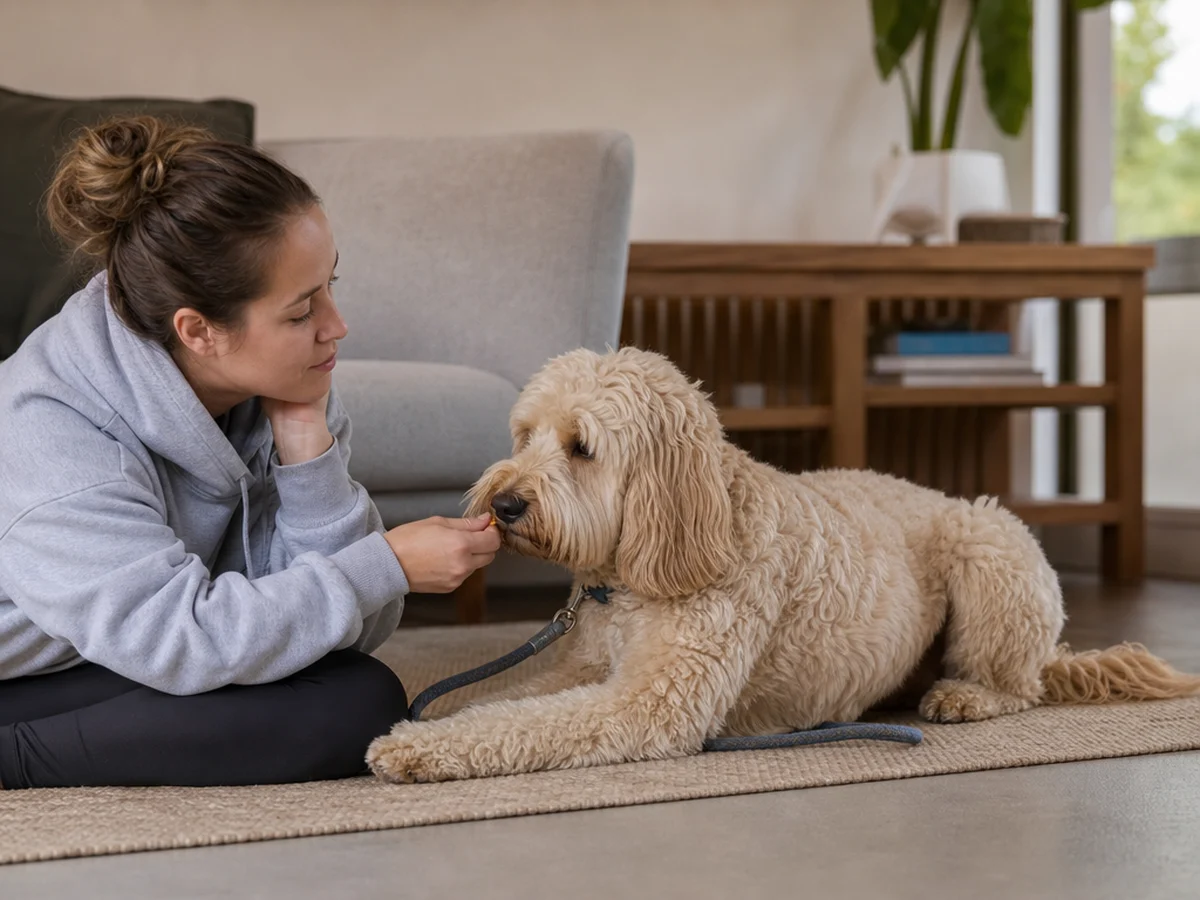
- Ask for the skill in a quiet room and reward the instant it happens with a treat and warm praise.
- Pay generously for several easy repeats so success feels like a jackpot, and end the session before your dog loses interest.
- Change only one thing next time, such as a new room, a few steps of distance or a few extra seconds of duration.
- If your dog stumbles, make the next ask easier instead of repeating the one that failed.
- Move outdoors slowly, starting where it is calm, and carry your tastiest treats wherever distractions are strong.
Our Australian Labradoodle puppy training timeline shows how skills build with age. Use it to choose the foundation worth revisiting first.
The Teenage Months Stubbornness Myth
Stubborn is the word many owners reach for when a cue gets ignored, and it rarely fits this mix. The parent breeds are known for wanting to work with people, so when a Labradoodle tunes you out, distraction, overexcitement and stress are far likelier causes. Each one looks different and each has its own fix, so it pays to read the signs before you decide anything about your dog's character.
Signs of Distraction
A distracted dog is still cheerful and still interested in food. Their head swings toward sounds, their nose works the ground, and they may glance back at you as if to say they will get to it in a minute. They usually respond once you move farther from whatever is pulling at them. Give them more distance, a tastier treat and a shorter ask.
Signs of Overexcitement
Overexcited teens bounce, spin, mouth your sleeves and snatch treats roughly. Some race around in sudden bursts. This is the high-spirited, exuberant side of the Labrador showing up in a bigger body. Stop the game for a few breaths, let your dog come down, and ask again once the wiggles fade. Reward the very first moment of calm so that calm becomes the thing that earns the fun.
Signs of Stress or Confusion
A stressed dog looks different. They turn away, hold their body low, refuse food they normally love or stare through you. Taking a rattled dog somewhere crowded to burn off the feeling can leave them more rattled, so choose a quiet corner instead, ask for something easy and pay well. The Cocker Spaniel side of the family is described as gentle, and a cross may share that sensitivity, which is one more reason to keep every lesson kind and rewarding.
Australian Labradoodle Hormone Myths
Hormones get blamed for every lapse, from ignored recalls to counter surfing. They are one part of the picture. Growth, bigger energy reserves and a bolder interest in the world all arrive together, and your training has to keep pace with all of it rather than waiting for a single cause to pass.
Timing of the Teen Phase
There is no calendar date. Adolescence differs from dog to dog and may begin at about eight months, then continue until about two years. Some Labradoodles sail through with only a few wobbly weeks, while others test you for much longer. Because the Lab and the Poodle are both very playful, expect plenty of silliness alongside the setbacks.
Keep up regular vet visits through these months, and mention sudden changes such as new fearfulness, pain when touched or a drop in appetite. Not every change is just a phase.
Neutering and Behavior
Recall and polite greetings come from practice and rewards, not from any single change in your teenager's life. Keep paying generously for the behaviors you want, and keep practicing them in small, easy steps. Whether to neuter, and when, is a conversation to have with your veterinarian about your individual dog.
This is general information, not medical advice. Please check with your veterinarian about whether and when neutering suits your dog.
Firmer Approach for the Teenage Months
Some people say a lapse means it is time to get stricter, but the facts point the other way. Poodles are described as devoted to people and keen to learn when lessons stay upbeat and enjoyable, and the Labrador is described as eager to please too.
A teenager who is already overstimulated needs lessons that feel easier and more rewarding, not harder and more serious. Pile on pressure and you add stress to a brain that is struggling to focus, and an eager-to-please dog quickly stops enjoying the game that made them so easy to teach in the first place.
Generous rewards do the work. Pay more often than you think you should, mix treats and play with life rewards, for example a sniff break or a release to greet a friend, and mark the right choice with a word the instant it happens. The Cocker Spaniel is described as easily motivated by food, play and praise, and your Labradoodle may share that.
Keep sessions short. A brief, successful practice beats a long, scratchy one, and finishing while your dog is still keen leaves them wanting more. If play turns frantic, pause it and resume when they settle.
Consistency matters just as much. Everyone in your home should use the same cue words and ask for the same behavior in the same way. Mixed signals look like forgetting but are really confusion.
Australian Labradoodle Energy Myths
The last myth sounds sensible: this is a smart, active mix, so the answer to every problem is more exercise. Exercise matters a great deal, but it is only one of three parts. The other two are mental work and real rest, and a teenager needs all three in balance.
Physical Exercise Has Limits
The Labrador is described as exuberant and in need of lots of exercise every day, and one without enough is likely to turn hyperactive or destructive. A Labradoodle may inherit this, although the Cocker Spaniel is said not to need a great deal to discharge energy, so dogs vary. Even so, a good exercise routine may improve unwanted habits without fixing them completely. A fitter teenager can still be an unfocused one.
Mental Work Tires Differently
Brain games don't replace walks, but they are an important partner to them, because mental stimulation complements exercise. A thinking dog gets tired from practicing cues, working food puzzles, sniffing out hidden treats and learning something new. Poodles are rated as needing a job or activity, and a Labradoodle may too.
Try simple nose work games by hiding treats around a room and letting your dog sniff them out. Nose work also teaches energetic dogs to concentrate. Meals are another chance, since food puzzles slow eating and give a busy mind something to chew on.
Rest and a Weekly Rhythm
Rest is part of training. A teenager who never settles gets wired, and a wired dog can't learn. Mix active days with calm ones, and use a mat or crate for quiet time after sessions. A simple week might look like this:
- Most days, do a short, rewarded session on one familiar skill in a quiet place, then add a little distraction as it gets easy.
- Give daily physical exercise suited to your dog's energy, somewhere calm enough for a stressed teen.
- Set aside a scent-game or puzzle-feeder day to use up brainpower without more running.
- Plan a calm day with sniffy walks, chew time and a settle on the mat.
- Review the week by noting what got easier, and raise only one challenge at a time.
Reward Your Teen Australian Labradoodle Today
If everything above feels like a lot, forget the plan and do one thing. Pick a skill your Labradoodle already knows, such as sit, a hand touch or coming to you indoors, and practice it for two minutes. Ask in a quiet room, reward the moment they get it right with a treat, praise and a little play, and stop while they are still wagging.
That small win is the heart of the teenage months. This is an eager, social, people-loving mix, and the curly goofball tearing across the yard still wants to work with you. Your job is to make cooperating the most rewarding option in the room. Keep it short, keep it generous, and your dog will show you the skills never left.
 Training basicsSmart but Bouncy: Australian Labradoodle Temperament
 Exercise and jobsWhich Therapy Dog Skills Come Easily to an Australian Labradoodle?
 BehaviorWhy Does My Australian Labradoodle Bark at the Door?