 Australian Labradoodle
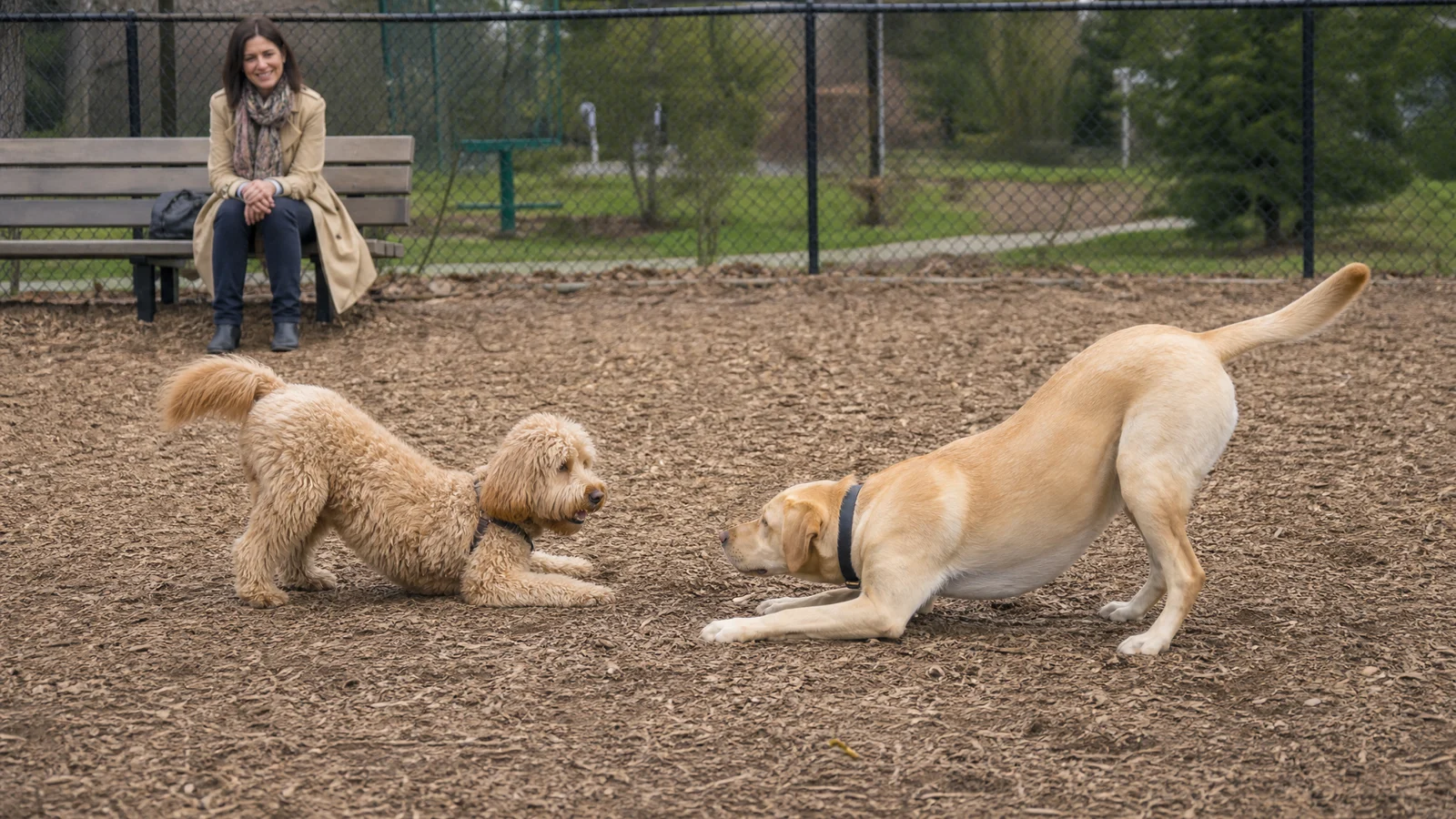
Some Mini Australian Labradoodles trot into the park, greet a dog with a loose wiggle, play for a while and come back when called. Others bowl over every dog they meet and treat a polite sniff as a starting gun, which leaves their owners apologizing all the way around the field.
The gap between those two outcomes is mostly teaching, not luck. A bouncy greeter left alone learns that every hello is a tackle, and other dogs start steering clear, while the same dog taught well becomes the one the park is glad to see. This guide covers socializing for polite play, from telling rough games from friendly ones to rewarded hellos, recalls out of play and safe matches with bigger dogs.
Socializing a Mini Australian Labradoodle, Not a Small Lab
A stranger's Labrador charges across the grass and your mini freezes, ears back, working out whether this is a game. A week later they meet another Labrador and launch into a full-body wrestle.
Both reactions are normal for this cross, and the reason sits in the parent breeds. The Labrador and the Cocker Spaniel both score a perfect 5 of 5 for getting along with other dogs, while the Poodle rates 3 of 5, a score that points to supervision. An Australian Labradoodle blends these lines, so one litter can hold a dog who adores every dog they meet and a littermate who prefers a few chosen friends.
So drop the idea that a mini is a Lab in a smaller coat. Size tells you what fits under a bench, not how a dog plays.
Spend the first few play dates simply watching. Note whether your dog greets every dog with equal gusto or settles on favorites, and how quickly they recover after a scare. A dog who loves everyone needs help with manners, while a selective dog needs the freedom to say no and a calm way out. Pushing a choosy dog to befriend the whole park is how a sound temperament turns wary.
Telling Rough Play From Polite Play While Socializing
Your mini is pinned under a larger dog, squealing, with the tail still wagging. A wag proves very little, so read the whole pattern instead. Polite play is mutual and keeps shifting, while rough play gets stuck, lopsided or louder. These signs separate the two:
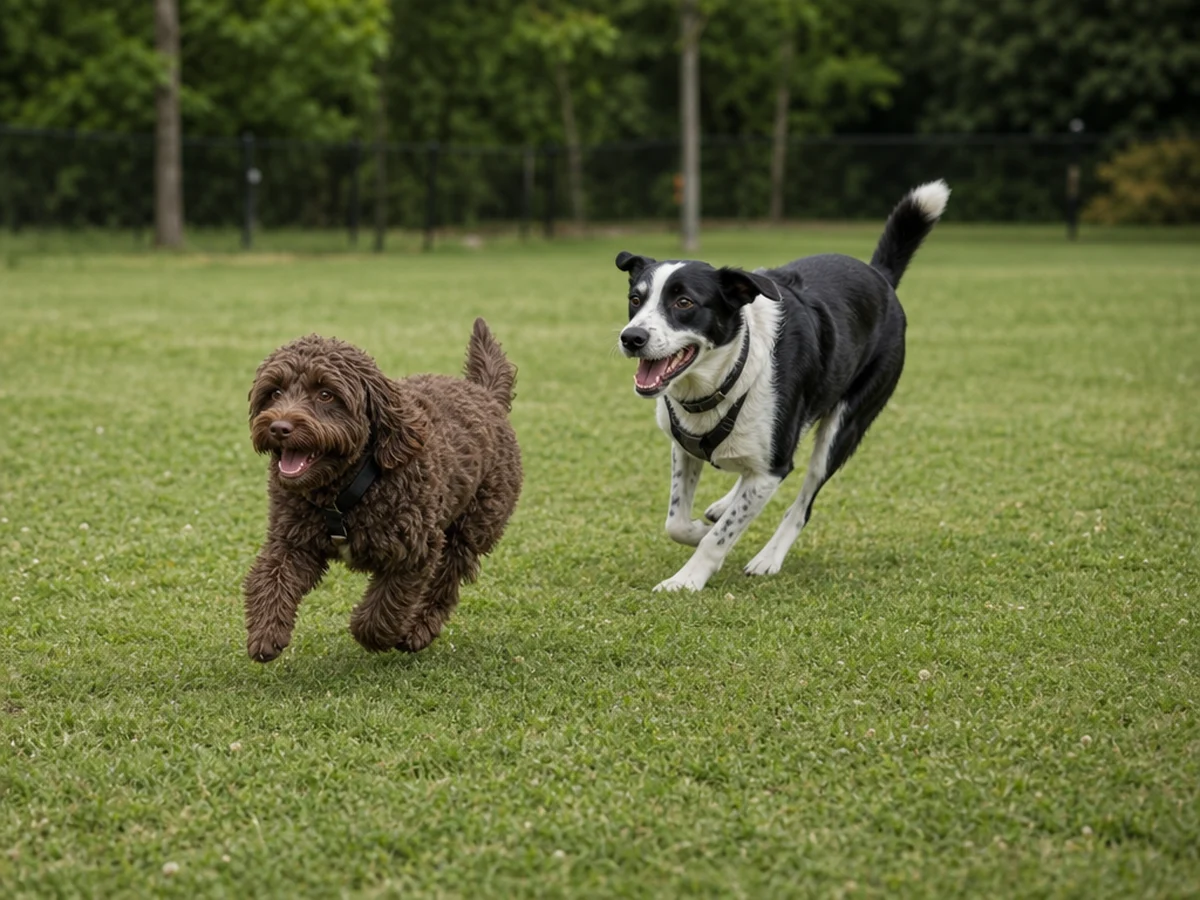
- Polite play shows role swaps, where the chaser becomes the chased and the dog on the bottom gets a turn on top.
- Loose, bouncy bodies, play bows and little pauses to shake off or sniff all point to a game both dogs are enjoying.
- Trouble shows when one dog always chases, pins or mounts while the other never gets a turn.
- A dog who hides behind your legs, freezes or keeps trying to leave is telling you the game is over for them.
- Stiff bodies, hard stares and rising noise without pauses mean arousal is climbing faster than manners.
The Labrador and the Poodle both rate 5 of 5 for playfulness, so a mini can climb from silly to frantic within moments. Arousal, more than bad intent, is usually what turns a fair game into a rough one. When you see the climb, call your dog out in a calm voice, pay them for coming and let both dogs breathe.
If the other dog keeps pushing, end the session with a short time-out on the leash. Ending a game early costs almost nothing because a good game restarts in seconds, while a scare can color the next outing.
Why Not Let Dogs Sort Out Socializing Themselves?
Two dogs tumble across the lawn and a bystander says they will work it out. Maybe so, but the dog who loses the argument tends to leave the park and never file a report.
The claim sounds kind and has little behind it. With playful parents on both sides, a mini can learn that bowling over other dogs is a winning move, because the game keeps going every time they do it. Repeat that enough and you own a habit nobody at the park asked for.
Having trained this breed for many years, we side with early, light intervention. Your job is referee: interrupt when play tips, pay the instant your dog disengages, then send them back in once they are calm.
Reward-based teaching is plenty for this, since most dogs can become well-adjusted with positive reinforcement alone. A treat and a cheerful voice beat any amount of glaring from the sidelines. Our verdict is simple: let dogs choose how they play, but never leave the rules to chance.
Socializing With Rewarded Greetings, Not Free-for-All Hellos
The leash goes tight and your mini hauls toward a dog across the field, whining and bouncing. Each time that rush ends in a sniff and a game, the rush gets paid.
A free-for-all hello rewards the most frantic approach, while a rewarded hello pays for the calm one. The Poodle and the Labrador both rate 5 of 5 for trainability, so this lesson sticks fast once the pattern is clear. Teach it in small steps:
- Begin far enough back that your dog can see the other dog and still look at you. The moment they glance your way, say your bright marker word and hand over a treat.
- Shorten the distance only while the leash hangs loose and their body stays soft. If they stiffen or haul, you moved too fast, so back up and begin again.
- Allow a few seconds of sniffing, then cheerfully invite them away and pay for turning toward you.
- Offer a release word for play once both dogs look relaxed, so the game has a clear starting signal.
Done consistently, this teaches your dog that calm gets them to the other dog sooner than frenzy does. That single lesson prevents most park drama, because the reward for patience is the very thing they wanted.
Calling a Mini Australian Labradoodle Out of Play
Your dog is mid-chase, ears flying, and you shout their name. They keep going, so you call again, louder, until your voice turns into background noise.
Calling at the peak of play asks a dog to trade the best thing in the park for a word they usually hear somewhere dull. A lull is the smarter moment, when the dogs drift apart to sniff or catch their breath. Call then and the choice is easy, and every successful call makes the next one likelier.
Build the break with one familiar playmate. Wait for a natural pause, call once in a cheerful voice and reward generously when your dog arrives, then release them straight back to the game so that coming to you earns more play instead of ending it.
As the habit grows, call during busier moments and keep the reward better than the distraction. Use a long line in any unfenced space until the response holds. Trainability runs 4 of 5 for the Cocker and 5 of 5 for the Poodle and Labrador, so this skill is well within reach if you stay patient with the lulls rather than forcing the peak.
Can a Mini Australian Labradoodle Play With Big Dogs?
A big dog bounds up and your mini squeaks, ducks and tries to hide behind a bench. Whether that ends in a friendship or a fright depends on more than weight.
Yes, minis can play with bigger dogs, but choose carefully. A cross may inherit size from either side. The Miniature Poodle standard allows 15 inches or under with a minimum height in excess of 10 inches, and the Cocker Spaniel stands about 14 to 15 inches, which hints at the small end. The Standard Poodle stands over 15 inches and is listed at 40–50 pounds for females and 60–70 for males, so the gap to a playmate can be large.
Style matters more than size. Pick big dogs who play gently, take breaks and respect a retreat, and skip body-slammers, relentless chasers and groups. Meet one dog at a time in a fenced space and give your mini an exit, such as a bench or your legs. When in doubt, choose a similar-sized playmate. Keep up regular vet visits, and mention any limp or soreness that follows a rowdy session.
Puppy Socializing Against Adult Dog Park Habits
A puppy mobs an older dog and earns a tolerant pause instead of a scolding. Adult dogs give puppies enormous license, which helps them learn and also misleads their owners.
What Puppy Play Allows
That license is not manners. Use it to build habits that will matter later, such as calm hellos, check-ins with you and recalls from lulls, and keep sessions short with gentle, known dogs.
What Adults Must Do Differently
Most dogs reach adolescence around 8 to 12 months, though breed and size shift the schedule, and bigger dogs usually mature more slowly. That is just when the forgiveness ends and your mini grows bolder, so keep paying for good choices. Strange adults will not tolerate what puppies got away with.
At the park, arrive with a settled dog, skip the crowded gate and leave while play is still good. A small group of known playmates often beats an open free-for-all.
Polite Play Questions Australian Labradoodle Owners Ask Next
Polite play spills into the rest of daily life, and the same few questions tend to follow. Each has a guide that goes deeper:
- What is the safest way to bring a new family dog or a child into the mix? Start with safe introductions for family dogs.
- How do you stop the jumping when guests arrive? Our guide to an Australian Labradoodle four-paws-down hello covers that.
- How do you keep play calm around children? See calm play with children.
- What if your dog grabs a toy and will not give it back mid-game? Try teaching drop it and trade.
Underneath every one of these questions is the same truth about this breed. Australian Labradoodles are social, playful and eager to please, and they turn a habit into a routine quickly, for better or worse. Teach polite play early and reward it often, so that all that energy and friendliness has a good outlet and your mini learns that checking in with you keeps the fun going.
 Training basicsGentle Training for a Sensitive Australian Labradoodle
 Training basicsHow to Teach a Medium Australian Labradoodle to Settle
 BehaviorShort Absences for a Devoted Australian Labradoodle