 Australian Labradoodle
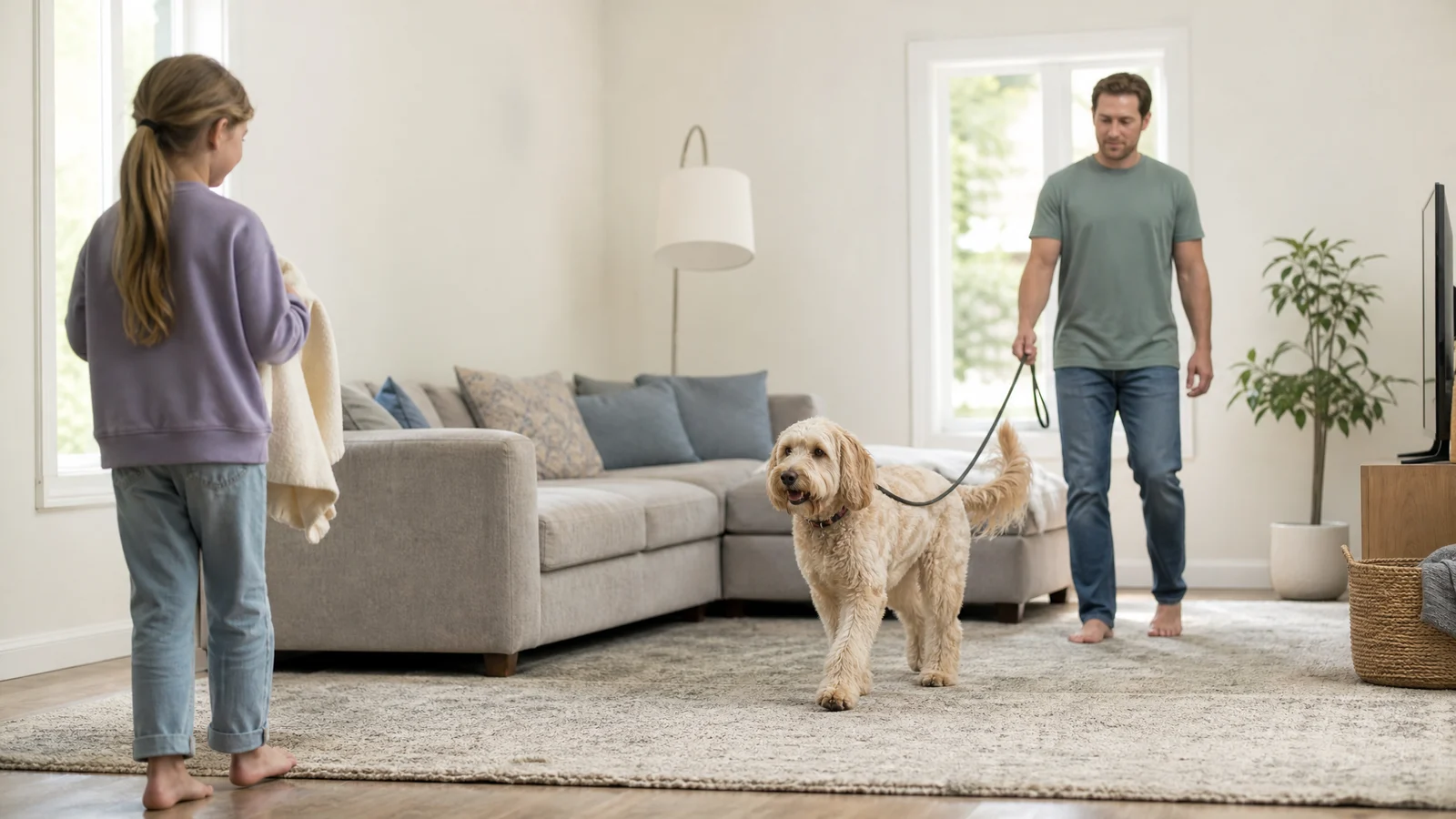
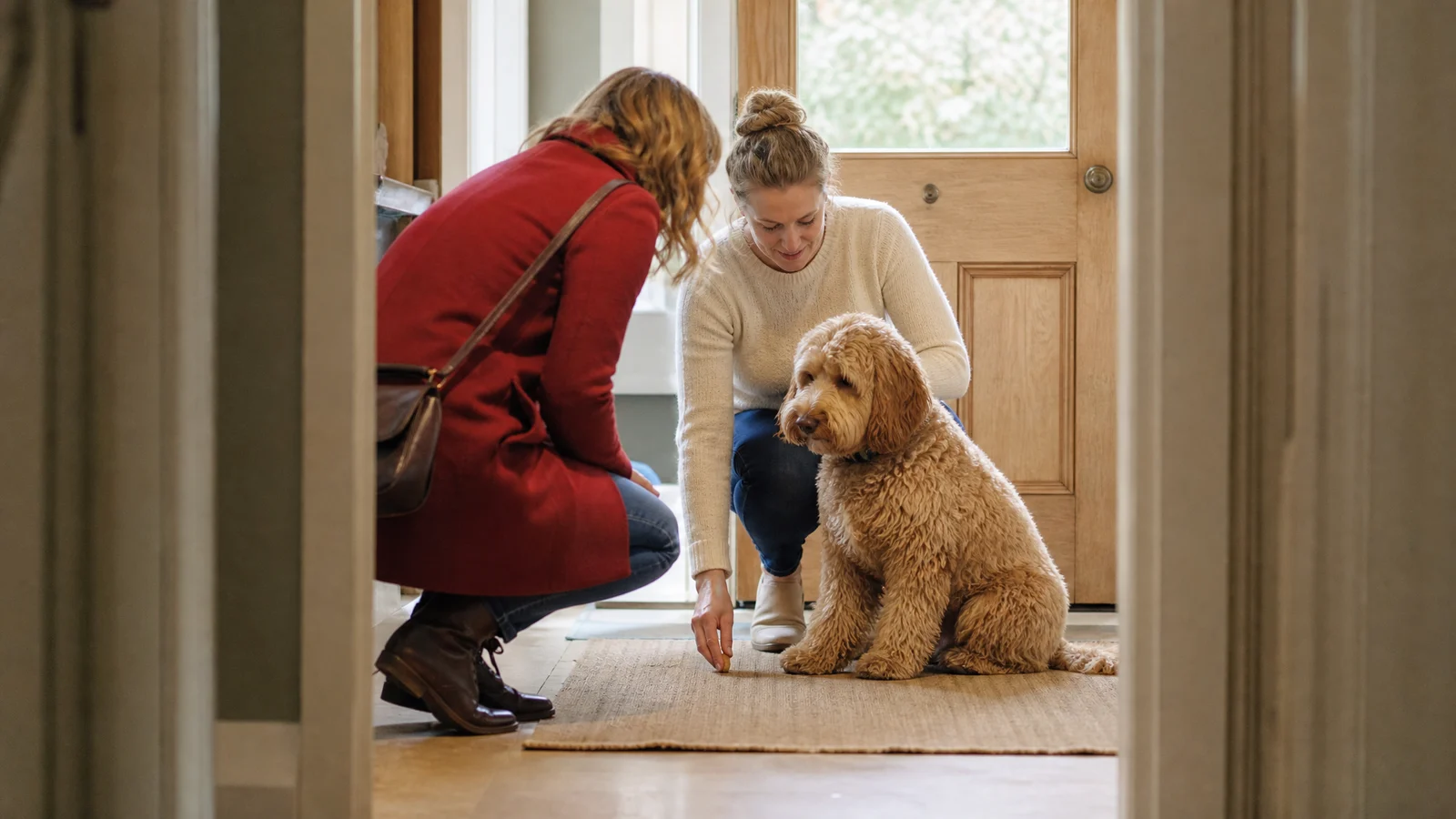
A child comes into the family room carrying a blanket, a visitor steps through the doorway, and the Australian Labradoodle rushes forward with a loose body and too much speed. Everyone calls the dog friendly, but the child still loses space and the greeting still needs help. Friendly intention does not reduce the physical impact of an unplanned approach.
This case-files guide separates sociability from social skill. The parent breeds carry encouraging ratings for children, strangers, and other dogs, yet a cross can inherit different combinations. Good socializing therefore means arranging safe, rewarded experiences for the individual dog, not assuming friendliness will organize itself. Manners, confidence, and consent remain separate parts of the picture.
This guide covers socializing across young children, a resident dog, visitors, public settings, and quiet family space. Each file is a hypothetical household situation, not based on an actual client. We will look at what everyone does, what the dog may be learning, and how to change the setup before excitement or worry takes over. Each file ends with a choice the household can repeat.
Socializing With Young Children
In the first case file, an Australian Labradoodle shares a home with a young child who moves quickly and wants constant contact. Cocker Spaniels, Labrador Retrievers, and Poodles each receive the top parent-breed rating for life with young children. Those ratings support possibility, while supervision and individual behavior still govern the room. Ratings cannot decide whether today's dog is ready for today's child.
The Child's Part of the Meeting
The child needs a simple role that does not depend on reading subtle body language. They can stand or sit still, keep food and toys out of reach, and wait for an adult to invite contact. Running toward the dog, hugging, or following a retreat turns a friendly moment into pressure. Simple actions are easier for a child to remember and for adults to supervise.
Adults should manage distance before giving instructions. A gate or separate area lets the child enter without the dog rehearsing a rush. Once the dog can watch calmly, the child can toss a reward away from their body. The dog moves out to collect it, creating space instead of crowding closer. Repeated tosses can create a calm approach-and-retreat rhythm without direct handling.
The Dog's Exit Route
The dog also needs a way to leave. A mat, open crate, or gated resting area should remain available without a child entering after them. PDSA describes the aim of crate training as a comfortable retreat where a dog can relax, sleep, or take downtime.
Practice the exit when the room is quiet. Reward the dog for moving to the resting area, then let them return by choice. During child activity, an adult can guide the dog there before bouncing begins. Social confidence grows when participation and retreat are both safe options. The dog learns that leaving does not end access forever.
Other Dog Introductions
The second case file places a new Australian Labradoodle with a calm resident dog. Parent profiles do not give one answer: Cocker Spaniels and Labrador Retrievers receive the top rating for other dogs, while Poodles rate 3 of 5. The cross may inherit easy sociability, selectivity, or something between them. The resident dog's preferences add another independent part to the match.
Movement Before Close Contact
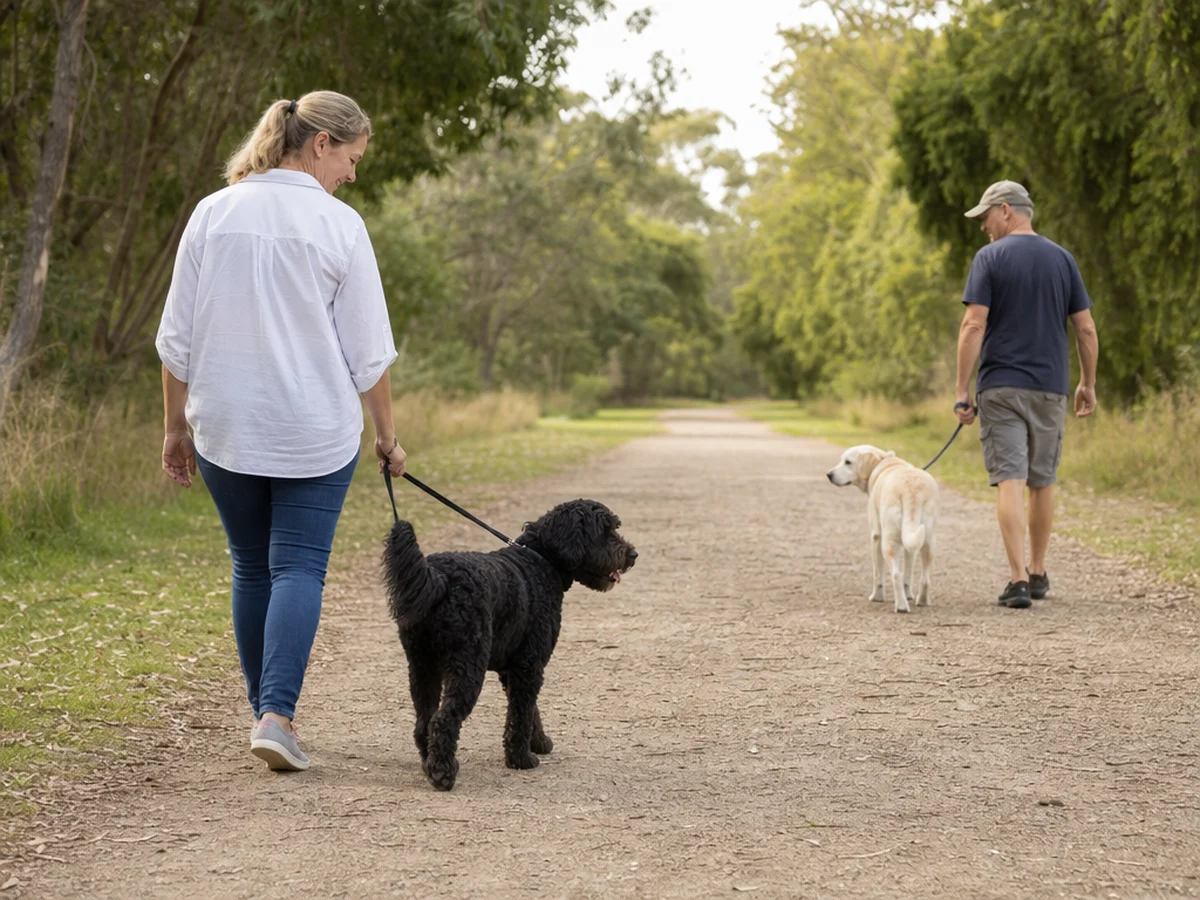
Begin with space and parallel movement rather than a face-to-face stop. Each handler rewards their own dog for soft glances and the ability to move on. The dogs can gradually share a path while remaining far enough apart to sniff, eat, and respond without straining toward each other.
Closing distance is optional. If either dog stiffens, stares, hides behind a person, or cannot disengage, increase space and finish with an easier pass. A good first meeting can be brief and uneventful. Boring movement often reveals more useful information than immediate close contact. The useful outcome is two dogs who recover and leave calmly, not a dramatic play session.
Shared Space at Home
At home, remove competition before it appears. Feed separately, give chews in different areas, and provide more than one resting place. Keep early indoor time short and supervised. The resident dog should be able to move away without being followed by a playful newcomer. Separate resources also prevent excitement from becoming competition.
Reward calm coexistence, including moments when the dogs notice each other and choose separate activities. Play should include pauses in which both dogs can disengage. If one repeatedly pursues while the other tries to leave, interrupt the scene with a cheerful call and separate rest before trying again.
Australian Labradoodle Visitor Socializing
The third case file begins before a visitor knocks. Labrador Retrievers and Poodles each rate 5 of 5 for openness to strangers, while Cocker Spaniels rate 4 of 5. An Australian Labradoodle may inherit a powerful desire to greet, which makes the doorway exciting even when the dog means no harm. The setup must slow access before enthusiasm gathers speed.
Set the room before the arrival. Put the dog behind a gate or on a practiced mat, prepare rewards, and tell the visitor to enter without reaching toward the dog. Release happens only after the dog can keep four paws down and return attention to the handler.
Use the visitor as a reward for calm rather than asking food to compete forever. The visitor can turn away when jumping begins and offer quiet contact when paws return to the floor. Our guide to Australian Labradoodle door barking and greetings develops the mat routine for noisy arrivals.
The visitor plan stays easy to remember because every person has one observable job. Review the sequence before the door opens, then keep the greeting brief:
- Prepare the dog's mat or gated area before the person arrives.
- Have the visitor ignore rushing, jumping, barking, and pawing without adding attention.
- Reward the dog for looking back, settling, and keeping four paws on the floor.
- Allow a brief greeting only while the body remains loose and the dog can disengage.
- End access and offer a rest break before excitement rebuilds into another rush.
Public Socializing Without Greetings
The fourth case file happens outside a café, near a store entrance, or on a broad sidewalk. People and dogs pass, but none is promised as a social partner. The Australian Labradoodle learns that socializing can mean observing calmly and moving on, not collecting contact from every available stranger.
Choose enough starting space for your dog to notice activity while still eating or sniffing comfortably. Mark a glance toward the scene, then reward the turn back. If the dog pulls forward, move farther away and restore an easier pattern. Distance lets the dog process the environment without being trapped in it. Curved movement away can make that space easier to maintain.
Keep the outing short enough that recovery remains possible. A friendly dog can become frustrated when access is repeatedly blocked, while a worried dog can become quieter without becoming comfortable. Watch the whole body and the speed of recovery. Calm observation is useful only when the dog can remain loose and responsive. End before repeated exposure turns learning into endurance.
Australian Labradoodle Quiet Space
The fifth case file is ordinary family life: adults talking, children playing, a resident dog moving through the room, and the Australian Labradoodle expected to rest nearby. Inclusion matters for a cross who may inherit the Labrador's need to take part in family activities, but inclusion does not require constant interaction. Resting near the group can be a complete and valuable social behavior.
Teach the quiet space as a positive destination before using it during busy periods. Safe haven is the RSPCA's description for a crate, which should not be used merely to halt unwanted behavior. Best Friends also recommends that handlers mark and reward a dog for entering during crate training.
Family rules protect that space only when adults enforce them before the dog has to leave. Keep the agreement visible and use the same response across busy days:
- Children and visitors leave the dog alone whenever they are on the mat or in the crate.
- Adults provide a separate place for food, chews, and rest when another dog is present.
- The dog may leave social contact without being followed, cornered, or immediately called back.
- Busy play ends before the dog is too aroused to settle with food or a familiar cue.
- Everyone uses the same release word so rest has a clear beginning and end.
A quiet space is not social isolation. It is where the dog practices remaining part of the household without participating in every movement. That ability is especially valuable for an affectionate, playful cross because it prevents family closeness from becoming relentless stimulation.
Socializing Setbacks and Safety
The sixth case file covers a meeting that goes poorly. The dog may hide, freeze, bark, lunge, or fail to recover after more distance is added. The response does not prove the dog is unfriendly. It shows that the current setting, distance, duration, or social partner is beyond the dog's workable level. The next plan should change one of those variables.
End the exposure and create space without trying to force a better final impression. Future practice should use an easier version with fewer moving parts. If fear, growling, snapping, guarding, or repeated lunging makes an introduction unsafe, work with a qualified reward-based professional rather than staging more household tests.
Keep regular veterinary checkups, and speak with your veterinarian when social behavior changes suddenly or touch appears uncomfortable. The Labrador parent standard describes a stable family companion, but that description cannot rule out discomfort or individual variation in a cross. Safety decisions come from the dog in front of you. Parent descriptions provide context, while current behavior directs action.
Australian Labradoodle Socializing at Home
The final case file is a household agreement rather than another meeting. Children give the dog space, adults manage introductions, visitors wait for calm, the resident dog has separate resources, and public outings do not promise greetings. Every person protects the dog's right to retreat and rewards the ability to reconnect. That agreement turns separate case files into a coherent household system.
An Australian Labradoodle may bring generous sociability into that system, but enthusiasm becomes a family skill only when the setup makes polite choices possible. Socializing succeeds when the dog can approach, pause, leave, and recover. Build those options across the household, and friendliness no longer has to arrive as a rush.
 CareHow to Groom an Australian Labradoodle Who Wiggles
 BehaviorAustralian Labradoodle: Sound sensitivity
 BehaviorTeaching an Australian Labradoodle a Four-Paws-Down Hello