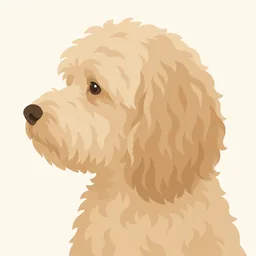
 Australian Labradoodle
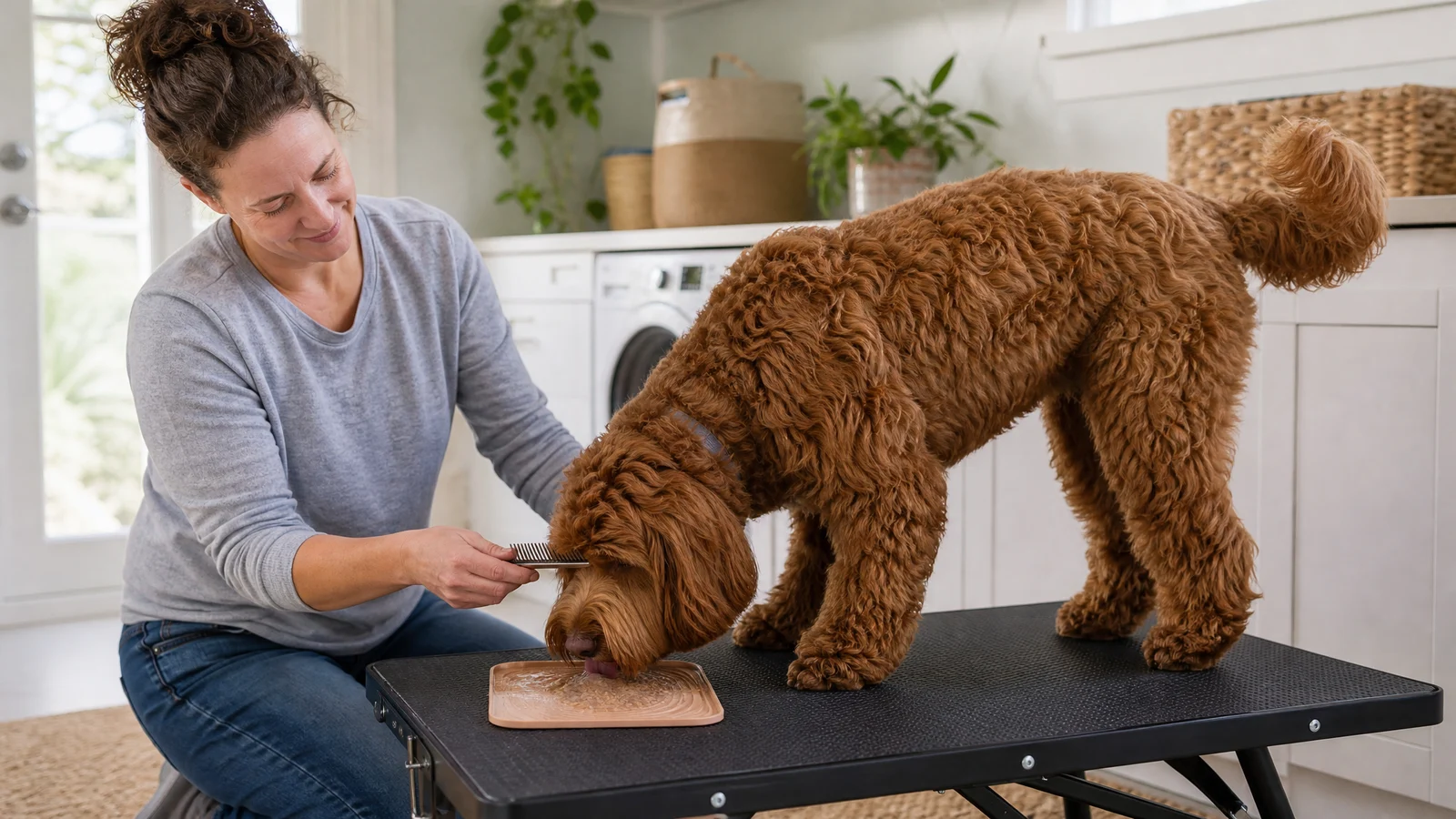
A wiggly Australian Labradoodle can learn to accept face and mustache grooming. Keep touch sessions brief and repeat them daily, rewarding every calm moment with a treat. Begin with just your hands, bring in tools in tiny steps, and end each session before your dog loses interest or tenses up.
The coat is the reason. A Poodle parent may bring dense, curly hair that barely sheds, so loose hair stays in the coat and knots instead of falling out, and the ears, face and mustache go first. Add the playfulness of both parent breeds, and the comb looks like a toy and the whole process like a wrestling match.
In this article, we'll go through where grooming fits into your day, the spot and treats that make it predictable, how to read a wiggling puppy, and the handling steps that lead to combs, clippers and a first mustache trim.
Why Grooming Fits Into Your Household Routine
Low shedding is not low maintenance, which most families learn around the time the ears turn to felt. The Poodle parent rates a 4 on a grooming scale where 5 means daily, the Labrador parent a 2, and an Australian Labradoodle can land anywhere between them. Hair that does not shed has to go somewhere, and it goes into knots.
Mats also keep a pattern. They rarely spread evenly and collect in the same few places: ears, face, tail, belly, rump, and the chest or armpits where a harness rubs. A quick daily check of those spots beats brushing the whole dog on Sunday, so tie it to something you already do, such as unclipping the harness after the walk and running your fingers through the ears and mustache while the dog eats.
Even diligent brushing does not always win. Fine, curly or changing coats can tangle within hours around the ears, and some owners see heavy matting about two months after a groom, which is how a dog ends up clipped shorter than anyone planned. Rough play and wet, mouthed ears tangle quickly too, so comb the ears after play.
Owners describe a rhythm that holds up:
- Daily, a fingers-only check of the ears, face, mustache and harness spots, with a comb through anything that feels thick.
- Every other day to weekly, a fuller comb-through, which is the range owners report for home brushing.
- Every 5–6 weeks to every 10 weeks, a professional groom, since owners who stretched the gap to 8 weeks or six months report severe matting.
- Many owners keep the body clipped short, sometimes with a fuller head, and need very little brushing between grooms, which leaves the face as the part you actually handle.
A dog who will not tolerate a comb on the head ends up shaved, so calm handling is the real grooming skill here.
Setting Up a Grooming Spot Your Australian Labradoodle Trusts
Pick one place and use it every time. A non-slip surface matters because a skidding puppy panics, and many owners find that a raised surface plus a cue word makes brushing easier to accept, since the dog learns that this spot means a short, predictable job. Do things in the same order each session too. Dogs forgive a lot, but not surprises involving a comb.
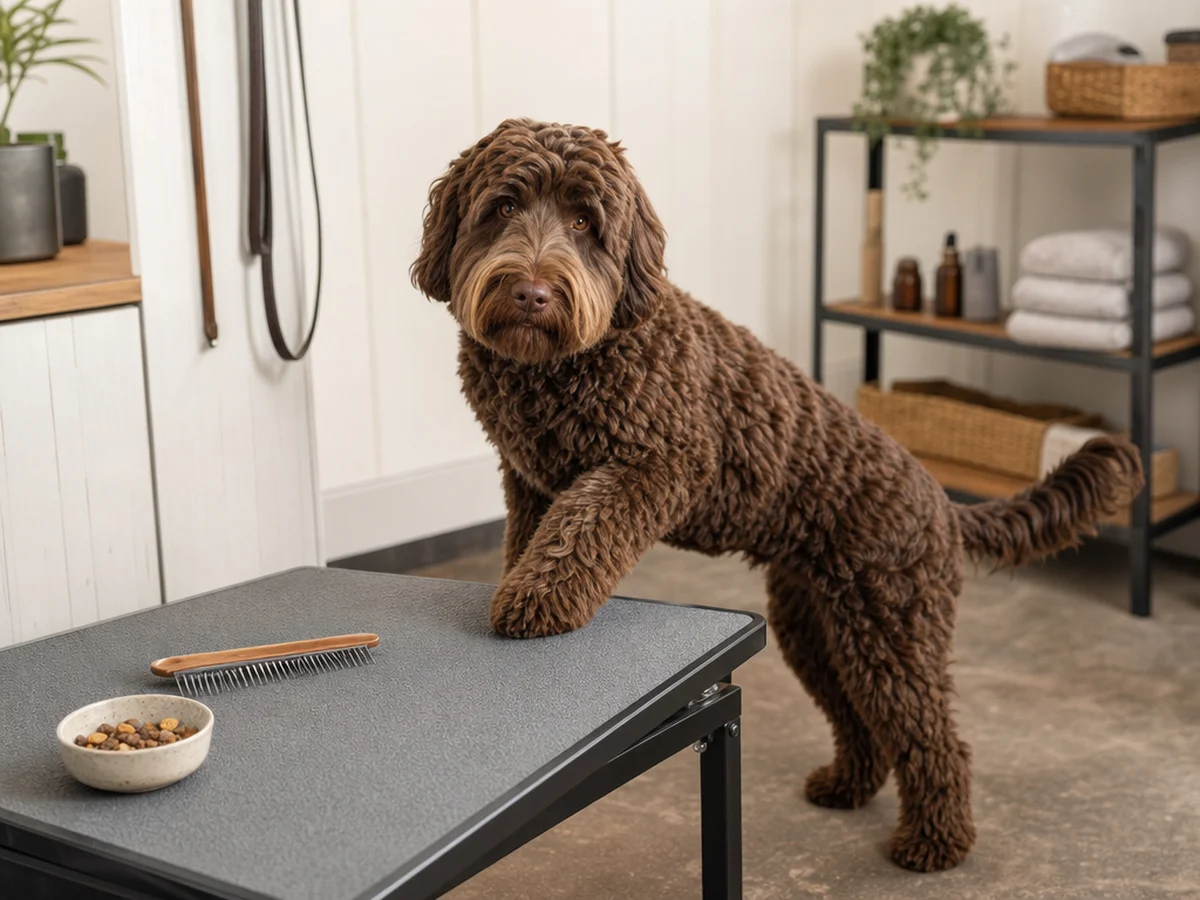
Timing counts more than people admit. The Labrador parent is described as exuberant and needing lots of exercise, and both the Poodle and Labrador parents rate 5 of 5 for playfulness, so a dog with spare energy treats grooming as an invitation to party. Take the edge off with a walk or play first, then groom while the dog is pleasantly tired rather than wound up.
Gather everything before you call the dog, because a puppy who watches you hunt for the comb will invent a game. Common advice hands every curly coat a slicker brush, but many owners find a metal comb works better. Here is what to have within reach:
- Small, soft treats that are swallowed fast, because a dog crunching a biscuit is not learning anything about the comb.
- A sticky lick mat with a dog-safe spread, which owners use to keep a busy mouth off your sleeve, or simply one treat per stroke.
- A metal comb as your main tool, since it reaches the skin, some dogs dislike the slicker, and a comb run through the coat shows whether it is really free of tangles.
- A slicker or pin brush for the body, only if your dog accepts it, because owners match tools to the area and the thin, curly hair on the head often wants something different.
Same spot, same order, same ending, and the dog stops having to guess.
Reading a Wiggly Puppy's Body Language During Grooming
Not every wiggle is a complaint. A dog with Poodle and Labrador playfulness behind them can squirm because grooming is the most interesting event in the house, while another dog squirms because they want out. The fixes differ, so learn to tell them apart before you pick up anything with blades.
Owners report the less happy end of the range too: dogs who run off, jump away, mouth, nip or bite when brushed, and some who growl at family members. Feet are a common sore spot for dogs who dislike being handled. Here is a way to read what you see:
| What you see | What it usually means | What to do |
|---|---|---|
| Loose, bouncy body, play bow, grabbing at the comb | Grooming looks like a game | Go still, wait for calm, reward it, then continue |
| Mouthing your hand during strokes | Excess energy or a bored mouth | Offer a lick mat or a treat per stroke, and stop play if it continues |
| Stiffening, freezing, head turned away | Discomfort or worry | Lighter touch and a smaller step next time |
| Running off or jumping away | Step too big or session too long | End the session and shorten the next one |
| Growling or snapping | A real objection | Stop at once, drop back well below that step |
Playful signals earn a pause, not a scolding. Stressed signals earn a shorter session and an easier step. A growl is information, so honor it, and if the objection is new, mention it at your next regular vet visit, since a sore ear or irritated skin can make a gentle dog suddenly dislike being touched.
Teaching Head and Ear Handling in Tiny Steps
We have trained this breed for many years, and handling is where we start, long before any comb appears. The goal is a dog who stays loose while your hands wander over the muzzle, ears and forehead. Dogs learning to accept touch tend to dislike the face and paws, and a hand reaching over the head is worse, so begin on the chest or shoulder.
Gentle handling suits this cross. The Cocker Spaniel parent is described as smart, happy and gentle, and the Poodle parent as extremely intelligent and easily trained, so a cross may well inherit a dog who learns fast and gains nothing from heavy-handedness.
Starting With a Puppy
Touch for a second, say your marker word, then give a treat. Approach from the side, never from above. Move along a slow line: shoulder, neck, cheek, under the chin, a cupped hand around the muzzle, fingers through the mustache, a gentle hold of the ear flap, then a stroke over the forehead. One touch, one marker, one treat, and a couple of minutes is plenty.
Puppies will leave, and they should be allowed to. A dog who knows they can walk away learns that staying is a choice, and they start making it faster than you would expect. If they pull away, the step was too big, so return to the last spot they enjoyed.
Retraining an Older Dog
An adult who already dislikes head handling needs the same line with smaller steps and better treats. Start further from the face than seems necessary. If a salon is too much for an anxious adult for now, keep up gentle combing at home while handling tolerance grows. That is a sensible bridge, and it keeps mats from taking hold in the meantime.
You are ready for the comb when your dog does all of this.
First, they stay loose through a cupped hand on the muzzle, with a soft face and no stiffening. Next, they let you run fingers through the mustache and lift an ear flap without turning away. Throughout, they look to you for the next treat rather than leaving or mouthing your hand.
Boring touch, repeated happily, makes everything after it possible.
Introducing Grooming Scissors, Combs and Clippers Without Fear
Tools go in the way hands do, only slower, moving from sight and sound to touch. The approach borrows from the muzzle training approach, where the item sits on the floor with treats in and around it before it goes near a face. A comb is hardly a muzzle, but a playful dog will still grab it, paw it or play bow at it, so the slow version pays off. Stay on each step until the dog is relaxed:
- Set the comb down near the treats and reward looking or sniffing, then pick it up and put it away.
- Rest the back of the comb against the shoulder and chest, mark, and treat.
- Touch the teeth to the coat, take one gentle stroke, and give one treat per stroke.
- Move to the mustache tips and the edges of the ears with single strokes.
- Hold the hair above any tangle with your fingers and comb from the tips toward the skin, so the comb never tugs at the root.
- Comb a little deeper until the teeth reach the skin, because that is the only way to confirm the area is clear.
Tangles are where this stage gets honest. If the comb catches, stop, hold the hair at the base, work the tip out first, and leave a tight knot to a groomer. Pulling through a mat teaches a gentle dog that the comb hurts. Use shorter strokes and more treats on the head, where many dogs are touchy and the hair can be fine and curly.
Machines get their own track. Many owners start early with noise and touch, running clippers across the room while the dog eats and resting closed scissors near the head. Clippers feel strange at first, so give your dog plenty of gradual exposure, and remember that just pretending to trim, followed by a treat, is a legitimate step, not a wasted afternoon. See it, hear it, feel it, and only then cut.
Trimming the Australian Labradoodle Mustache and Eye Area
This is the fussiest corner of the dog, and the one where mats start earliest. A mustache gets wet at every water bowl, catches food and gets mouthed in play, and the finer and curlier the coat, the faster it felts. The Cocker parent is described as having a soft, appealing expression, and a cross may inherit it, which is easier to enjoy when the hair is not in the eyes.
Work with the comb between your scissors and the skin. Lift a few hairs on the comb, snip only what stands above the teeth, and keep the tips pointing away from the eye. Take a few hairs at a time. The moment the dog turns, stiffens or starts wiggling, put the scissors down, take your hands away and reward the stillness you get back.
Take the first trims in this order, one area per session:
- The mustache tips, where long hair collects food and water and mats first.
- A little off the top of the head, lifting the hair on the comb and snipping the ends only.
- The ear fringe, with the ear flap supported in your free hand.
- Hair across the eyes, last, and only after the dog has stayed relaxed through every earlier job, with the hair held well away from the skin.
A dog who cannot hold still near the eyes belongs with a professional for that part. Use reward-based training to get the dog used to grooming gear, and start groomer visits as soon as the dog is fully vaccinated. Some owners book quick early visits, such as a nail trim, so the salon is familiar before the first full groom. Groomers tend to love a puppy who already knows hands and a comb.
This is general information, not medical advice. Check with your veterinarian before any medicine or diet change, and keep up regular vet visits.
A Calm Australian Labradoodle Face Over the Next Two Weeks
Common advice says to block out an afternoon and do the whole face in one go. With a playful, people-loving dog, that is how you teach them to dread the afternoon. Use short daily sessions instead, each ending while the dog still wants more, and keep the daily finger check of ears, face and mustache going whatever else is on the schedule. Here is how the two weeks run:
| When | Daily time | Goal |
|---|---|---|
| First half of week one | A couple of minutes | Touch on the chest, shoulder, cheeks and chin, with a marker word and a treat each time |
| Second half of week one | A couple of minutes | Cupped hand on the muzzle, fingers through the mustache, an ear flap held, one stroke over the forehead |
| First half of week two | A few minutes | Comb on the floor, then on the shoulder, then single strokes at the mustache tips and ear edges |
| Second half of week two | A few minutes | Clippers running across the room, closed scissors near the head, then a few hairs snipped from a mustache tip, and stop there |
If a session goes badly, drop back a step or two, not to the beginning, and shorten it. Wiggles return after growth spurts, skipped days or a coat that suddenly feels different. That is normal, and it is your cue to make the step smaller, not to push harder.
Eager, people-loving parents give this cross a head start, but what they need from you is small steps, not pressure. Calm face handling is built in minutes a day, not forced in one session, and it pays back at every groom, whether you do it at home or a groomer does. Book the next professional groom before the coat forces the issue, and keep the treats ready.
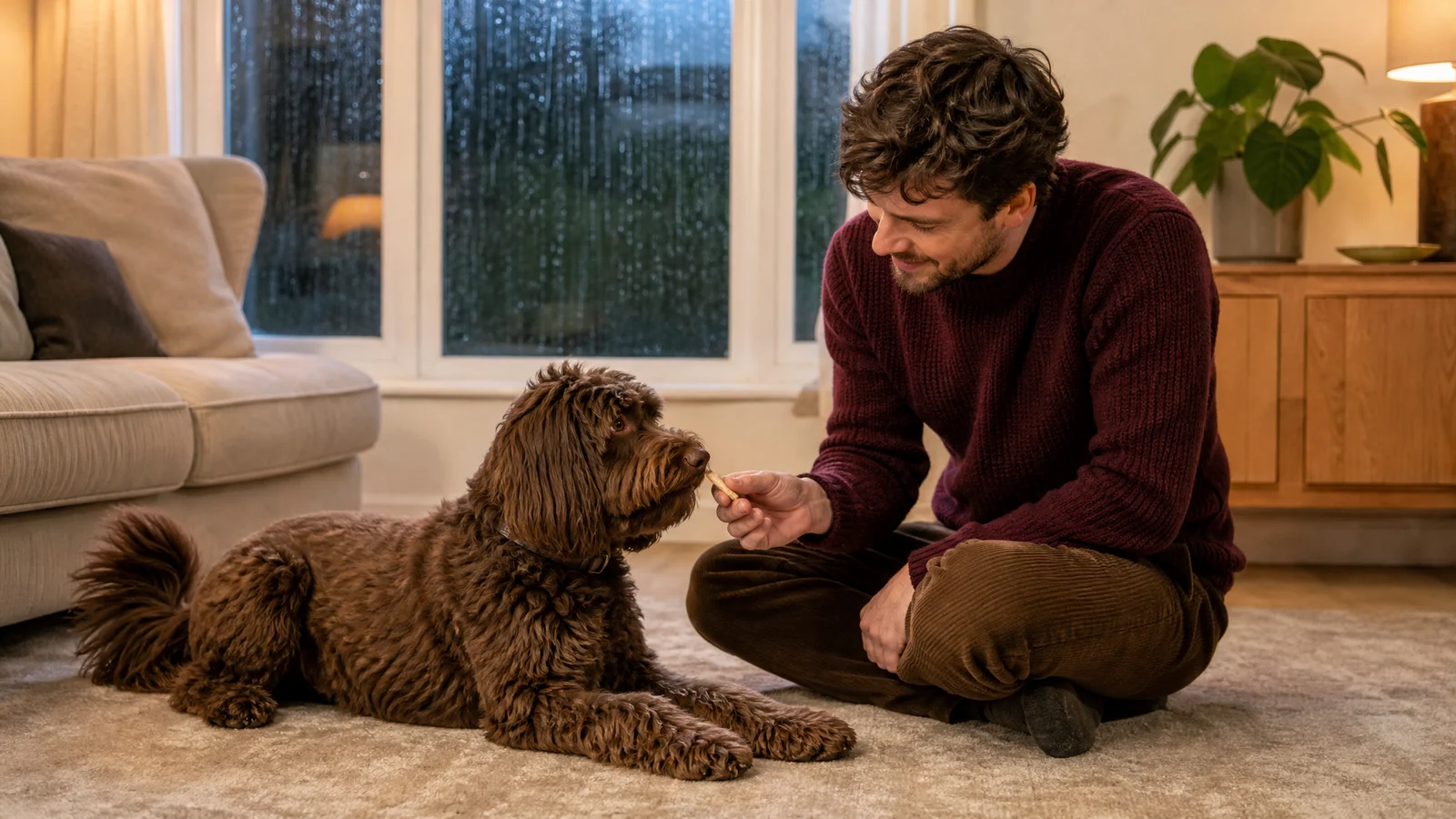 BehaviorAustralian Labradoodle: Sound sensitivity
 BehaviorTeaching an Australian Labradoodle a Four-Paws-Down Hello
 BehaviorBored Australian Labradoodle: Chewing, Digging and Zoomies