 Australian Labradoodle
The usual advice says a daily walk and a few toys cover an Australian Labradoodle. Yet a dog can finish that routine and still shred a sofa cushion, dig a trench along the fence and run laps around the living room every night.
This matters for the breed because their parent breeds sit at or near the top of the scale for energy, play and the need for a job, so drive that goes unspent tends to come out as chewing, digging and sprinting indoors.
Handled well, the same drive makes a dog who learns fast and settles happily beside you. Read on for what each sign looks and sounds like, what usually causes it, and a daily plan of rewarded chews, puzzles and short training that gives the drive somewhere better to go.
Chewing Furniture, Shoes and Drywall as a Behavior Problem
Chewed drywall at puppy height, stuffing across the rug and one shoe missing its laces are the usual calling cards. Each one tells you something about when and why the mouth went to work.
Three causes overlap. Puppies chew while their teeth are coming in, because the pressure eases the ache. Dogs of any age chew to explore and to burn off boredom, and a dog with nothing approved to chew will pick from whatever is in reach. Dogs need to chew, play and scavenge, and those without enough of it find their own outlets, which show up as unwanted behavior.
Retriever Roots and Mouthing
The Labrador parent is described as high-spirited and active, and Labradors are retrievers, so carrying and mouthing things may come naturally to a cross. Some Australian Labradoodles inherit less of this, so judge by your own dog.
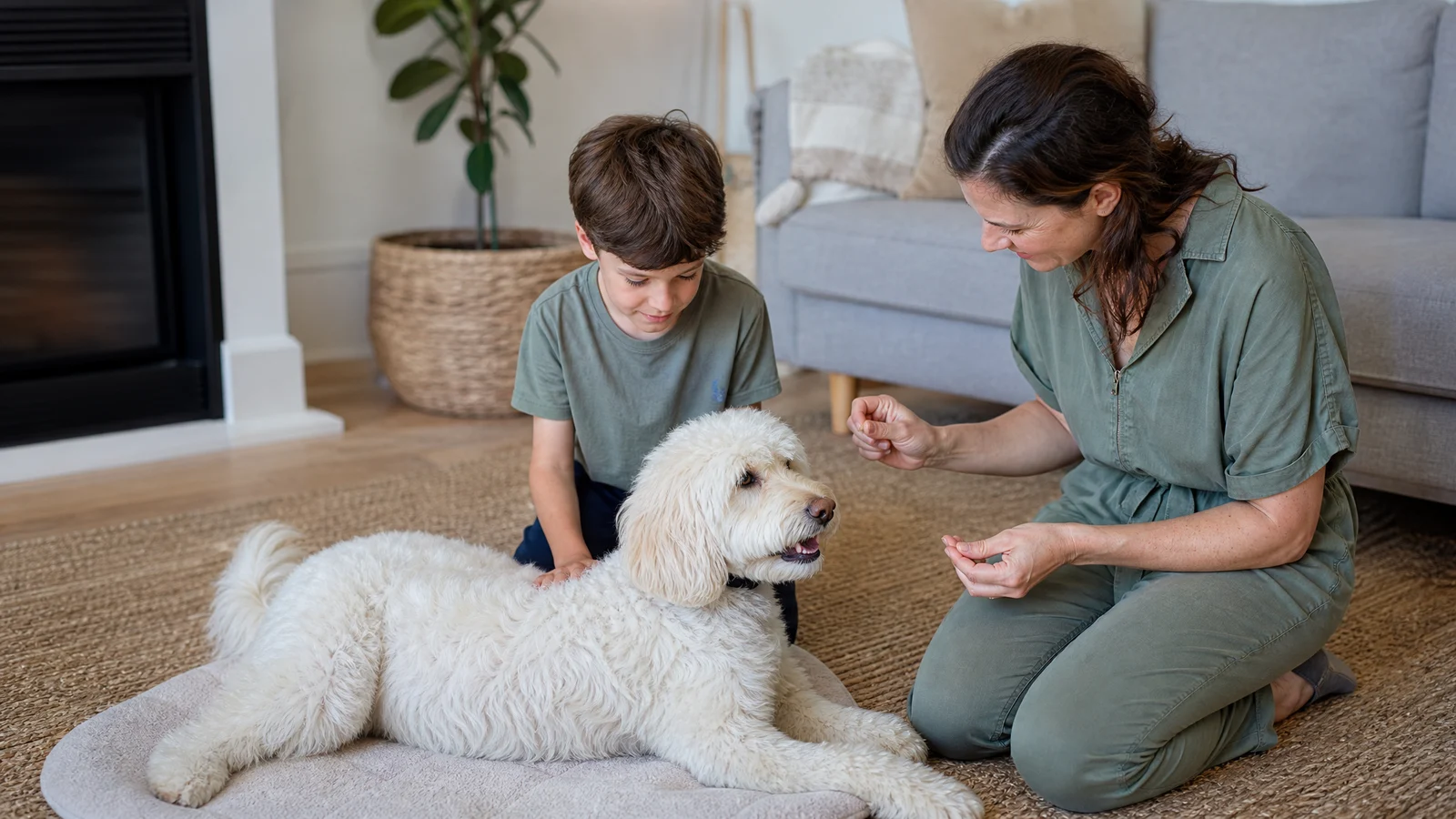
Fix the cause at both ends. Hand over a rewarded chew at the hour trouble usually starts, and sit close enough to mark calm chewing with a quiet word and a treat. That marker is a brief signal, yes for example, which tells your dog the exact moment they got it right.
Management covers the rest. Use a gate or pen to keep the dog in a room where cushions and baseboards are out of reach, and put shoes and remotes up high.
If they grab something off limits, calmly trade a chew for the item instead of chasing. Our guide to teaching drop it and trade shows the full handoff.
Digging Behavior Problems in Yards and Sofa Cushions
A trench along the fence, a crater beside the patio and a sofa cushion pawed into a pile are all digging, but they do not always share a cause. Sorting out the cause tells you where to aim the fix.
Telling Boredom From Nesting and Scent-Seeking
Boredom digging happens when a dog is left outside with little to do, since soil is soft, always interesting and rewarding in itself. Scent-seeking digging clusters around spots with strong smells, because the nose is a major part of how dogs explore.
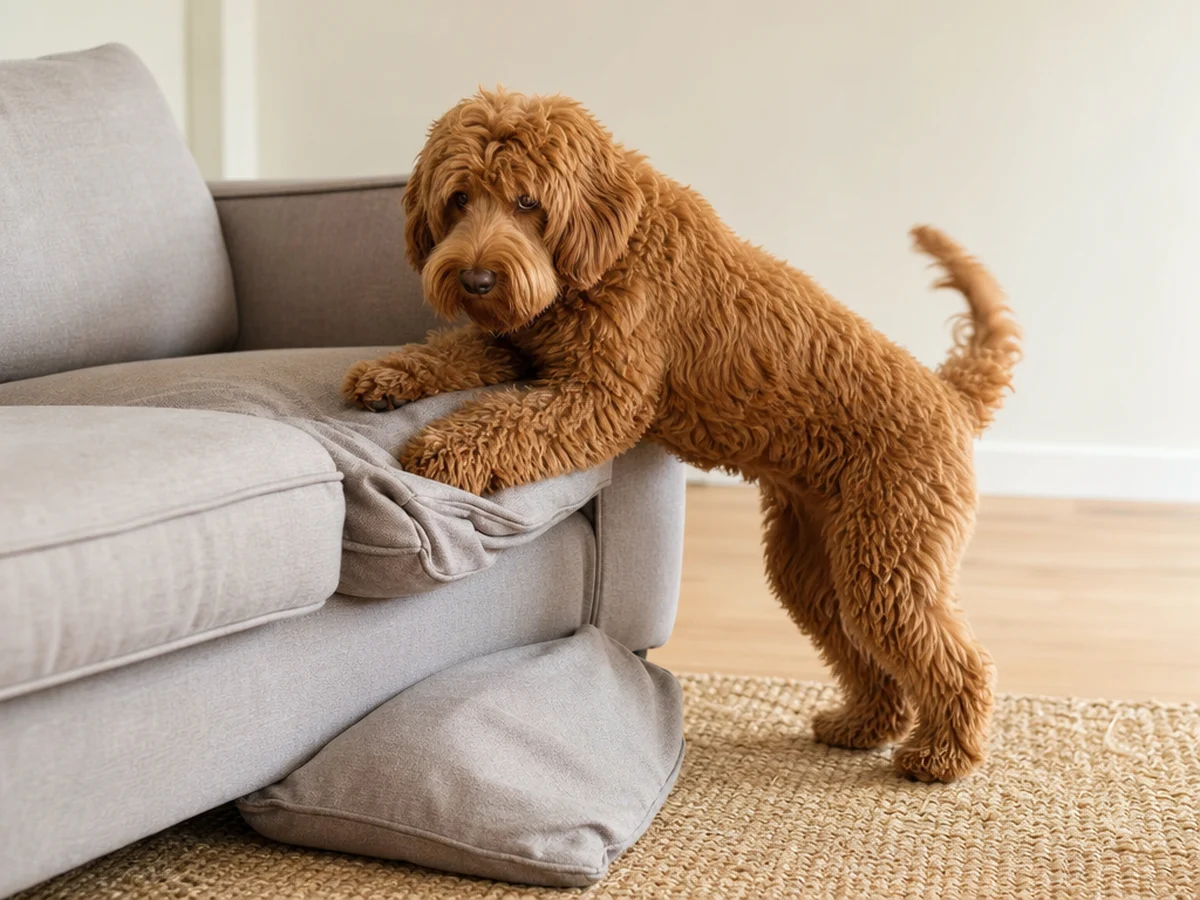
Nesting appears on beds and cushions. The dog scratches and circles to arrange a spot before lying down.
It is often ordinary behavior. A dog who does it constantly, though, may be short on other things to do.
Watch the timing. Digging that begins soon after you go inside points to boredom, digging at one smelly spot points to scent, and scratching at bedding just before sleep points to nesting.
Build an Approved Dig Spot
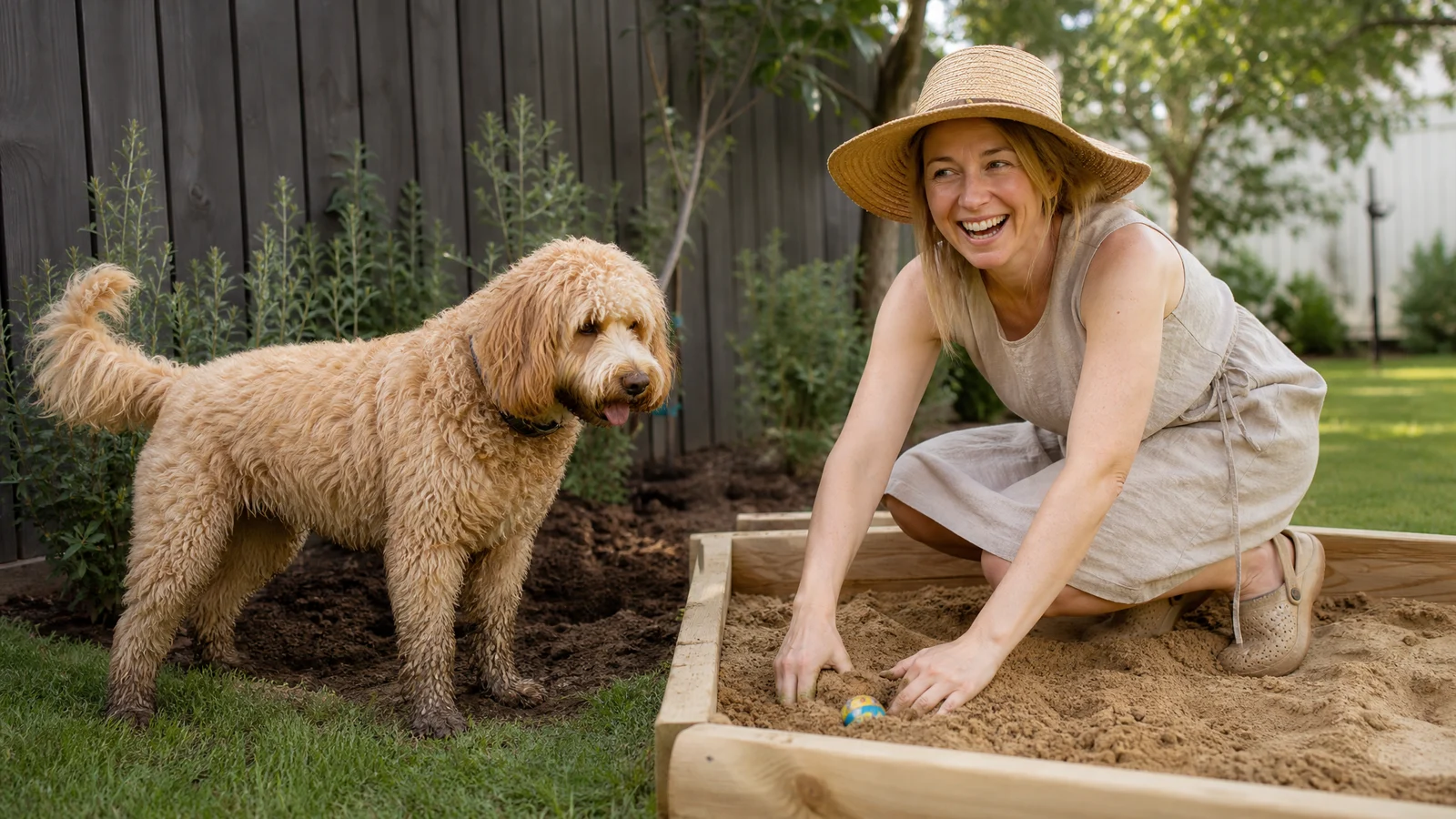
Give digging a legal home. Mark off one corner you can see from the house with a border or sturdy box, loosen the soil or fill it with sand, and bury a few treats or a favorite toy just under the surface. Show the dog the spot, praise the first scoop and keep hiding small prizes for several days so it stays the best dirt in the yard.
If they start a hole elsewhere, call them away cheerfully, walk them to the spot and reward them there. Fill old holes and block favorite places with low fencing or planters, and stay outside until the new habit is firm.
Then rotate the activity so the dig spot is one option among several. One day offer a stuffed chew, the next scent games and puzzle feeders, and the day after a short training game. For cushion digging, set out a washable bed in a quiet spot and reward the moment they lie down.
Australian Labradoodle Zoomies and Behavior Problems Indoors
The pattern is familiar: the dog bolts down the hall at dusk, skids around the sofa and comes back for another lap with a wide, open mouth. Zoomies are sudden bursts of sprinting, and they often come from energy that has been stored up for hours.
Two things usually feed them. Pent-up energy is the first, and both the Labrador and the Poodle rate 5 of 5 for playfulness, the non-stop end of the scale.
Overexcitement is the second cause. A busy household, a family member coming home or a long stretch of stillness can tip an eager dog over the edge at once.
Telling the two versions apart helps you choose the response. Watch what happens immediately before the zoomies begin.
- Playful zoomies look loose and bouncy, with play bows and wide circles, and they fade within moments and leave a panting dog who is glad to lie down.
- Overtired zoomies look tighter and more frantic, with grabbing at clothes, ignored cues and no ability to settle even when nothing is happening.
- Timing is a clue, since playful bursts often follow a nap or a reunion, while the frantic kind tends to arrive late in a busy day.
For playful bursts, clear breakables, open a safe path and let them run. Chasing the dog usually extends the game, so call them to you from a distance and reward arrival. Better still, schedule a short game before the usual hour, such as tossing treats down the hall for a scent hunt or a quick round of known cues, so the burst has somewhere to go.
For the overtired version, lower the stimulation. Move to a quiet, dim room, offer a chew and reward any sign of settling, since a dog in that state often cannot wind down without help.
If children are around, laps at full speed can knock small people over. Our Australian Labradoodle calm-play guide shows how to channel the energy safely.
Nudging, Shadowing and Demands From a Bored Australian Labradoodle
A cold nose pushed under your hand while you work, a toy dropped in your lap every few minutes and a dog stationed in each doorway you walk through are the quieter signs. None of them damages anything, which is why they are so easy to miss.
These behaviors usually mean the dog wants something to do and sees you as the best source of it. Poodles are very people-oriented and Labradors are described as devoted and happiest when included in family activities, so a cross may lean on you more than other dogs would. Shadowing on its own can simply be devotion, but pestering late in the day often points to an unmet need.
Why Attention Backfires
The catch is that attention is itself a reward. If you pat the nose, throw the toy or talk to the dog every time, the nagging works and tends to come back more often.
Answer the request on your terms instead. Wait for a pause, ask for a simple cue such as sit and reward it, or take the dropped toy, play a short game and finish with a chew or a settle on a mat. Reward the quiet moments as well, since calm near you is the behavior you want more of.
Demand barking follows the same logic. A bored dog may bark more, and the Poodle parent rates 4 of 5 for barking, so meet the quiet moments with attention and give scent or puzzle work before the usual hour. Our guide to Australian Labradoodle barking at the door covers the alert kind.
What Boredom Behavior Problems Share Underneath
Chewing, digging, zoomies and nudging look unrelated, but they tend to appear at the same hours and in the same rooms. That pattern points back to one gap.
The Labrador parent rates 5 of 5 for energy. The Poodle parent reaches the ceiling on a different scale, mental stimulation, where 5 means "Needs a Job or Activity." The Labrador rates 4 of 5 there too, so a cross may need both a physical outlet and a mental one.
A Labrador Retriever who gets too little exercise may have pent-up energy. Hyperactive or destructive behavior can become the outlet.
An Australian Labradoodle is a cross, so they may share that tendency. Nobody can promise it for a single dog.
Training this breed is what we specialize in, and we plan every dog's day as if they inherited both drives. That assumption costs little when it is wrong and saves furniture when it is right.
Exercise tires the body, while enrichment, meaning activities that let a dog chew, sniff, search and solve problems, spends the other half. Both parents also rate 5 of 5 for trainability, which is the encouraging part, since the drive has a ready channel in work you can reward.
Daily Chew, Puzzle and Training Plan for Behavior Problems
A stuffed chew handed over in the late afternoon does more than a longer walk after the cushion is already in pieces. The plan below puts small, rewarded jobs ahead of the hours when trouble usually starts, so adjust the timing to your household.
- In the morning, take a walk where the dog may sniff, then serve breakfast, or part of it, in a puzzle feeder or scattered for a scent game so the meal itself becomes work.
- At midday, run a few minutes of training on cues the dog already knows, add one small new skill and stop while they are still keen, rewarding with treats, praise or a quick game.
- Before the usual trouble hour, hand over a safe chew or stuffed puzzle and quietly mark and reward calm chewing so that settling with it pays well.
- In the evening, offer a short play session or another scent game, then let the pace drop so the dog is winding down instead of winding up.
- Through the whole day, reward rest on a mat or in a crate or pen, because a dog with this much drive often has to learn that doing nothing is also worth a treat.
Training in the daily routine keeps the mind active, reinforces cues, prevents boredom and builds the bond between you. Keep sessions fun, positive and consistent in what you ask, since Poodles are described as quick to please when training stays upbeat.
Adjusting the Plan for Age
Puppies chew more because they are teething, and they tire quickly, so give them more chews and shorter sessions with plenty of naps between. Adolescents tend to have the most energy and the least patience, so they often need the most structure and the most frequent small jobs.
Adults can handle longer puzzles and training blocks, while older dogs may prefer gentler scent games and slower walks. Whatever the age, watch for sudden changes in energy or chewing.
This is general information, not veterinary advice. Chews and stuffed puzzles add calories and not every chew suits every dog, so ask your veterinarian which ones to use and how much of the daily food to put in them. Regular vet visits matter too, because a sudden change in energy, chewing or restlessness is worth having checked.
One Rewarded Chew for Your Australian Labradoodle Today
The Labrador and Poodle parents sit at or near the top of the scale for energy and for needing a job, and an Australian Labradoodle may inherit both. A dog without an outlet for either will find work of their own in your cushions, your flower beds and your evenings. Walks matter, but they are only part of the answer, and the missing part is something to do with the mouth, the nose and the mind.
So the one thing to do today is to pick the hour when trouble usually starts, hand your dog a safe chew or a stuffed puzzle just before it, then sit nearby and reward calm chewing with a quiet word and a treat. It is the cheapest change in this article, it targets the most destructive habit right away, and it uses the eager-to-please nature that makes this cross so rewarding to live with. Repeat it at the same hour tomorrow, and let the plan grow from there.
 Puppy trainingFrom Pup to Trained Australian Labradoodle by Age Two
 Training basicsBuilding Recall for an Australian Labradoodle on the Trail
 BehaviorCalm Play Between an Australian Labradoodle and Children