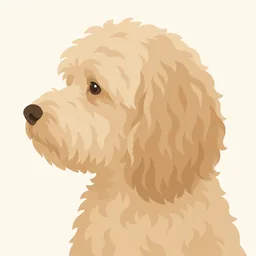
 Australian Labradoodle
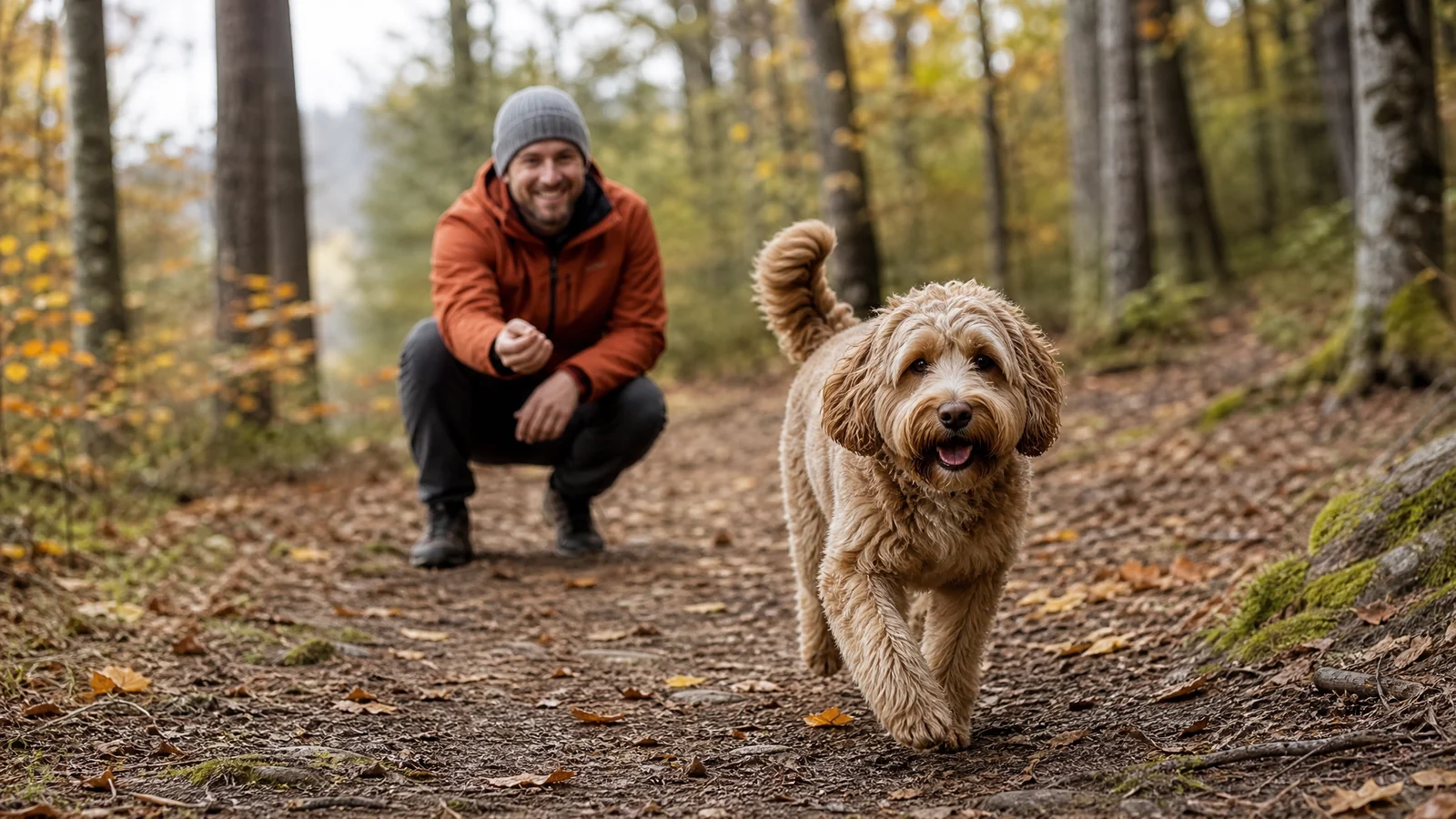
The most common trail mistake sounds harmless: unclipping a friendly, bouncy dog because they always come back. Then a hiker in a bright jacket appears, or a rich scent drifts across the path, and your Australian Labradoodle is far down the trail with a high tail and no interest in your voice.
The fix is to earn off-leash trust in stages, starting before your dog even arrives. The Labrador and Poodle parents both rate 5 of 5 for openness to strangers, the Labrador rates 5 of 5 for energy, and the spaniel, retriever and Poodle lines may add a nose that tugs a dog off the path. We have spent many years working with this breed's behavior, and the order below is the one we trust.
This article looks at recall as four stages of your life with the dog, so you can pick a cue and rewards before homecoming, build the habit indoors and on a long line, and decide when any trail is safe without one.
Recall Gear and Rewards
Set the plan before your dog arrives, because a recall cue is only as strong as the habits around it. Settling the word, the rewards, the gear and the family rules now means the first day goes to training instead of guesswork.
Cue and Rewards
Choose a short word or a whistle pattern that will only ever mean come straight back to you. Avoid your dog's name and any phrase your family already says all day. A whistle carries farther on a windy ridge and sounds identical no matter who blows it, which helps when several people share the dog.
Next, rank your rewards. The Labrador and Poodle parents both score 5 of 5 for trainability, but eager to please does not outrank a fresh animal scent, so your best reward has to beat the forest. Soft, smelly morsels usually beat dry biscuits. Both parents also score 5 of 5 for playfulness, so a tug toy kept only for recall can pay just as well.
Guard your top reward. If it also shows up at breakfast or for polite sits, it stops being special, and a quick-minded dog notices the change.
Gear
Buy a lightweight long training line. It gives your dog room to explore while you retain a physical safety connection. Choose one that wipes clean easily, since the Labrador and Poodle parents are both water lovers and a muddy swim is likely.
Pair the line with a snug, well-fitted harness so a sudden dash pulls on the chest and never the neck. Add a treat pouch for your hip and a short leash for crowded stretches.
Household Agreement
Every person who walks the dog is training the same dog. Write these rules down and put them where everyone sees them before the first day.
- Everyone uses the same cue, says it a single time, and never uses it to end the fun, start a bath or begin nail trims.
- Every arrival is paid, even a slow one, and the top treat and recall toy come out for recall only.
- Nobody repeats the cue while the dog is busy, because repetition teaches a clever dog that the first call is optional.
- Nobody unclips the line on a trail, however well recall goes at home, until the plan says the time has come.
Our reward-based Australian Labradoodle training plan covers the wider habits around these rules. If your dog turns out to be a soft, sensitive type, the advice on gentle training will suit that temperament better.
Australian Labradoodle Recall at Home
Start at home while a young dog naturally trails after the people they trust. Use that urge to teach the cue indoors and in the yard, with plenty of treats and brief sessions that stop before your dog tires of them.
The Name Game
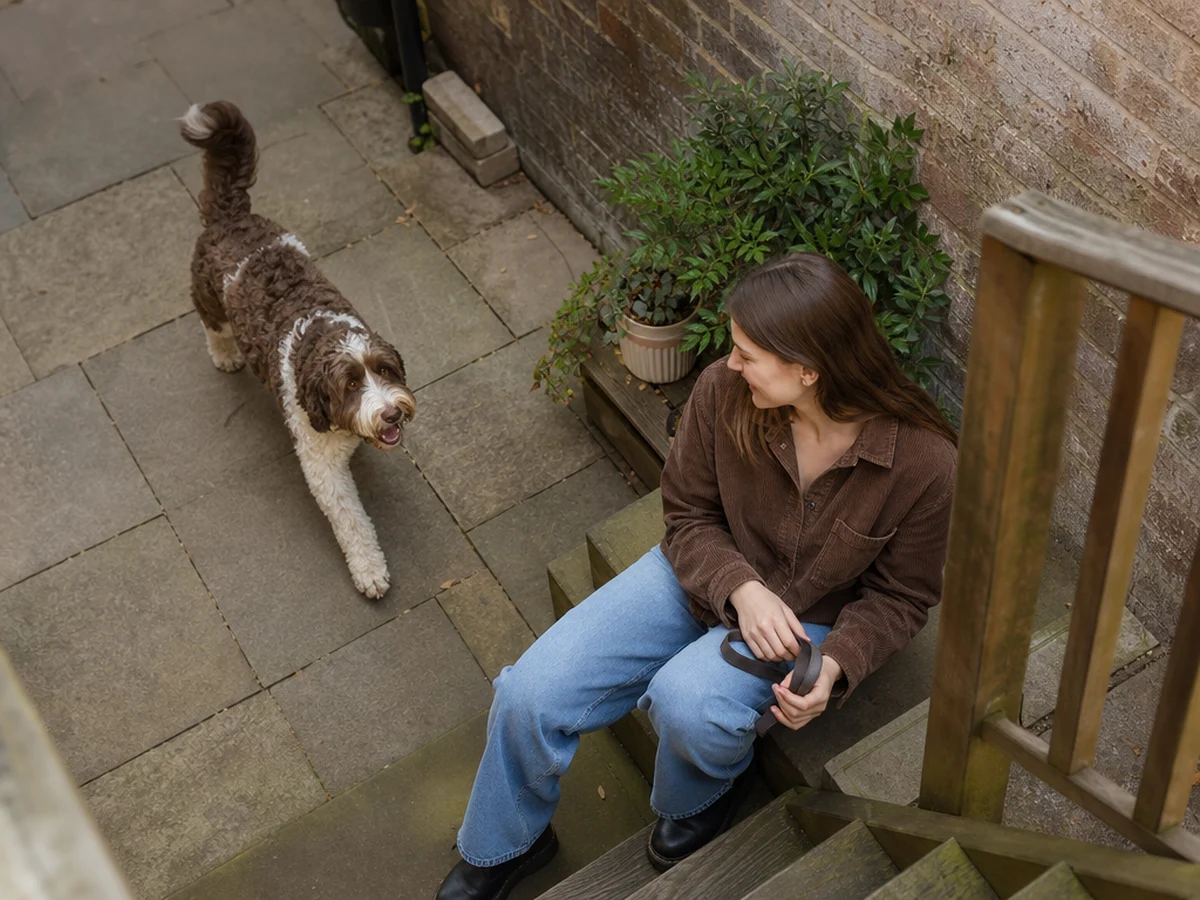
Say your dog's name once in a light, happy tone. As soon as they look at you, mark the moment with your marker word, then give them a treat. Repeat at random moments around the house until the name predicts something good.
Then add the cue. Stand a few steps away, say it once, and back up as your puppy moves toward you, because young dogs love chasing a retreating person. Mark the arrival, feed at your leg, and stretch the distance from room to room, keeping each new space easy before it gets harder.
Check-In Games
Whenever your dog glances at you or wanders over unasked, mark and pay without calling anything. Parents who both score 5 of 5 for openness to strangers produce a dog who looks outward all day unless looking back pays, so this game teaches that checking in is their own good idea.
As glances become frequent, make the game trickier. Turn quietly and walk the other way while your dog sniffs, or slip behind a tree, and pay generously when they find you.
Short Yard Practice
In a securely fenced yard, call your dog at different points in a session instead of only when it is time to go inside. Practicing recall throughout the walk prevents the lesson that coming back always ends the fun. After each arrival, pay and then release your dog to whatever they were enjoying.
If your dog does not come, walk over, show the treat, step back and try again from closer. Never let a call go unanswered while you stand still, because an ignored cue loses value fast.
Trail Distractions for an Australian Labradoodle
Move the long line onto real trails, where your dog meets strangers, scents and a growing streak of independence. Expect weaker recall than at home and treat early hikes as rehearsals, not tests.
Long-Line Trail Basics
Pick a quiet trail at an off-peak hour. A dog with top-of-the-scale energy often arrives wound up, so a few minutes of play beside the car helps them think before you set off. Then work through these steps in order.
- Clip the line to the harness and let it trail, or hold the end loosely, so your dog feels free.
- Call once while the line is slack and the distraction is mild, and mark the first step toward you.
- Pay at your hip with the top treat, adding several more in a row after an especially hard recall.
- Release your dog back to the smell they left, then repeat at a new spot.
The line is a safety net, not a steering wheel. According to Best Friends, it can lengthen to 20 to 30 feet as your dog's skills improve, but only lengthen it once your dog answers reliably at shorter distances. If they ignore you, walk toward them and try again from nearer.
Strangers on the Trail
Because the Labrador and Poodle parents both rate 5 of 5 for openness to strangers, many Australian Labradoodles treat every hiker like a long-lost friend. Call your dog in well before people reach you, pay, and hold the line as they pass. Then release your dog, so that passing people become a signal to check in and never a signal to run.
Greetings can come later, after a check-in and a sit, and only if the other person wants one. If your dog drags toward people, work on Australian Labradoodle loose-leash walking first.
Scent Pulls
Cocker Spaniels were bred to find birds in dense cover, Poodles have a history of truffle work, and Labradors long worked beside hunters, so your cross may inherit a nose that tugs them off the path. Call before your dog's head drops. That early moment is far easier to win than the middle of a deep sniff.
Learn the look of a locked-on dog: a lowered head, a stiff tail, a fixed stare. When you see it, stop repeating the word, step away calmly, hold a treat at nose level and pay the moment they turn. Shorelines deserve the same caution, since water-loving parents make a lake as tempting as any scent.
Teenage Dips
Somewhere in adolescence, many dogs answer slowly or seem to stop hearing the cue entirely. Go back a step with a shorter line, easier ground, the top treat and an extra payout for every hard recall.
Pay every arrival, however slow, so coming back never costs your dog anything. This is usually a phase, and our look at Australian Labradoodle temperament shows what to expect from a smart, bouncy dog at this age.
The Off-Leash Recall Decision
Off-leash work asks whether freedom is ever reasonable, and the standard should be strict. Wait until your dog has perfect recall on leash before asking them to come off leash at all. For a friendly, energetic, scent-driven breed that bar protects everyone, so follow the trail's own rules and favor enclosed ground when you do test it.
Keep rewards valuable but unpredictable. Sometimes pay with a handful of treats, sometimes with tug, sometimes with a release to the best smell nearby, and never with nothing.
Keep the check-in games going on every outing, and meet other trail users the same way each time: call early, pay, hold the line as they pass, then release. Other dogs deserve a plan too, since the Labrador parent rates 5 of 5 for getting along with dogs while the Poodle rates 3 of 5, so your adult may greet every dog or be pickier. Regular vet visits keep your dog comfortable enough to run, jump and turn without hesitation.
When Trail Recall Needs Help
Judge recall across many outings, not one great afternoon. These two checklists show where you stand, starting with the signs recall is holding on trails.
- Your dog turns around mid-sniff after a single call, with no second request.
- They check in on their own, even when strangers or new scents are close.
- They arrive within touching distance, relaxed and happy, instead of dodging or circling out of reach.
- They answer on the long line in new places and past other dogs, hikers and food smells.
Some patterns call for a qualified trainer who works with treats and play. Ask early, before running off becomes a rehearsed habit that is harder to reshape.
- Your dog bolts repeatedly, even on a long line, after you have moved through each stage slowly.
- They ignore the cue in places where they used to answer.
- They chase or fixate on wildlife and cannot be called away, even when the animal is far off.
Until the first list is consistently true, your next step is simple: go back to the long line. An Australian Labradoodle brings high energy, a welcome for every stranger and a nose that may pull them off the path, which is exactly why trail recall is built in stages and never assumed.
Keep the cue protected, keep paying with rewards that beat the forest, and keep the line clipped on until your dog checks in without being asked. A dog who learns that coming back is the best part of every hike will keep choosing you, and that choice is what makes real freedom on the trail possible.
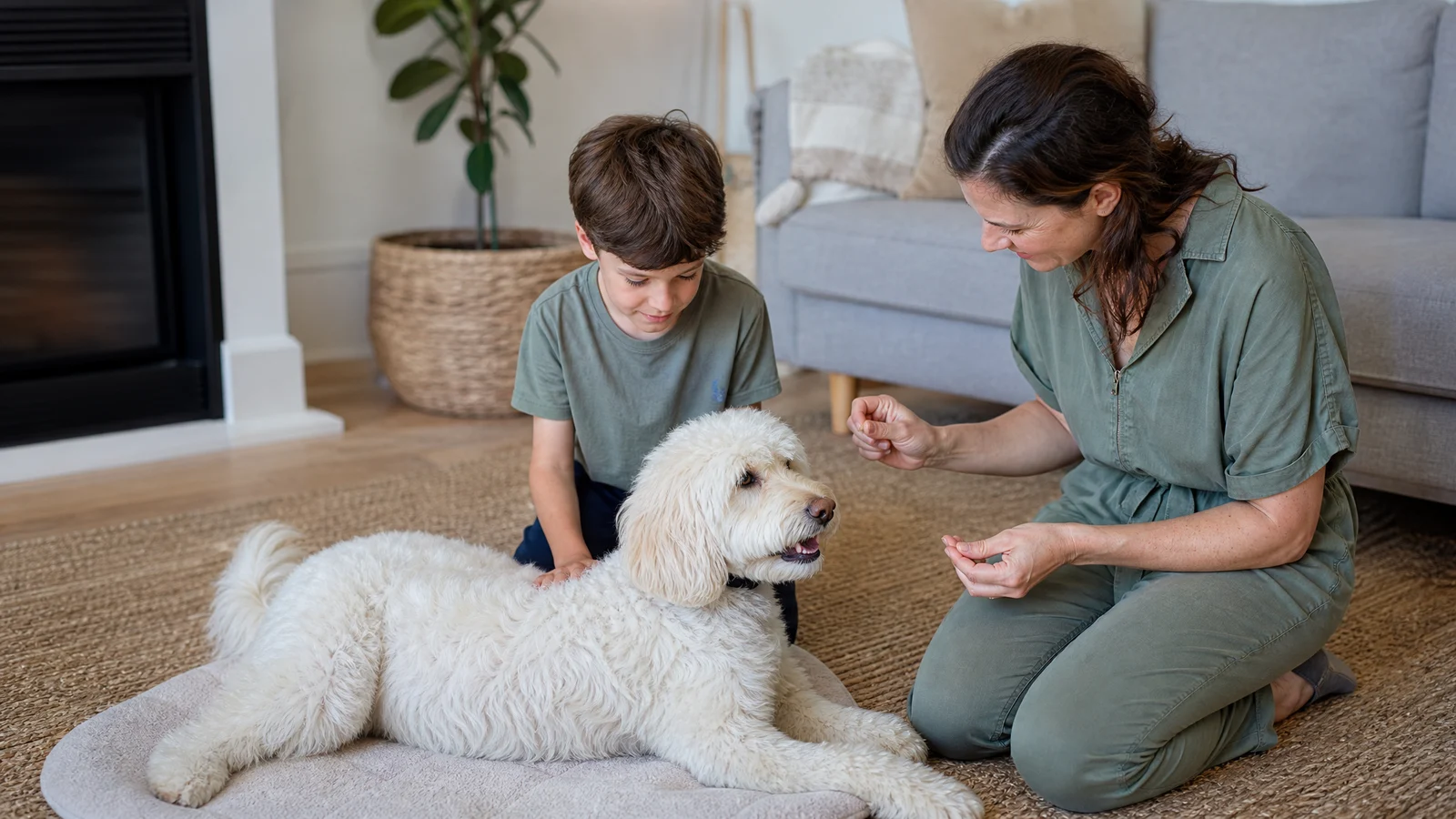 BehaviorCalm Play Between an Australian Labradoodle and Children
 BehaviorTeaching Drop It and Trade to an Australian Labradoodle
 BehaviorTeaching a Mini Australian Labradoodle Polite Dog Play