 Australian Labradoodle
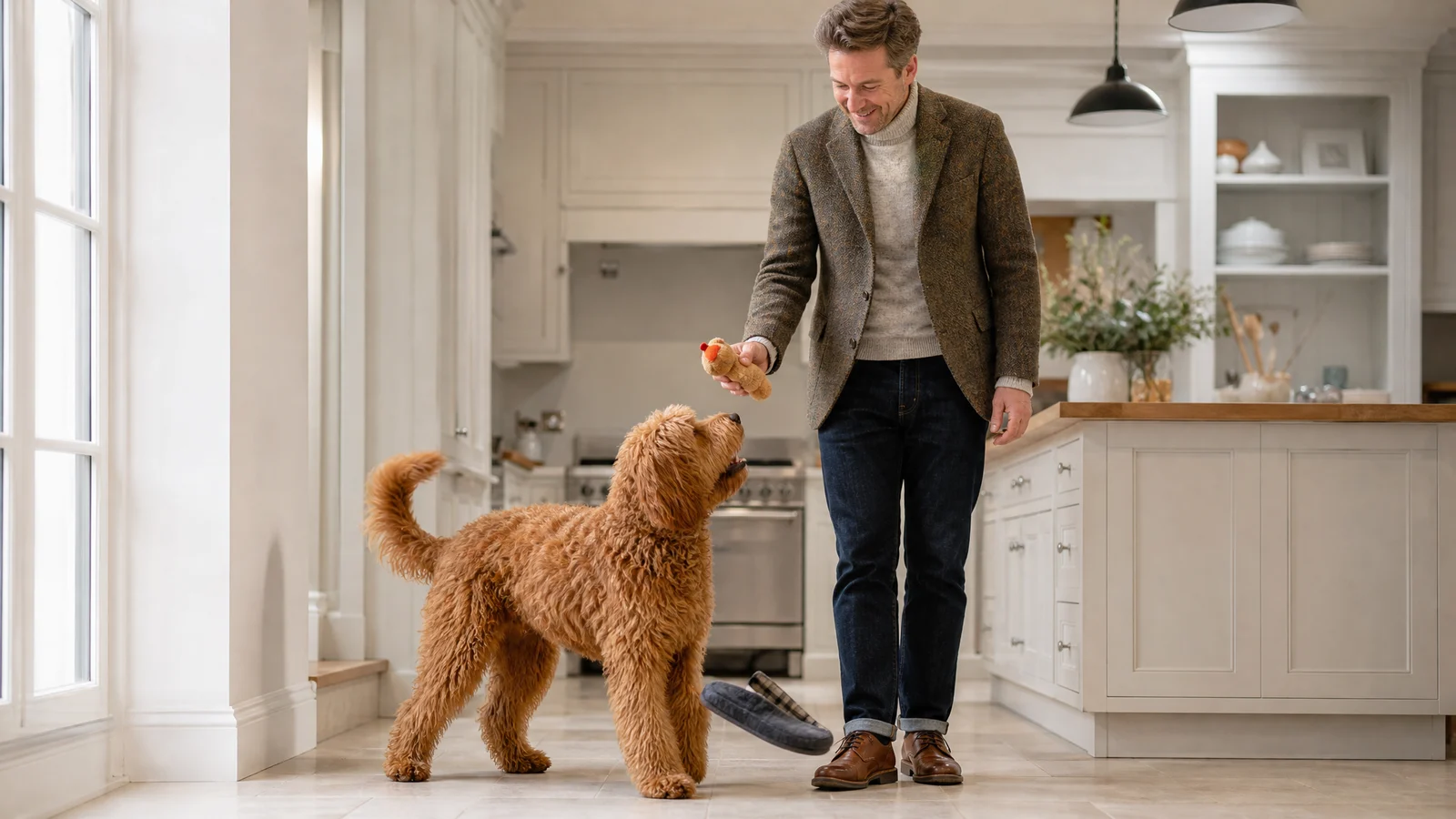
Your Australian Labradoodle trots into the room with a sock, a shoe or the TV remote held high, looking thrilled with themselves. You take one step toward them and they spin around and gallop off, prize and all.
Nothing is broken here. This is retriever wiring meeting a game of keep-away, and if you handle it badly it hardens into guarding or a swallowed sock. Handled well, it gives you a dog who carries things to you on purpose and hands them over happily.
In this article, we'll go through the retriever history behind the habit, how to teach drop it and trade with treats, and how to turn all that carrying into fetch and bring-it-here games. Our team focuses on the behavior and training of this breed, so every step reflects how they actually live at home.
Why Australian Labradoodles Carry Things
The sock makes more sense once you look at the family tree. The Labrador is the traditional waterdog of Newfoundland, long employed as a duck retriever and fisherman's mate, and Labs worked beside fishermen and hunters, helping them catch fish and retrieve game. Carrying things to a person was the job, not a hobby.
The Cocker Spaniel side adds more of the same. Cockers are hunters' companions who find birds in dense bushes and high grass, flush them, and bring the fallen bird back to the hunter. Poodles are no strangers to it either, since they are excellent water-retrievers who also compete in dock diving.
That makes three parent breeds with one old assignment: pick something up and deliver it to a person. An Australian Labradoodle may inherit some of that urge, and the word is "may," because individual dogs vary a great deal. Some carry everything in sight, and some barely bother.
For a dog who does have the wiring, the sock is not a glitch or a character flaw. The only real question is whether you shape the habit into something useful or let it turn into a daily chase through the living room.
Socializing and Retriever Roots at Home
Inside a house, retriever wiring looks like a dog who collects socks, shoes, remotes, laundry and whatever you needed ten minutes ago. They are not stealing to annoy you. They are carrying, and carrying a prize to a person is exactly the work their ancestors did.
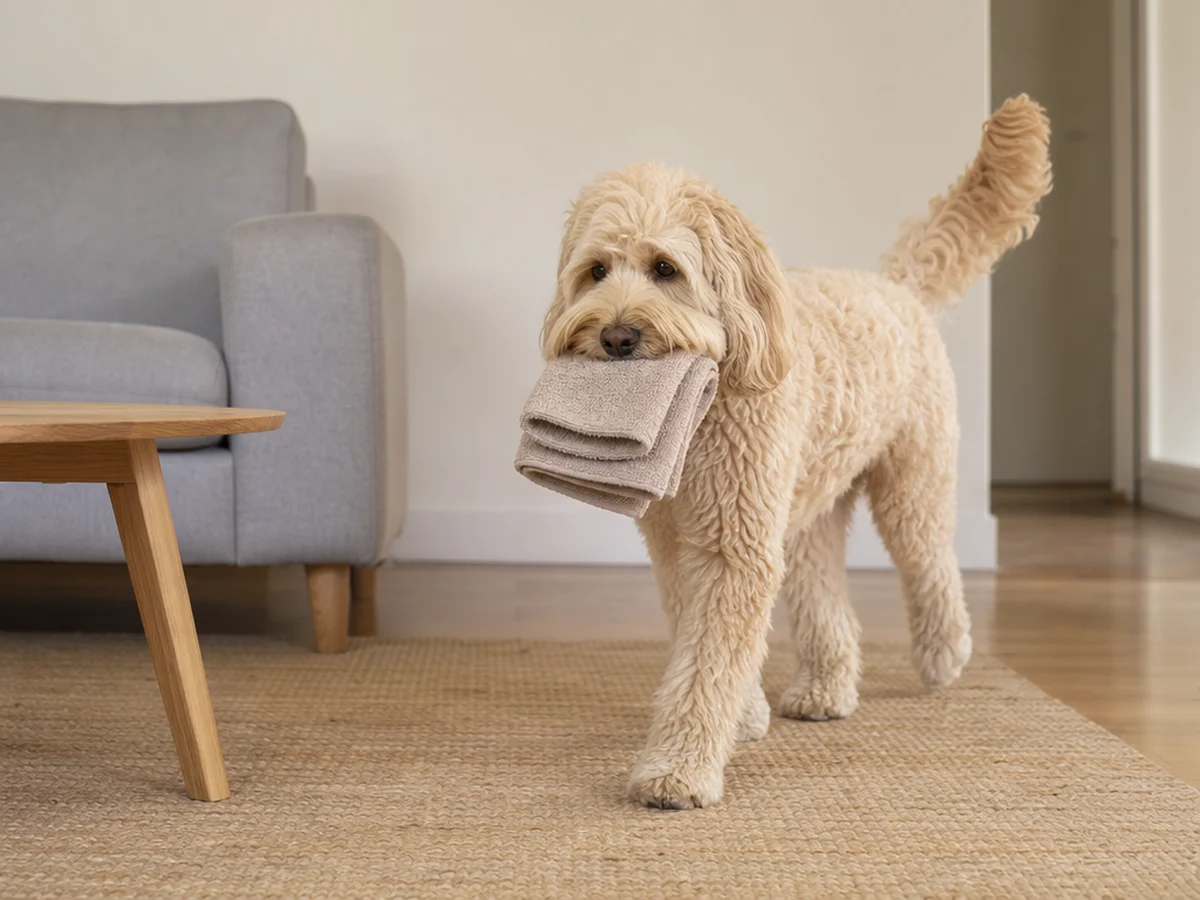
Socializing is part of this, which most people miss. The parent breeds are described as friendly and outgoing, merry and impish, and very people-oriented, so a pick-up often comes with an audience in mind. The sock is a ticket to your attention, and the more people in the room, the more the dog performs.
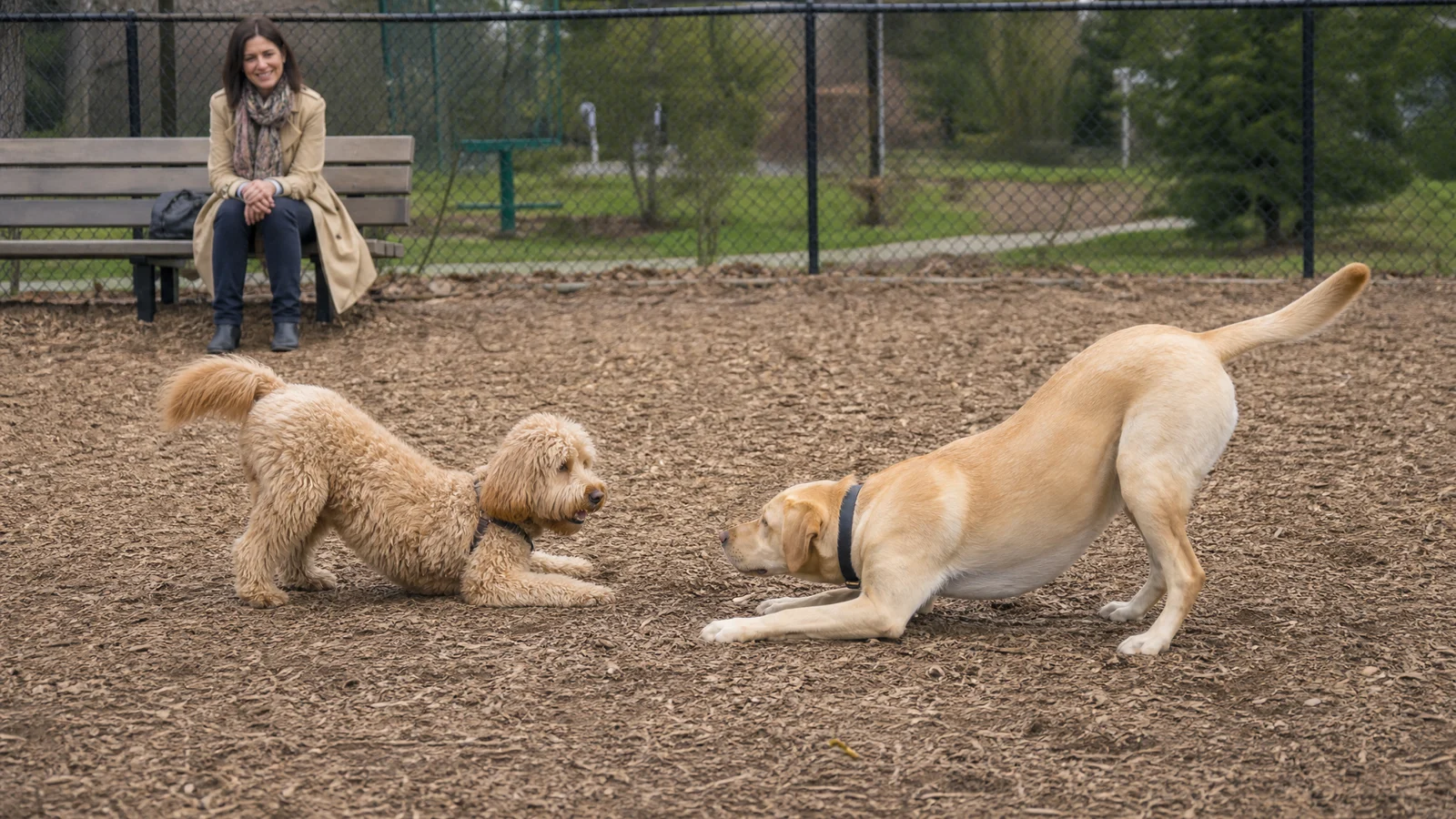
That is why the bolting happens. A dog who runs off with the prize is usually inviting a game, and every time you chase, you confirm the invitation worked. Calm is the better answer, and it also helps when dogs meet. At face-to-face greetings, keep the leash fairly loose, because a tense handler makes a dog think there is a reason to worry. That matters if your dog arrives at a meeting with a toy in their mouth.
Common advice says to wear the dog out and the carrying will stop. Labs, a parent breed, tend to turn hyperactive or destructive when they get too little exercise, so daily exercise matters, but a tired dog still picks up the remote. Exercise lowers the temperature, and training gives the urge somewhere to go. Boredom makes it all worse, and our guide to chewing, digging and zoomies covers that side.
Teaching Your Australian Labradoodle to Drop It
Drop it is easy to teach when your dog expects a payoff for letting go, and hard when letting go means losing the object for nothing. So the plan is to make an open mouth the fastest route to something better, and to never pry anything out of that mouth.
Reward Before You Reach
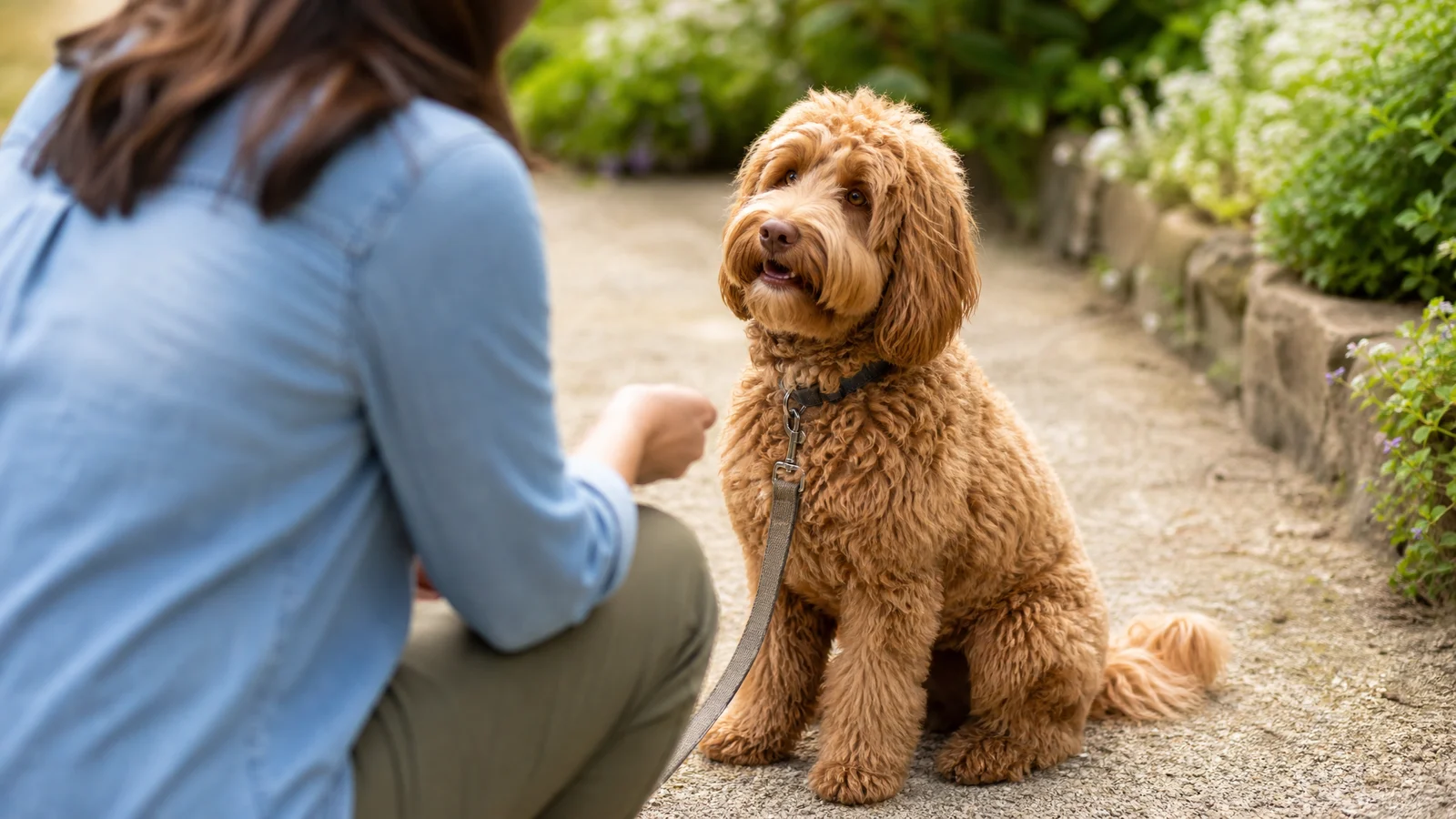
Start with a toy your dog likes but isn't obsessed with. Let them take it, then bring a treat right to their nose. Most retriever types open up for food, and the moment the toy falls out you say "yes" and deliver the treat. Your hands never touch the toy.
Pay for every single drop at the start. After that, reduce the rewards gradually, because cutting them too fast lets the behavior fade and makes problem behavior more likely.
Adding the Cue Word
Once the toy drops reliably as the treat appears, say your cue just as the mouth opens. Keep the word short and the same across the household.
Poodles are very people-oriented and respond well to fun, positive sessions, but they still want consistency in what you ask. The sequence looks like this:
- Offer the toy and let your dog settle with it for a moment.
- Say the cue once, calmly, then bring the treat to their nose.
- Mark and reward the instant the toy leaves their mouth.
- Hand the toy back often, so dropping it never means the game is over.
Proofing With Real Objects
Toys are the training wheels. Real life brings socks, remotes, a child's stuffed animal and whatever escaped from the trash. Work up from boring objects to exciting ones, and keep the payoff bigger than the prize every time.
Practice with different family members, too. A dog who only drops for you has learned a person, not a cue, and the first visitor will prove it.
Trade Games for Australian Labradoodles
Drop it asks a dog to give something up. Trade changes the question, because the dog gets something better for handing over what they have, so every exchange feels like winning. A people-loving retriever mix tends to take to this quickly, and it is the habit to build first.
Starting With Low-Value Items
Pick items your dog barely cares about, like a dull chew or an old toy, and let them carry it a few steps. Show a small treat, say your cue, and swap. Then give the item back right away if it's safe, so the trade doesn't feel like a permanent loss.
Keep rounds short and cheerful. Food, play and praise all motivate Cockers, so mix up what you pay with and let a quick game of tug or a happy "good dog" count as a reward too.
Moving Up to Valuable Items
Climb the ladder slowly, from a better chew to a squeaky toy and then to the objects that start the zoomies. The rule is that the treat must beat the prize, so a dry biscuit won't buy a sock that smells like you. Use chicken, cheese or whatever your dog would cross the room for.
Bring the family in once the trade is smooth. Everyone uses the same cue and the same payoff, which pays off when calm play with children turns into a tug-of-war over a stuffed animal.
Trading for Stolen Items
Sooner or later your dog will grab something real. Walk toward them calmly without reaching, and show a treat or a favorite toy. Many dogs drop to trade, the sock hits the floor, and you pick it up while they eat. The goal is that your arrival predicts something good.
If your dog is already running, don't chase. Chasing is the game they are inviting, so turn it into a different game, as the troubleshooting section below explains.
Socializing Through Fetch and Bring It Here
Trade works best alongside a real outlet, and fetch is the obvious one. Labs take part in agility, obedience, tracking and dock diving, and Cockers enjoy the challenge of performance activities, so a cross may well love games with a purpose. Fetch is the job you hand the carrying urge instead of the sock drawer.
It is also social. A game with a clear start and finish lets your dog spend time with family, and later with friends, doing something they are good at. Use a toy that isn't part of the household, toss it a short distance, mark the pick-up, and call them back in a happy voice.
Give the game a firm beginning and end, because a retriever who can't tell when play is over just keeps going until they're wired. A simple structure helps:
- Start with a cue such as get it in a consistent spot, so your dog knows play is on.
- When your dog turns toward you with the toy, reward the approach itself, even before the hand-off.
- Trade the toy for a treat or another throw, then end the game with a calm cue and put the toy away.
- Save the toy for these sessions only, so it stays special and the socks lose some glamour.
Done daily, this gives everyone a game they can join, from the person holding the treat pouch to the one who just wants to throw. Keep guests out of it until your dog can manage an Australian Labradoodle four-paws-down hello. The game builds the habit of coming toward a person with something in the mouth, which is the opposite of keep-away.
Drop It Problems When Socializing
Most drop it problems come from three sources: a chase that is more fun than the trade, a dog who feels they are losing something precious, or an object that is dangerous to leave in the mouth. Each has its own fix, and each gets harder when visitors or other dogs are around.
The Dog Who Runs Off
A dog who bolts has usually been rewarded for it, because the chase was the best game going. Stop chasing and make a treat or a favorite toy more interesting than the sock. Then reward them for coming toward you, even with the sock still in their mouth. Sort out the drop after the approach is solid.
Practice in a hallway or on a leash where there is nowhere to run. Add rooms as the hand-off gets reliable, and add people only after that, since an audience makes the chase more tempting.
The Dog Who Stiffens
Some dogs freeze, go hard-eyed, lower their head over the object or gulp it faster. That is a dog telling you the object matters a great deal, and reaching in only proves their point. Back away calmly, toss a high-value treat a few feet off, and pick the object up while they eat.
If your dog freezes or growls again and again, book time with a reward-based trainer. It is very fixable when you start early. Meanwhile, keep prized items out of reach, especially when guests or children are around.
When Swallowing Is the Danger
The real risk with a carry-everything dog is the item that goes down, like socks, hair ties, corn cobs, bones and toy pieces. A dog who gulps when you approach is the most likely to do it, so management matters as much as training. Keep small items off the floor, put laundry away, and trade early before the gulp.
If your dog swallows something that isn't food, call your veterinarian right away. Do not wait to see what happens, and keep an after-hours number handy.
Socializing and Carrying Habits Over the Years
Expect the urge to stay for life, but expect it to change shape. A puppy who carries everything often settles into a dog who carries a few favorites, and adolescence may bring a stretch where a well-trained drop gets tested again. Treat that stretch as a reason to go back to paying well, not as proof that training failed.
Socializing keeps evolving, too. As your dog meets more people and dogs, the same toy that was easy to give up at home may feel precious at a friend's house. Rehearse trades in new places, with new people, and keep the payoff generous until the habit holds anywhere.
Keep a few trades and a short fetch session in your weekly routine, even once the cue is rock solid. Thin the treats over time, but keep paying sometimes.
Regular vet visits belong in the routine as well. A dog who picks things up and chews them should have their mouth checked as they mature.
The carrying instinct is not going anywhere, and you wouldn't want it to. With steady, rewarded trading, the sock-and-run routine turns into a polished retrieve and an easy hand-off that lasts for years.
The dog who once ran from you will come to you with the prize, glad to give it up. That is retriever wiring shaped by a reward that pays well.
 BehaviorTeaching a Mini Australian Labradoodle Polite Dog Play
 Training basicsGentle Training for a Sensitive Australian Labradoodle
 Training basicsHow to Teach a Medium Australian Labradoodle to Settle