 Australian Labradoodle
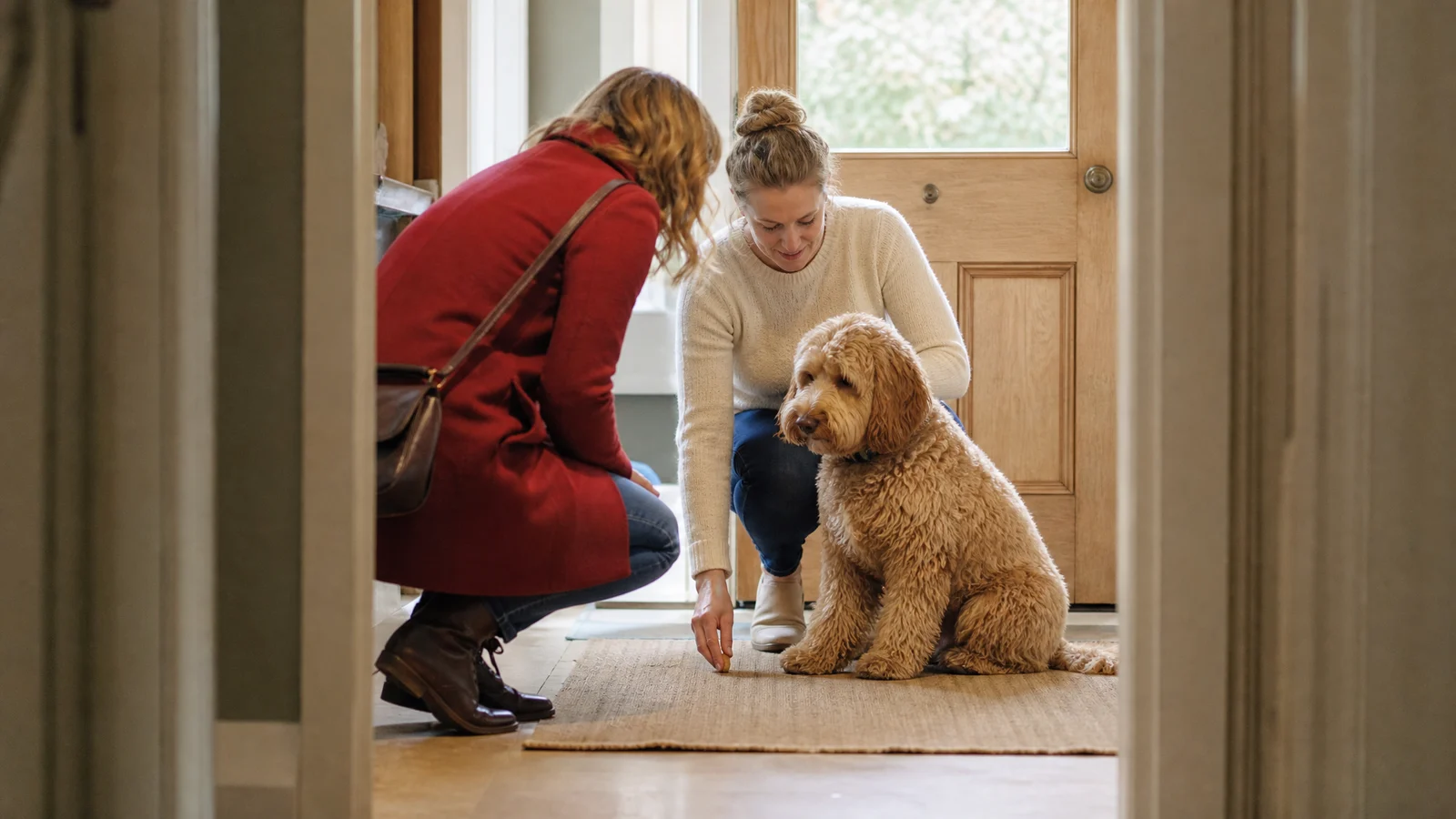
Most greeting advice says to stay calm, ignore the jumping, and wait for the dog to settle. For an Australian Labradoodle that plan has a hole in it. Both Labrador and Poodle parents rate 5 of 5 for openness to strangers, so your dog may see every visitor as the best event of the day, and plain quiet can't compete. The calm itself needs a reward bigger than the jump.
This matters because a dog who greets with all paws up gets pushed away, grabbed, or shut in another room, and the excitement usually grows. Done right, you get a dog who walks to a mat and waits while guests hang up their coats.
We have trained this breed for many years, and the same few steps work in most homes. In this article, we'll go through the mat and rewards that build the hello, the gear and spaces for practice, and the door routines that carry it over to real visitors.
What Changes When Socializing an Australian Labradoodle With Guests
The doorbell rings and your Labradoodle, who was asleep a moment ago, reaches the entryway at full speed with a wagging body and front paws aimed at your guest's chest.
Standard advice says to stay calm, turn away, and wait. A dog this social often doesn't settle on that plan, because the guest's attention is the prize and turning your back only removes yours.
So the plan changes in one way: you pay for the calm. Instead of hoping for quiet, you teach a job that can't happen at the same time as jumping.
When the door opens, your dog goes to a mat and keeps all four paws on it, then you pay them there. The guest becomes the cue to head for the mat, not the cue to climb.
Sitting is fine. Standing is fine too, and so is lying down. A dog who stands calmly with every paw on the floor is doing the job, so don't hold out for a perfect sit. The greeting still happens, but it comes after the calm, as part of the payment.
Rewards That Build a Four-Paws-Down Australian Labradoodle Hello
Hold a treat up at your own chest height and you have just taught a jump. Watch where the food lands for a dog who greets well and you'll see it arrives low, between the paws, on the mat. Reward choice and placement are your main tools, and they suit a breed whose parents both rate 5 of 5 for trainability.
Choose the Treat
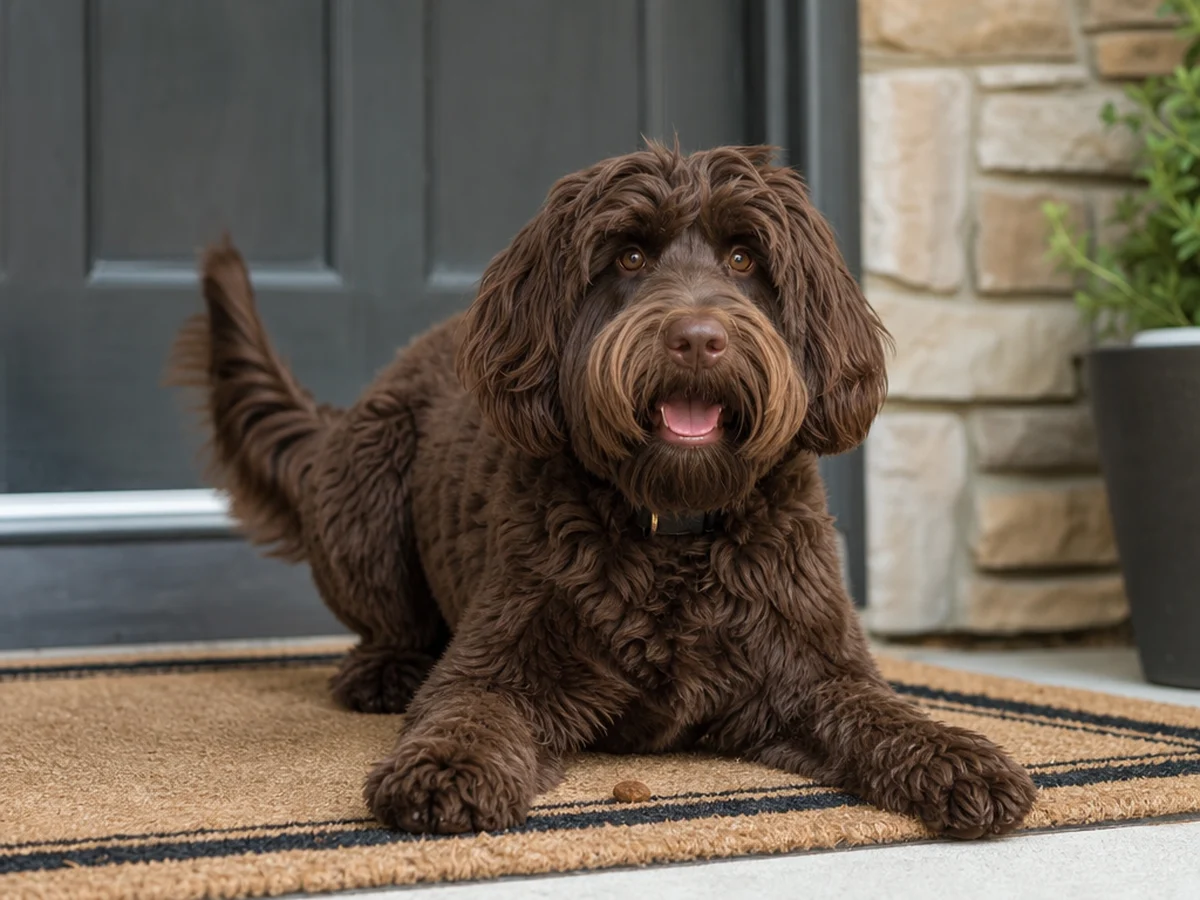
A guest at the door is the most exciting thing in your dog's day, so your treat has to be better than usual. Use soft, pea-sized pieces of something special, like cooked chicken or cheese, and save them for door practice only. Small pieces get swallowed fast, so you can pay again and again without a break in the action. Keep a pouch by the door so the food is always in reach.
Deliver at Paw Level
Mark the instant your dog's four paws touch the mat with a word such as "yes," then drop the treat between the front paws. Pay often at first, almost continuously, then stretch the gaps as your dog gets steadier.
If your dog hops off, toss a treat onto the mat to send them back, then start paying again. Low delivery keeps the nose down, and a nose down keeps the paws down.
Pay for Calm Without Punishment
Every step here pays for what you want, and a missed rep simply resets. This fits the position that dog training should rely on only reward-based methods, and the principle that a reward makes a behavior more likely to come back. A study of 92 companion dogs also found lower stress after training in dogs from reward-based schools. The guest's hello is your biggest reward, so hand it over only once all four paws are down.
Why Does an Australian Labradoodle Love Every Guest?
Your dog isn't testing you when they launch at a visitor. Both Labradors and Poodles score 5 of 5 for openness to strangers, a rating labeled "Everyone Is My Best Friend," and both score 5 of 5 for playfulness.
A Labradoodle may inherit that outlook, though dogs vary. The Labrador standard describes a kindly, outgoing, eager-to-please disposition, which is a lovely trait and a lot to manage at a front door.
That changes how you read the jump. It isn't defiance. It's the friendliest greeting your dog knows, and so far nobody has paid for a different one. Eager-to-please dogs learn fast once the better option is clear, because they'll work for your approval and the guest's attention.
Poodle parents also rate 5 of 5 for watchdog nature and 4 of 5 for barking, so some Labradoodles pair the joy with a burst of alert barking when the bell rings. If the sound itself rattles your dog, read our piece on Australian Labradoodle sound sensitivity before you start doorbell practice.
Energy matters too. The Labrador is described as needing lots of daily exercise, and a cross may inherit that. A walk or a game before guests arrive takes the edge off, so plan it as part of the training, not a separate chore.
Mat, Leash and Gate for Socializing Practice
Set three things by the door the night before a practice session: the mat, a leash, and a baby gate. Each one makes it harder for your dog to rehearse the jump and easier to earn a payment. Here is what each does.
- Use a thick, non-slip mat that you only use for greeting practice, so the mat means one thing to your dog. A bath mat or a small dog bed with a flat surface works.
- Clip a leash to a harness so you can guide your dog to the mat without grabbing. A loose leash also keeps them from reaching the guest before you're ready.
- Install a baby gate across the entryway or hall to set distance. It lets your dog watch the door, learn that guests mean treats, and stay safe while you answer.
- Use the gate as a calm time-out spot when your dog gets too wound up. A short break on the other side, with no fuss, lets them settle before you try again.
- Wear a treat pouch so rewards are instant. Fumbling in a pocket is when a dog jumps for the food.
If your dog protests loudly behind the gate, build gate comfort in short sessions first, using the same patient approach we describe in short absences. Start far enough from the action that your dog can settle.
Where Should Guest Socializing Practice Happen at Home?
Your living room is easier than your front door, and your yard is easier than both when a guest is truly exciting. Practice moves through spaces the way a student moves through grades, from the quietest setting to the most demanding.
Start in a Quiet Room
Teach the mat in a room with no door, no visitors and no noise. Reward your dog for stepping on, standing or sitting, and staying a few seconds.
Add duration, then add a family member walking by. This is the stage where your dog learns that the mat pays, so don't rush it.
Move to the Entryway
Place the mat a few steps back from the door, not right at it. Practice touching the doorknob, opening the door a crack, and closing it, paying for each moment all four paws stay down. Add the doorbell sound last, once the door itself is boring.
Use the Yard for Harder Cases
When a very exciting guest is coming, or you have several people at once, meet them in the yard with your dog on leash and a portable mat. Open space lets your dog burn off a little energy, and nobody gets bowled over in the hall. Bring the mat inside after the first hello.
Door Routines for Your Australian Labradoodle's Visitors
A routine turns a pile of good ideas into a habit your dog can predict. Dogs who know exactly what happens at the door tend to relax into it. Run the same sequence every time, whether the visitor is a friend, a delivery driver, or a relative you see weekly.
- Exercise your dog before guests arrive, with a walk or a game, and put the mat in place.
- When the bell rings, say your cue and send your dog to the mat. Mark and treat the moment all four paws land.
- Keep paying at paw level as you walk to the door and open it.
- Have the guest step in without speaking to your dog, while you keep feeding.
- When your dog has held the position for a few calm seconds, say your release word and let the guest offer a low, quiet hello.
- If paws leave the floor, the guest stands still and quiet, you send your dog back to the mat or take a short break behind the gate, then you restart.
Brief your visitors before they arrive. Ask them to skip the high voice, keep their hands low, and wait until you say go. A simple text works. Tell them the dog will get a treat for the calm hello, and they get a polite greeting in return. If children are visiting, follow the steps in safe introductions so the youngest guests stay safe too.
A Two-Week Plan for Socializing a Polite Australian Labradoodle
Short practice rounds work best. Two or three minutes is plenty, and quitting before your dog tires keeps the next round bright. This breed learns quickly and turns silly when worn out, so brief lessons suit them. Regular vet visits also help you rule out health causes if your dog's behavior changes suddenly.
In week one, work only with your family. In the first few days, teach the mat in a quiet room, paying for stepping on, standing or sitting, and staying. Midweek, move the mat to the entryway and practice touching the door and opening it a crack. By the end of the week, add the doorbell sound, with a family member playing the guest and following the full routine from the list above.
In week two, invite calm visitors who follow instructions. Start with one familiar person at the door, dog on leash.
Midweek, add a second visit and a quiet hello after the calm hold. Try two people over the weekend. Do the exercise step first.
The point of all of it is simple. An Australian Labradoodle's love of people won't shrink, and you don't want it to. What you can change is what they get paid for. Reward the calm hello, not the excitement, and a dog who once treated every guest as a launch pad learns that four paws down is how the best part of the day begins. Keep paying for it, and the polite hello becomes your dog's own habit.
 BehaviorBored Australian Labradoodle: Chewing, Digging and Zoomies
 Puppy trainingFrom Pup to Trained Australian Labradoodle by Age Two
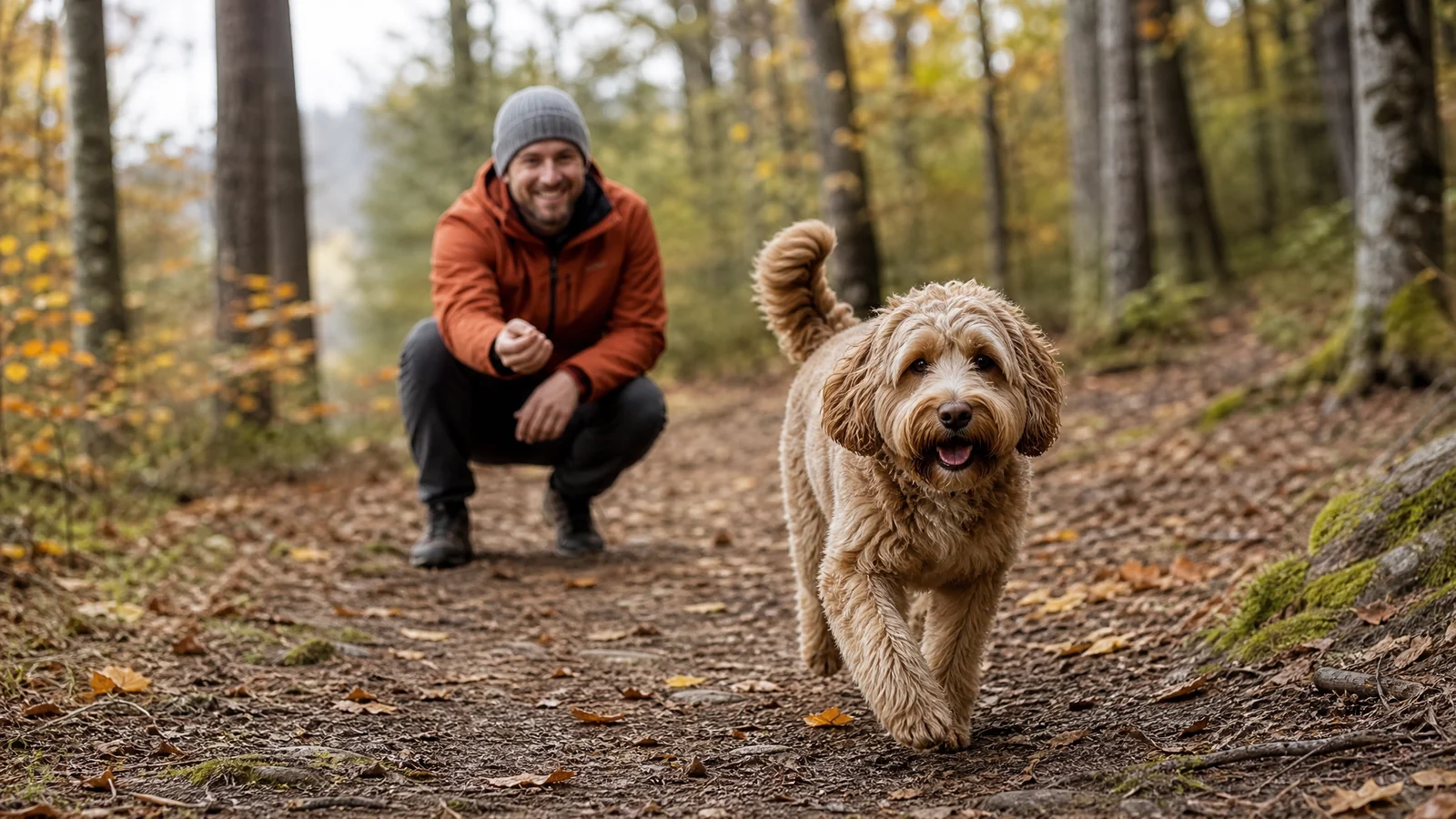 Training basicsBuilding Recall for an Australian Labradoodle on the Trail