 Australian Labradoodle
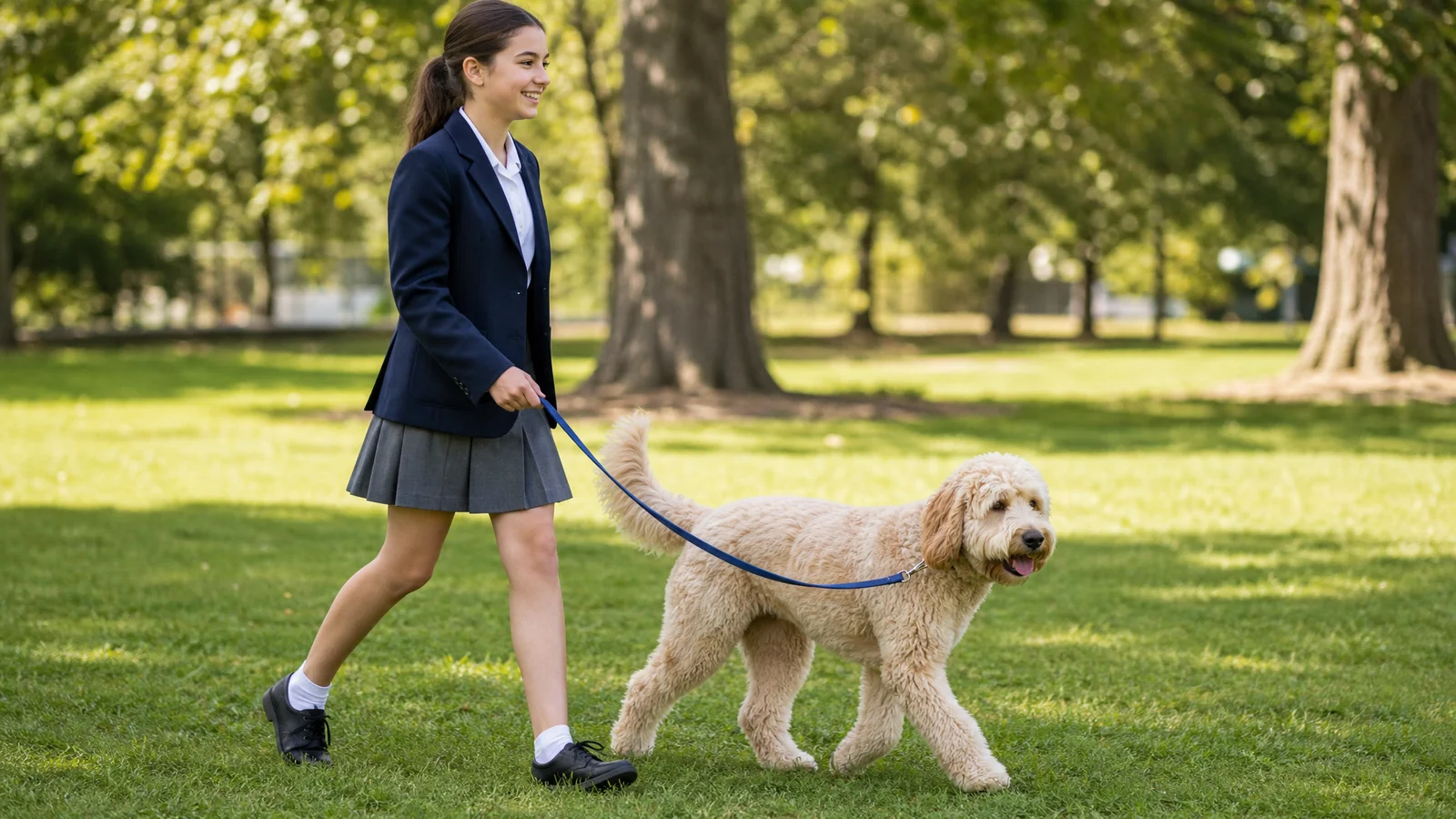
When will a puppy actually be trained? The usual one-line reply, a date near the second birthday, leaves out everything an owner lives through before then, and it treats a quick learner as though they were a slow one. The Lab side is described as high-spirited and active with a desire to please, so a cross who inherits that picks up habits at speed, including the ones you never meant to teach.
We'll walk you through what you see and hear at each age, from needle teeth and midnight crying to a teenager who goes deaf at the park, then trace each symptom to its cause and a fix paid in treats, play and praise.
Handled badly, the early weeks harden into pulling, panic and chewed furniture, and handled well they give you a dog who is easy to live with. We have spent many years with this breed, and we disagree with the popular habit of holding off on training until a puppy has grown up a bit, because what stands out is how early the habits set.
Puppy Training for Mouthy Australian Labradoodles at Eight Weeks
Within minutes of meeting anyone, an eight-week-old puppy tends to have a finger, a sleeve or a shoelace between their teeth, working at it with the gravity of someone handed an important job, and it can feel personal until you notice how cheerful they look. Nothing is wrong, but a cross this eager repeats whatever earns a reaction, so the steering has to begin on the first day.
Why the Needle Teeth Appear
Mouthing at this age is part exploration and part arousal that climbs faster than self-control can follow. Watch for a few days and you will see the teeth appear when play gets loud or your puppy is overtired.
That pattern shows you where the fix belongs. Overtired puppies bite harder than rested ones, so naps belong in the bite plan, and a crate or pen in a quiet corner does more than any cue you could teach, which surprises people who were hoping for a clever trick.
The Reward Set That Replaces Biting
Most dogs can become well-adjusted family members with positive reinforcement alone, and mouthing is a good proof, because every part of the fix is something your puppy gets paid for. Keep a few rewards in each room so the right choice is within reach at the moment the wrong one appears.
- Pause play and turn away for a few seconds when teeth touch skin, then restart, so gentle contact is what keeps the game going.
- Offer a chew or tug toy in that same instant and praise warmly as soon as their mouth closes on it.
- Hand-feed treats and reward soft, slow taking, which teaches a delicate mouth faster than any lecture.
- Reward calm, low-key greetings so the polite hello is the one that pays.
- Schedule rest before the wild hour begins instead of after it has arrived.
Expect the biting to ease over several weeks and not to stop overnight. What you do in the first days counts for more than which technique you pick.
Night Crying and Puddles in Puppy Training
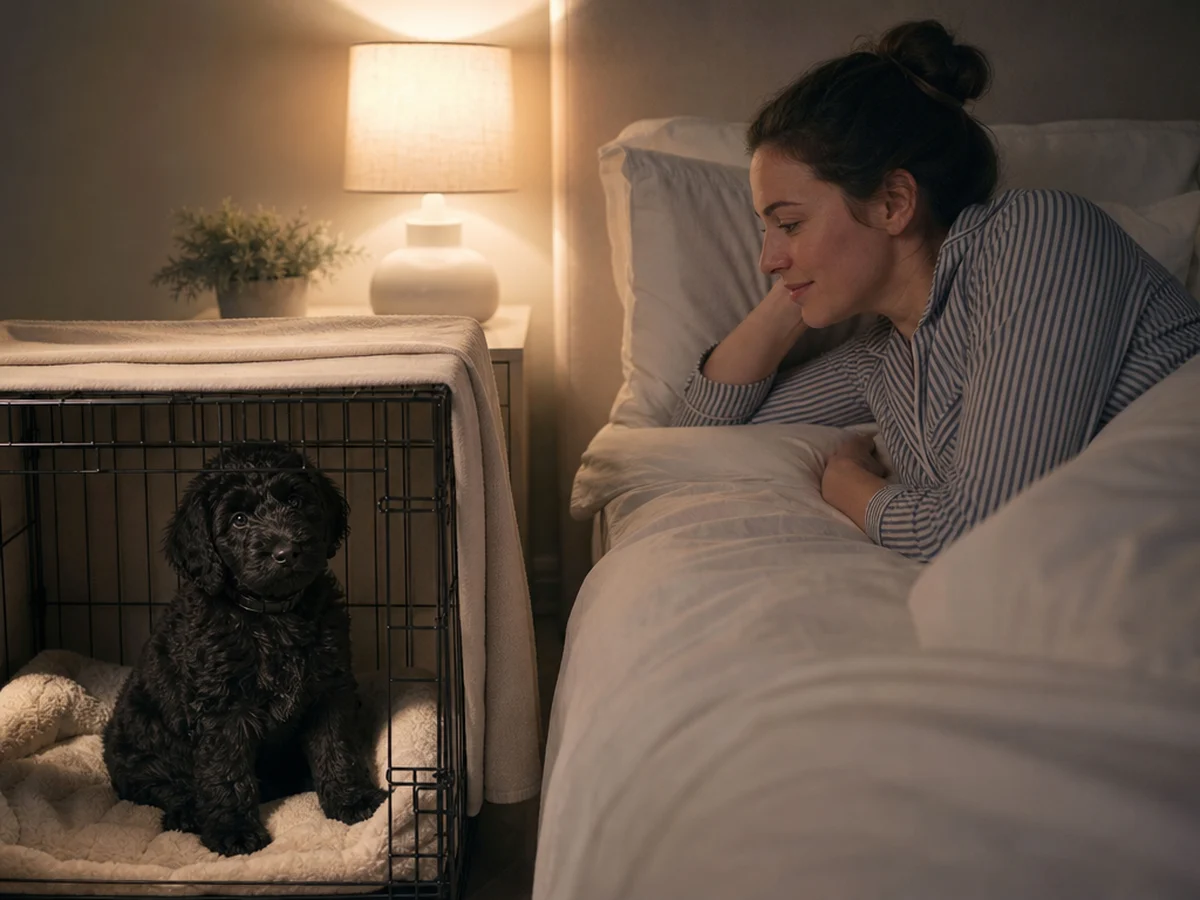
Nobody warns you properly about the first nights. The warm pile of littermates is gone, the house sounds enormous in the dark, and crying at midnight and puddles by morning tend to arrive together because they share a root: a very young puppy can neither hold a bladder through hours of darkness nor feel safe alone.
Why the Crying and the Puddles Travel Together
Poodles are described as very people-oriented, and a Labradoodle who inherits that streak may treat separation as an emergency, so the crying is a request to be found. The bladder is small and the habit of choosing a spot has not formed, which means the sleepless trips outside and the damp patches indoors both belong to the first weeks away from the litter.
Answer a cry with a calm, dull trip outside if the hour suggests a need. Otherwise settle your puppy near your bed without turning the night into a party.
A Routine That Builds Dry Floors
Dry floors come from management and repetition, not from clever tricks. Plan the day so your puppy gets many chances to be right and almost none to be wrong.
- Walk your puppy to the same spot at wake-up, after meals, once play winds down and whenever excitement peaks, then stand still and wait.
- Say your marker word as they finish and hand over the treat on the spot, not once you are back at the door.
- Keep your puppy in sight indoors, using a pen or tether when your attention is elsewhere.
- Put the sleeping spot beside your bed for the early weeks, then move it gradually as nights grow calmer.
- Clean accidents quietly and add one more outing to the next day's plan.
Make the crate a pleasant place with meals and chews, and practice short absences from the first week, since a people-loving puppy learns that alone time is safe only by trying it in small doses. If accidents continue well past the early weeks, or your puppy strains or seems unwell, call your veterinarian, because regular checkups are also how medical causes get ruled out.
Most nights improve in a pattern of good stretches followed by one bad one. Expect that wobble and keep the routine the same.
Why Does Your Puppy Ignore You Outside?
Indoors your puppy swings around at the sound of their name, yet in the yard or at the park the same word seems to dissolve into the breeze, which feels like defiance until you watch what is actually going on. Outdoors is crowded with smells, movement and strangers, and your voice is simply competing with all of it.
Why the World Outbids You
A high-spirited, active puppy will nearly always find the street more interesting than a plain call, and both the Lab and the Poodle rate at the top for openness to strangers. The result is a puppy who wants to greet everything in sight, and your name loses the vote.
Your name has to be worth more than whatever else is out there. In the early weeks that means paying well and paying every single time, so the word comes to predict something better than the distraction.
Recall Habits Worth Building Early
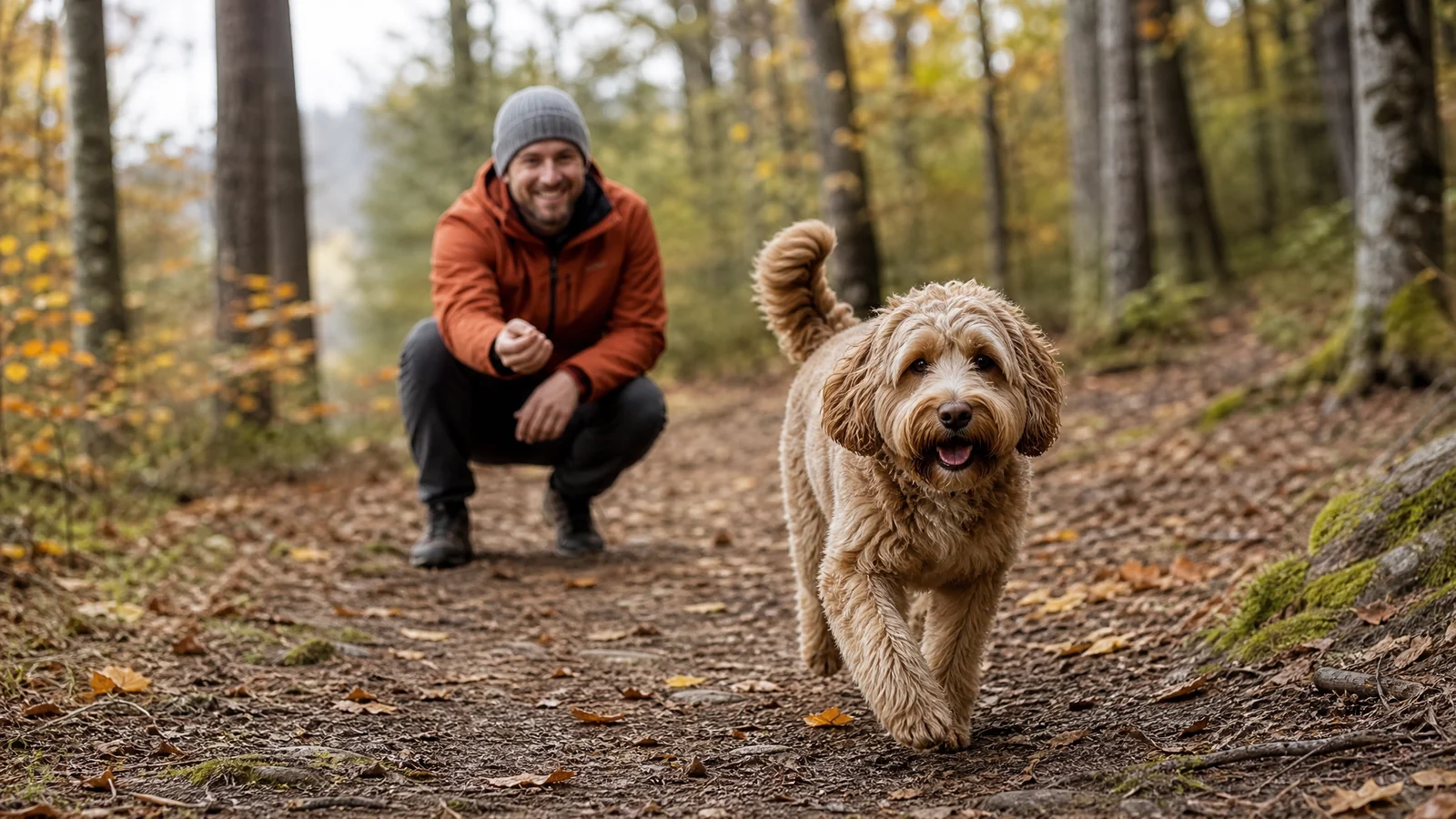
Start by saying the name indoors and rewarding eye contact, then move to the yard on a long line before you try any open space, and call only when you are confident your puppy will come, so each success is banked. Use a happy voice and your best treats, and never call to end the fun, because a recall that predicts the end of play teaches hesitation.
Choose one recall word and let everyone in the home use it the same way. A puppy cannot know that it means come from one voice and wander from another.
Follow each return with a life reward such as sniffing time or a release to play. A puppy who learns that coming back never ends the fun starts to come back faster.
Frantic Sprints and Chewed Furniture in Puppy Training
Somewhere around four to six months the sweet, sleepy puppy is replaced by a dog who sprints laps around the sofa, collapses in a heap, and then sets about chewing the leg off it. The likely cause is a mismatch between energy and outlet, not a failure of your training.
Teething and the Chewing Urge
Chewing is common in these months, which is why shoes, baseboards and furniture legs suddenly look irresistible. Offer a rotation of chews with different textures and keep tempting objects out of reach.
Every session that lands on the right item makes the next one more likely, and a chew brought back from the shelf feels new again. Offer something safe to gnaw before the evening wild hour begins, not after it has started.
Exercise Needs Shift as the Puppy Grows
The Labrador is described as exuberant and very energetic, and one who goes short of exercise is likely to turn hyperactive or destructive, so a Labradoodle who inherits the tendency shows it first in the sprints and the ruined furniture. Exercise needs vary widely between breeds, and working types need significantly more, so a single walk is rarely the finish line. Several shorter outings usually suit a growing puppy better than one long march.
Exercise is only half the supply. A dog without things to do will go looking for entertainment, and the results show up as the behaviors you least want.
The Poodle side can need a job, so scatter feeding, food puzzles, sniff walks and short trick sessions spend a quick brain far faster than another lap of the block. Teach a calm mat rest on purpose too, because a puppy needs to learn how to switch off as well as how to run.
This is general information, not veterinary advice. Check with your veterinarian about teething, how much running suits your puppy's age and growth, and any change to chews or feeding.
Does Your Australian Labradoodle Forget Everything at Eight Months?
It can look exactly like that. The recall that was dependable at four months now meets a blank stare, sit needs repeating, and the dog who loved training seems to have unlearned it overnight, yet the skills have not gone anywhere.
Why Skills Seem to Vanish
Adolescence changes a dog's priorities far more than their memory. Distraction, excitement and independence all grow while your cue stays the same quiet word it always was.
A dog trained mainly in the kitchen has also practiced mainly in the kitchen, and a cross with a Poodle's quick intelligence and a Lab's eagerness is perfectly able to notice when ignoring you is more fun. Treat it as a drop in reliability and not a loss of knowledge, since the reset is usually quicker than the original teaching.
Resetting With Rewards
Go back to the level where your dog succeeds, then climb again one step at a time. Each rung needs only a few clean repetitions before the next.
- Practice in the easiest room first with your best treats, and add distraction only after several clean successes.
- Keep a long line on in open areas so your dog cannot rehearse ignoring you, and reward every turn toward you.
- Say each cue once, wait a moment and pay for success, instead of stacking the same word until it fades into the background.
- Hold your household rules steady, so jumping that was off limits last month is still off limits today.
- End sessions while your dog is still winning.
A sensitive, people-focused dog reads frustration quickly, so if a session turns tense, stop and play for a while. When a dog seems not to respond, the missing piece is nearly always reward value or distraction level and not willpower.
When a skill seems to have vanished, rebuild it with rewards and the skill usually returns. Make the payoff clear again, and the old behavior has a reason to show up.
Puppy Training Through Pulling, Jumping and Selective Hearing
By the second half of the first year your dog is bigger and stronger yet still thrilled by everything, so the enthusiasm that was endearing at eight weeks now arrives at chest height on the end of a taut leash. Pulling, jumping and cues that apparently stop working tend to appear together, and they share a cause, which is rewards and exercise that no longer fit the dog you now have.
Pulling and Leaping to Greet
Both behaviors come from the same wish to reach something wonderful. If pulling gets your dog to the park and jumping gets attention, they are being paid handsomely, so change what pays by stopping when the leash tightens, walking on when it slackens and giving attention only when all four paws are down.
Ask visitors to follow suit, because one generous guest can undo weeks of effort. A bigger dog makes every habit more noticeable, so teach the polite hello while it is still easy.
Adjusting Rewards and Exercise as They Mature
Rewards that suited a baby will bore a teenager. Move from ordinary treats to better food in busy places, add play or sniffing time as a reward, and deliver the reward beside your leg so the right position is also the most profitable one.
Exercise should mature too, with more varied outings, more sniffing and more mental work, while you stay cautious about repetitive hard running until your veterinarian confirms the body is ready. A teenager who is tired in the right way is a teenager who listens.
Variety is the quiet engine here. A new route, a scent game and a few tricks in the driveway all keep a quick mind interested.
A Trained Australian Labradoodle at Age Two
Trained does not mean perfect, and it certainly does not mean a dog who no longer needs anything from you, yet by the second birthday the shape of a well-taught Australian Labradoodle is easy to describe. Reliability is the whole story, meaning habits that hold up on an ordinary afternoon with the doorbell ringing. The table below ties each stage in this article to the skill it produces.
| Stage | What you saw | What it becomes |
|---|---|---|
| Eight weeks | Needle teeth on hands | A soft mouth and calm greetings |
| First weeks home | Night crying and puddles | Settling alone and dependable house habits |
| Early outings | Name lost outdoors | A recall that has always paid |
| Four to six months | Sprints and chewing | Switching off on a mat after exercise |
| Eight months onward | Pulling, leaping, ignored cues | A slack leash and steady manners |
A two-year-old who has had consistent, reward-based teaching tends to settle in the house without being asked, say hello with four paws down and walk beside you on a slack leash. They come back from a distraction because coming back has always paid, and they stay home alone for sensible stretches because alone time was practiced from the first week.
Each of those skills traces to a stage above. The mouth was shaped at eight weeks, the nights settled early and the manners held through the teenage storm.
Do not expect the adult dog to stop being a Labradoodle. The Poodle's active, very smart nature and the Lab's friendly enthusiasm may both still be there, which means mental work, exercise and household rules stay on the calendar after the formal timeline ends, and a few minutes of practice each week keeps the training sharp.
Puppy Training Questions to Tackle Next
Once the timeline makes sense, a few questions tend to come next. When does the crate door actually close? Build the habit from meals and chews inside, shut the door for seconds at first, and lengthen the time only once your puppy walks in by choice.
When is house training really finished, and how do you stop pulling for good? Accidents taper as trips and rewards stay regular, and a veterinary visit is sensible if they continue unexpectedly, while pulling fades when the position beside your leg is what earns forward movement. If the teenage months are testing your patience, our guide to patience through the teen months covers that stage at length.
Across every stage the story of this cross is the same: a bright, people-loving dog with plenty of energy who learns whatever the day teaches them. Early habits therefore count, and so does meeting their need for exercise, play and mental work, because a dog whose needs are met has no reason to invent outlets of their own.
Pay generously for the choices you want and keep regular veterinary visits on the calendar through every stage, and the puppy who arrived all fluff and needle teeth grows into the settled companion you hoped for when you brought them home.
 Training basicsBuilding Recall for an Australian Labradoodle on the Trail
 BehaviorCalm Play Between an Australian Labradoodle and Children
 BehaviorTeaching Drop It and Trade to an Australian Labradoodle