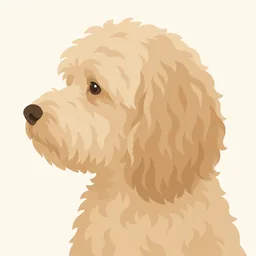
 Australian Labradoodle
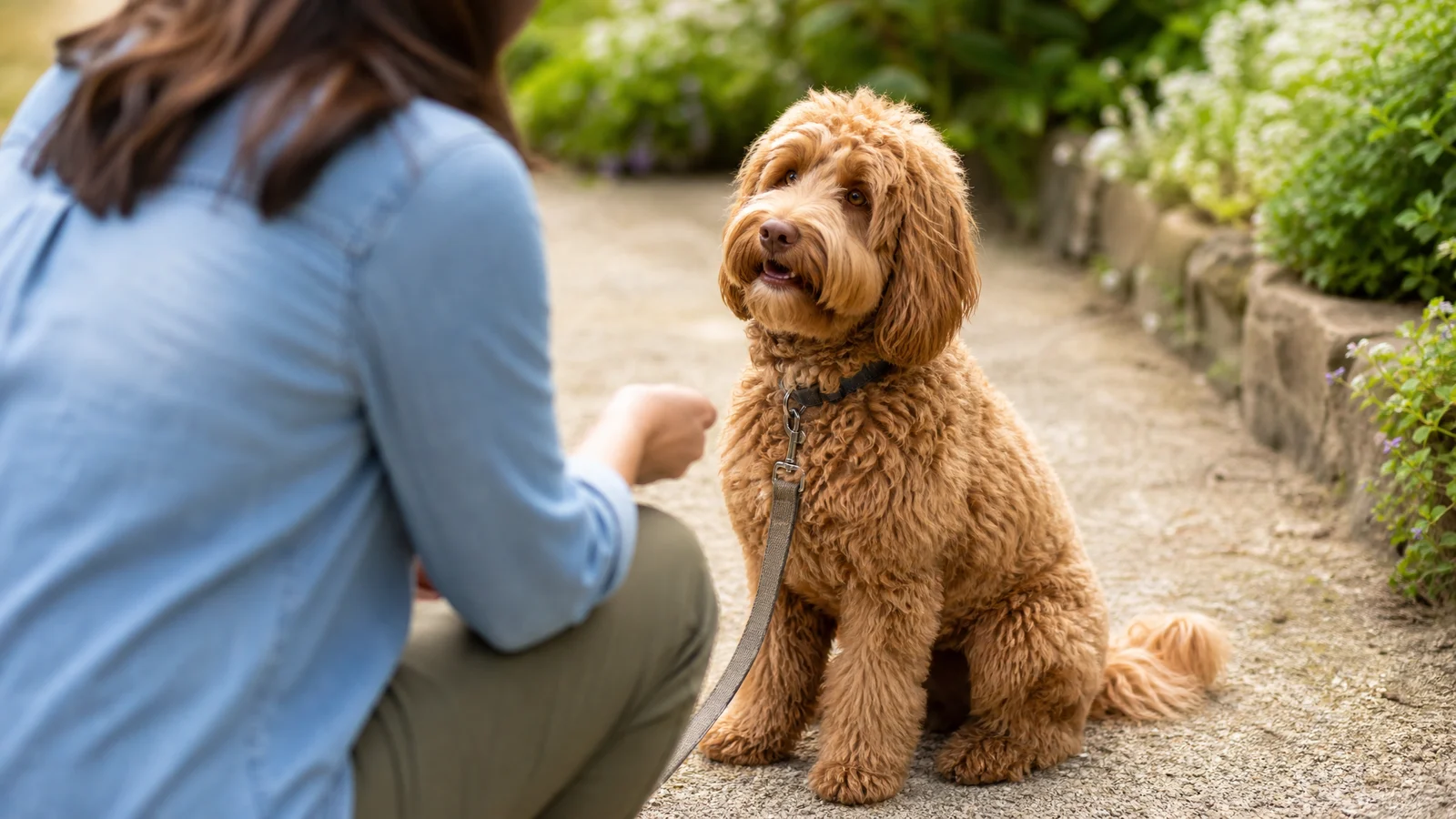
The socializing window for an Australian Labradoodle puppy opens in early puppyhood, so we suggest starting as soon as your puppy is home, and it keeps mattering as they grow. Timing matters most, so it comes first.
Because this is a cross, no one can promise how a particular dog will turn out, but the Labrador, Poodle and Cocker Spaniel sides often found in these dogs all lean toward people-oriented, quick-learning and sometimes sensitive temperaments.
Below, you'll find the timeline and what waiting costs, how to keep sessions brief and upbeat, why rewards suit this cross, and how to let a puppy choose their distance from new things, including how to recover from a scare and how your own voice and leash handling shape what a puppy learns. We finish with a two-week plan. Handled gently, this work gives you a family dog who meets the world with curiosity instead of worry.
Socializing an Australian Labradoodle Begins Earlier Than You Think
Socializing means teaching a young dog, through pleasant experience, that ordinary parts of life are safe. It covers people, other dogs, floor surfaces, household noises, handling and unfamiliar places. The window in which this learning comes easiest opens at about 3 weeks and closes while the puppy is still very young, and the early part of it usually happens at the breeder's home, so ask what your puppy has already met.
Why the Early Window Matters
Inside that window, new things tend to register as interesting. After it, the same things are more likely to register as suspicious.
Waiting costs more with a smart, sensitive cross than with a dog who shrugs everything off. The Poodle standard lists shyness and sharpness as major faults, and the Labrador standard says shyness in an adult should be severely penalized, which shows how much both parent breeds value a settled temperament. A clever puppy who meets very little early may fill the gaps with worry.
Your veterinarian can tell you which places are safe before vaccinations are finished, and regular vet visits belong in a healthy puppy's routine anyway. Until you have that answer, carry your puppy through busy places, invite calm visitors home and let them watch the world from your arms.
This is general information. Check with your veterinarian before any medicine or diet change.
The Second Push in Adolescence
Adolescence brings a second stretch where socializing needs attention. A puppy who was bold in the early weeks may hesitate at things they once ignored, and that is a reason to revisit earlier exposures, not to push harder.
Treat these months as a refresher course. Repeat the people, places and sounds your dog already handled well, keep the rewards flowing, and watch for the sudden hang-back, which is information about what needs another gentle round.
Keep Each Socializing Session Short and Upbeat
A socializing session is one planned exposure with a clear start and finish, such as a stroll past a quiet playground or a visit from a single friendly neighbor. Young dogs tire quickly, and the RSPCA advises short but regular sessions so the dog isn't overwhelmed. Several brief, pleasant outings teach far more than one long, exhausting day.
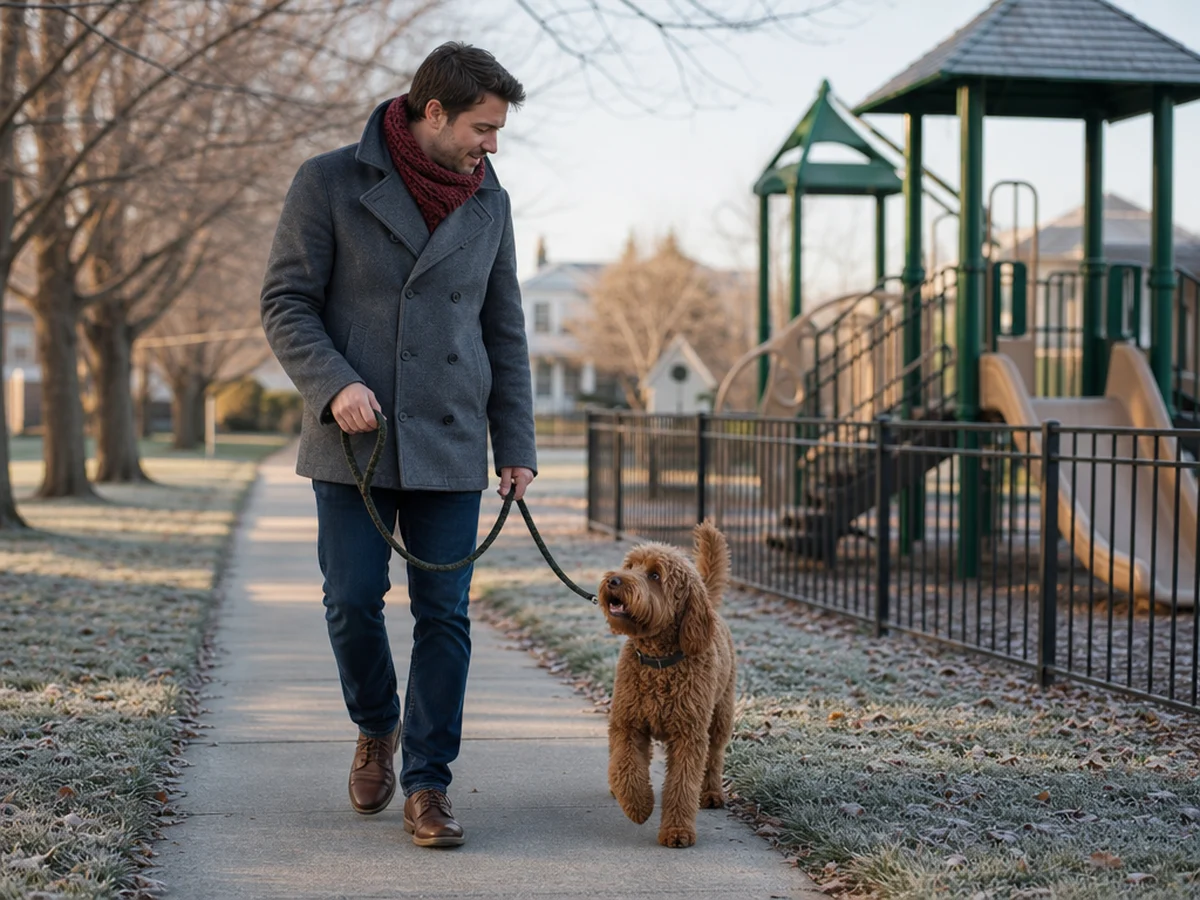
Always end while the puppy is still happy and still taking treats. A session that finishes on a high note leaves them looking forward to the next one.
The Labrador side is described as high-spirited and exuberant, so a session can look joyful right up until the puppy tips into frantic. A puppy who is bouncing, mouthing your sleeves and ignoring treats has not had more fun, they have had too much. Stop earlier than you think you need to.
End the session if you notice any of the following. Do not push through them:
- The puppy starts turning down treats they normally love, which usually means they are too stimulated or too uneasy to eat.
- They keep looking away from the new thing, or from you, and cannot settle their attention anywhere.
- Their play turns frantic, with hard mouthing, spinning or zooming that was not there at the start.
- Their body gets low or tight, with a tucked tail, flattened ears or a wish to hide behind your legs.
- They yawn, pant or sniff the ground in a hurried way even though nothing is happening.
Upbeat does not mean loud. A warm, cheerful voice and a quick game with a favorite toy keep a sensitive puppy's mood light without winding them up.
Give the puppy a chance to relieve themselves before you leave, as we describe in our guide to potty training an Australian Labradoodle puppy. A puppy with a full bladder cannot enjoy anything new.
Why Rewards Suit a Sensitive Australian Labradoodle
The case for rewards is built into the parent breeds. Cockers are described as motivated by food, play and praise, and Poodles tend to focus closely on their people and hurry to please when training routines are fun and positive. A cross may inherit either trait, so a treat pouch tends to work better than a stern voice.
Pressure often backfires on a sensitive dog, who may freeze, avoid or shut down rather than learn. Rewards give them a reason to try, and trying is where confidence starts.
Marker words work as a tiny signal, a crisp, bright yes that pinpoints the second your puppy chose well. Say it right as they do something right, then deliver a small, soft treat. The sound travels faster than your hand, so the puppy can tell precisely which choice earned the payoff.
Pay for small brave choices: glancing at a stroller, sniffing a new surface, taking one step toward a visitor, or staying calm when a door bangs. Reward the smallest version first and let the puppy build from there. Consistency matters too, so ask for the same things in the same way across the household.
Most dogs can become well-adjusted family members with positive reinforcement alone. You lose nothing by staying gentle, and with this cross you may gain a great deal.
Let the Puppy Set the Distance in Socializing
Every puppy has a comfort distance, which is the space at which they can notice something new and still behave normally. Inside that space they worry, and outside it they may not learn much. Your job is to find the distance, reward there, and let the puppy decide when to close it.
This works the same for people, dogs and noises. Ask visitors to ignore the puppy and let the puppy approach them. Keep another dog at a calm, far-off position until your puppy looks relaxed. Introduce a sound, such as a vacuum or a clattering pot, at low volume or from another room.
To shrink the distance gradually, follow these steps. Move at your dog's pace:
- Stop where the puppy can see the new thing and still eagerly take a treat from you.
- Mark and reward calm looking, then wait while the puppy decides whether to move closer on their own.
- Repeat at that spot until the puppy looks relaxed and bouncy, with a loose body and a soft face.
- Move a little closer, and only then, because the earlier spot has proved comfortable.
- If the puppy stops eating or backs off, add distance again and treat that as a good decision, not a failure.
Never drag or lure a worried puppy forward. If the puppy chooses to walk away, let them, and reward when they come back to you.
A Scare During Socializing Needs a Quiet Recovery
Even careful owners will see a puppy startle at a skateboard, a barking dog or a slamming door. What matters is the next minute, because a puppy's memory of a scare depends heavily on how it ended. Recovery is a skill worth practicing before you need it.
Here is a simple sequence. Keep every repetition easy:
- Calmly increase the distance from whatever caused the fright, without hurry or a sharp voice.
- Give the puppy a moment to look around and shake off the tension while you stay close and relaxed.
- Offer a treat once they are willing to eat, which tells you their thinking brain is back.
- Ask for something easy they already know and love, mark it, and reward it.
- End the outing on that easy win, then return later to a gentler version of the same experience.
Common advice says not to comfort a frightened dog because it will reinforce fear. For a sensitive cross, we disagree. Staying near with a quiet voice and a steady body gives a dog who is highly tuned to people a reason to feel safe, and that does not teach them to be afraid.
A retreat space helps. A crate or mat they already love, built up as in our guide to crate training a velcro puppy, gives the puppy somewhere to settle after a rough moment.
Your Own Tone Shapes Australian Labradoodle Socializing
The Labrador and Poodle sides are both described as devoted, people-oriented and keen to be included, so your Labradoodle may read you closely. In a new place, they often look to you before deciding how to feel. Your voice, your hands and your body become part of the environment the puppy is learning from.
Start with your voice. A cheerful, even tone says everything is normal, while a tense, high or sharp tone can say there is something to fear. If you are nervous about a meeting, take a breath, soften your voice and speak slowly.
Leash tension works the same way. A tight leash tells a puppy something is wrong, and it can make a wary dog feel trapped. Keep it loose and give the puppy room to look, sniff and back away.
Body language comes last. Face slightly sideways rather than looming over the puppy, kneel when you greet them, and avoid hovering over them as a visitor approaches. If you stiffen or hold your breath, the puppy often notices.
Visitors need the same coaching. Ask them to stay calm, look away instead of staring, and toss a treat low and to the side instead of reaching over the puppy's head.
A Confident Australian Labradoodle Grows From Gentle Repeats
The main lesson of this article is simple. Confidence is not a trait a puppy either has or lacks, it is built from many small, pleasant, repeated experiences, each rewarded. Confidence works like a savings account: every easy, happy exposure is a small deposit, and a rough day then draws on the balance without emptying it. For a smart, sensitive cross, patient deposits matter far more than big ones.
Use this two-week plan, with just a few small exposures each day. Repeat comfortable steps as needed:
- In the first week, choose a handful of ordinary things your puppy has not yet met, such as a new floor surface, a hat, an umbrella opening, or a calm visitor sitting on the sofa, and pair each with treats at a comfortable distance.
- Every day, keep each exposure short and end it while the puppy still wants more, even if you feel you could do more.
- In the second week, repeat the exposures that went well, then move a little closer or add a little more activity, and let the puppy choose when to approach.
- Add one or two new experiences, such as a quiet walk or a short ride in the car, always followed by a favorite reward.
- Once your puppy handles busier places calmly, you can start building Australian Labradoodle recall for the trail.
At the end of two weeks, look back at what has changed. Does your puppy recover faster, approach new things sooner, and look to you with a loose, happy body? If so, keep going at the same gentle pace through adolescence, and your Australian Labradoodle is likely to grow into the friendly, adaptable family dog these parent breeds are known for.
 Training basicsHow to Teach a Medium Australian Labradoodle to Settle
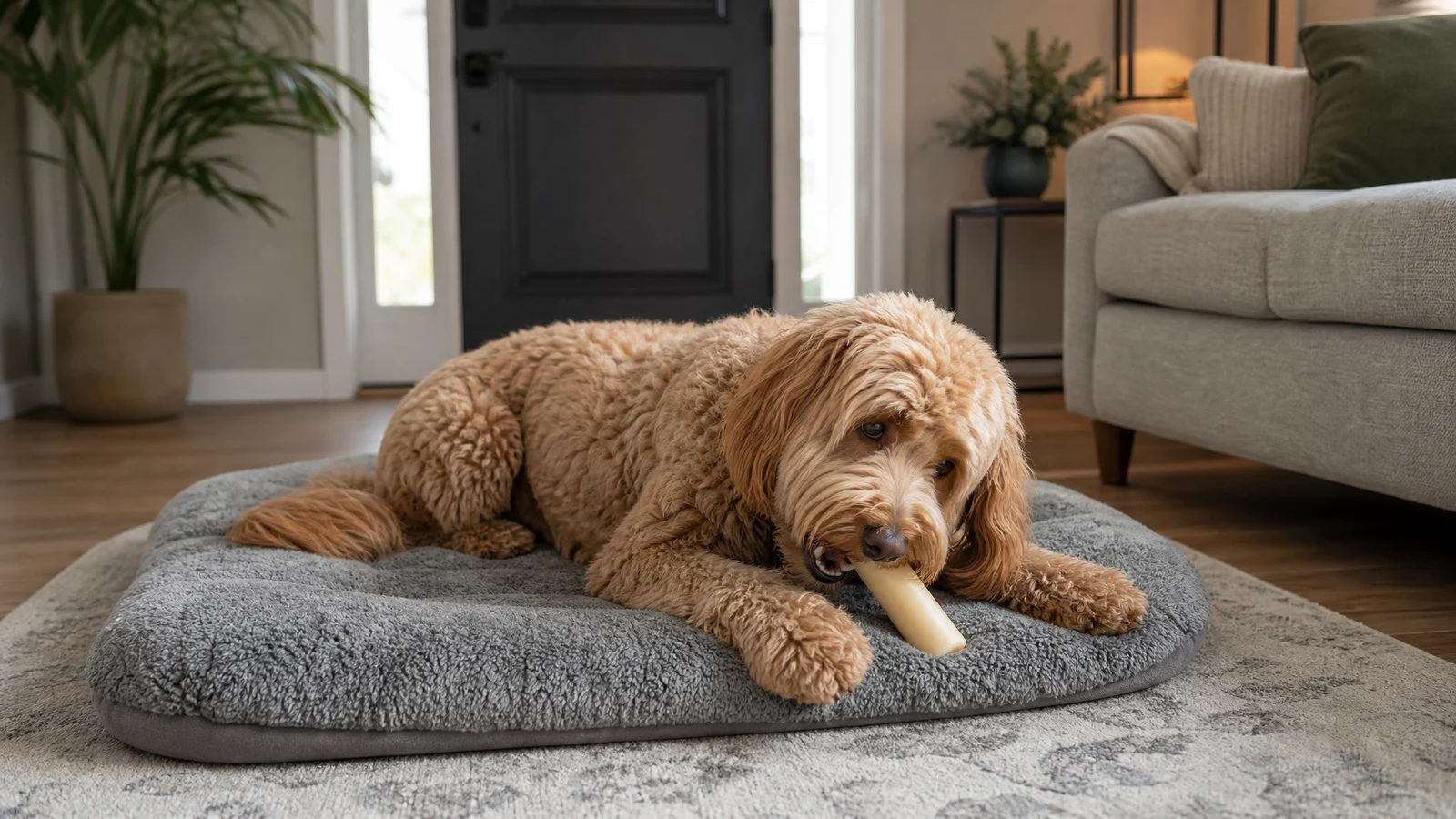 BehaviorShort Absences for a Devoted Australian Labradoodle
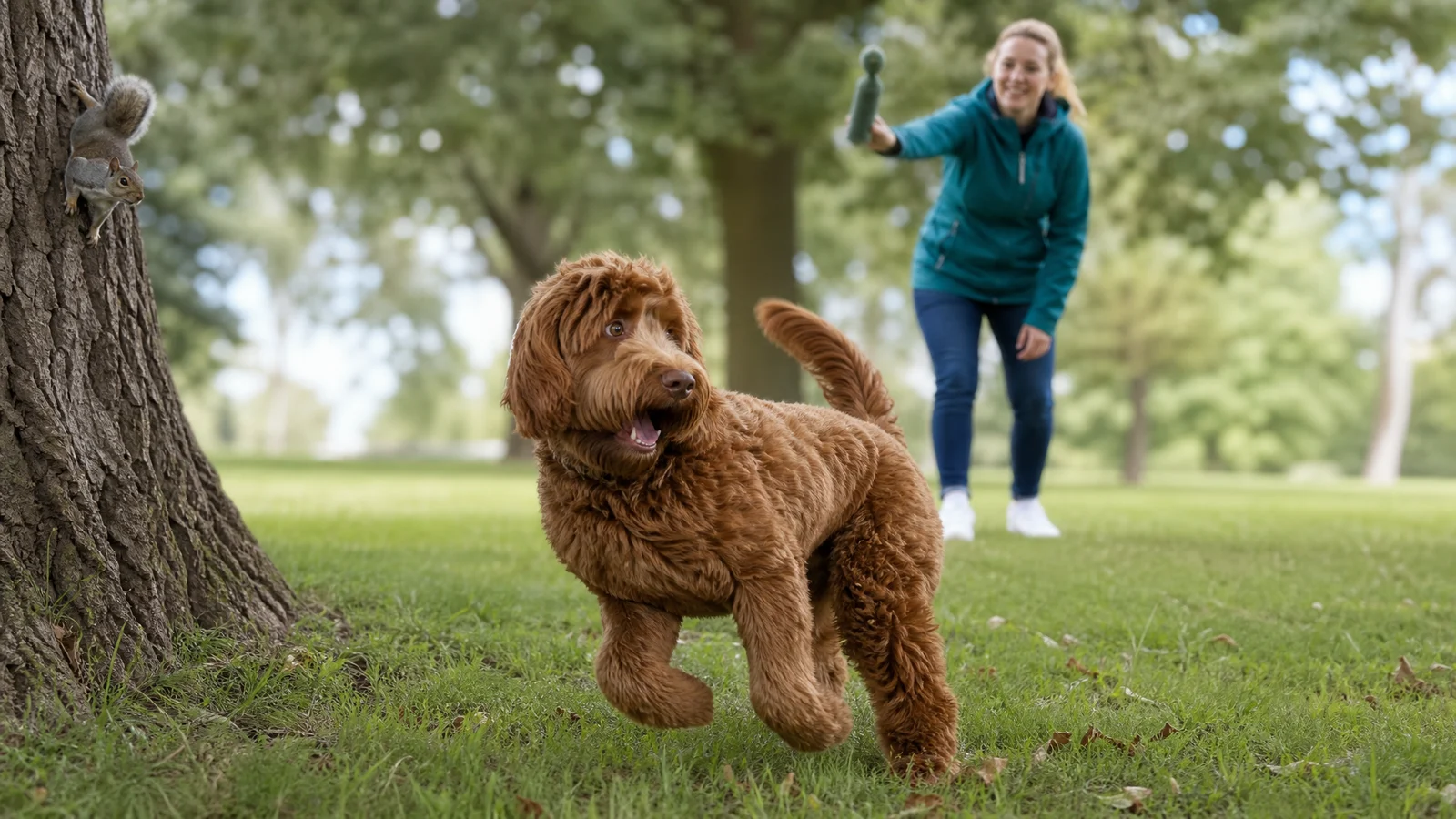 Training basicsAustralian Labradoodle Recall That Holds Up Near Squirrels