 Australian Labradoodle
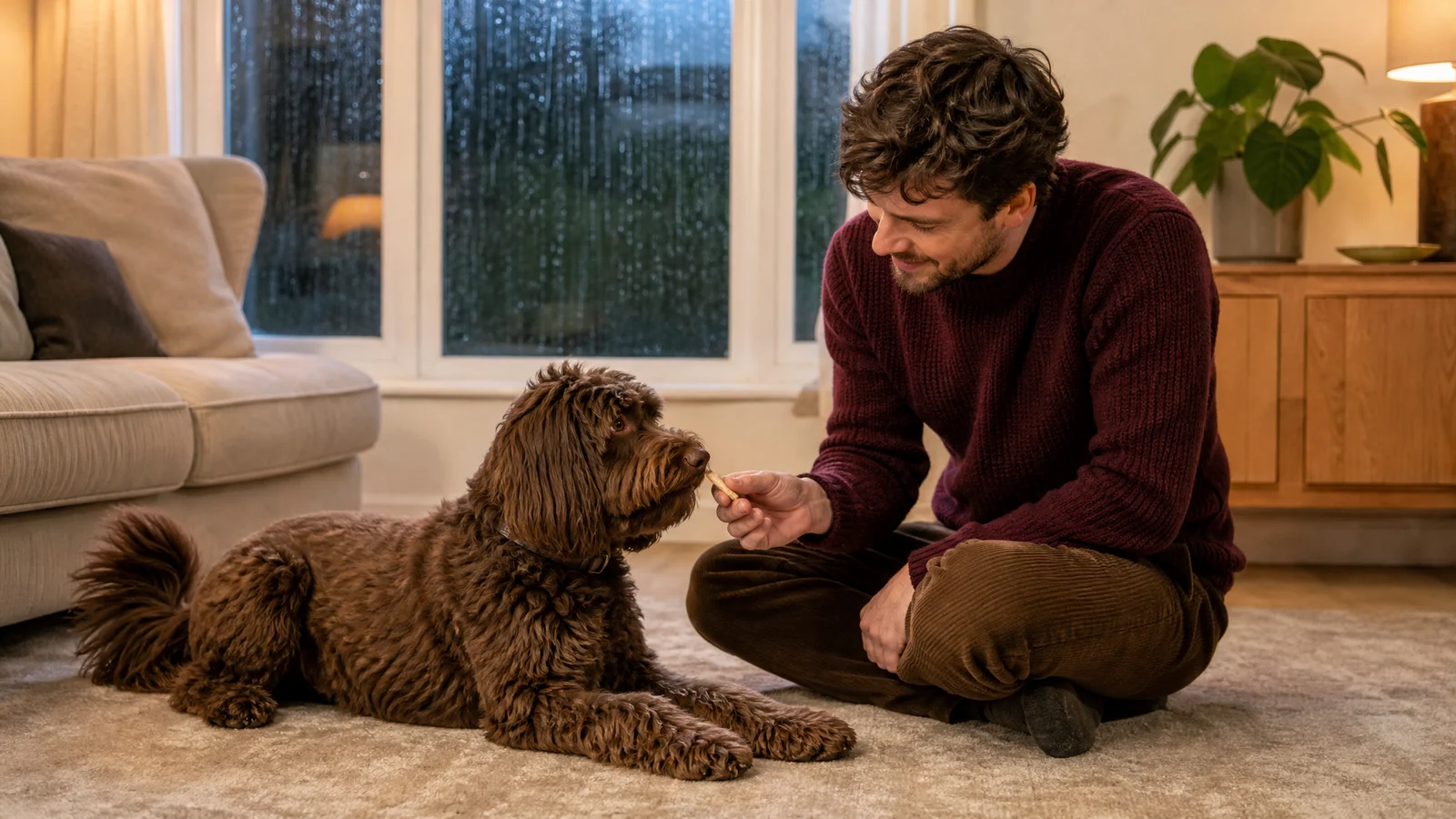
Owners most often describe the same mistake: dragging a startled dog toward the noise to get used to it, or soothing the fear with a long cuddle. Both turn a small scare into a big event. An Australian Labradoodle may inherit a soft streak from the Poodle and Cocker Spaniel side, so a slammed door can land hard.
The fix is to lower the volume, manage the exposure and pay for calm. We specialize in Australian Labradoodle behavior and training, and in our experience this order beats the reverse. Coat care counts too, because a matted coat means a longer session under the loudest tools your dog will meet.
Below, you'll find prevention steps, a reward guide, gear and safe spaces, and a graded practice plan, including daily routines, signs of progress and when to call a professional. A two-week schedule closes the article.
Managing Sound Sensitivity First
A flinch at the dishwasher is ordinary in a young Australian Labradoodle, and what you do next matters more than the flinch. Management comes before training because every big scare undoes practice. A dog who stays below the level of panic can learn, while a dog pushed past it learns only to dread the next sound. Keep today's noise small, then build the skill for next month.
Spotting Your Dog's Triggers
Walk the house and write down every sound spike, from doorbells and vacuums to dryers and garage doors. Add grooming, because clippers and dryers are the loudest tools your dog will meet.
Mats rarely spread evenly. They collect at the ears, face, tail, belly, rump, and the chest or armpits where a harness rubs. A quick daily check of those spots beats brushing the whole dog, and a matted coat means longer sessions under clippers and dryers.
Watch the body for freezing, ducking, a tucked tail, lip licking or bolting. Any of these means the sound was too much for now.
Breed profiles rate the Poodle 5 of 5 for watchdog nature and 4 of 5 for barking, so a cross may answer sounds by barking instead of hiding. Log that as a reaction too. Our guide to Australian Labradoodle door barking covers the next steps.
Keep a notebook with the sound, the distance, the reaction and the recovery time. Recovery time is the number you will follow from here on.
Lowering the Volume
Move the dog, not the noise, when you can. A closed door or a walk to the retreat room costs nothing and works at once. Run the dryer, vacuum and blender while the dog is elsewhere, and warn them before any machine starts. Keep your own voice normal and your movements slow.
When a startle happens anyway, use the same order each time. A predictable response from you gives your dog something steady to lean on.
- Watch the body, and note the sound and how far away it was.
- Add distance or close a door, and keep your body loose.
- Scatter a few soft treats on the floor, because sniffing and eating signal recovery.
- Let the dog walk to the retreat room alone if they choose, rather than carrying them in.
- Write down how long recovery took.
Limiting Surprise Exposure
Surprises come from people, so brief the household. Whoever runs a loud task gives a warning or closes a door first. Hang a pouch of tiny treats by the front door, where most surprises happen. Children bring squeals and slammed doors, so teach them the same quiet habits, as our guide to safe family introductions explains.
Groom timing is exposure management too. Owners report professional intervals from every 5–6 weeks to every 10 weeks, and severe matting tends to start when grooming stretches to 8 weeks or six months.
Fine, curly or changing coats can tangle even with diligent brushing, and some owners see heavy matting about two months after a groom. Many keep the body clipped short, sometimes with a fuller head, and need little brushing between grooms. Fewer long sessions mean fewer chances for a comb or dryer to become a bad memory.
Rewards for Australian Labradoodle Sound Sensitivity
The treat lands while the sound is still playing or just after it stops. That timing is the whole method, because the sound starts to predict something good. Food, a toy or praise delivered right then makes the calm response likelier to repeat. Here the behavior you pay for is staying loose while a sound plays.
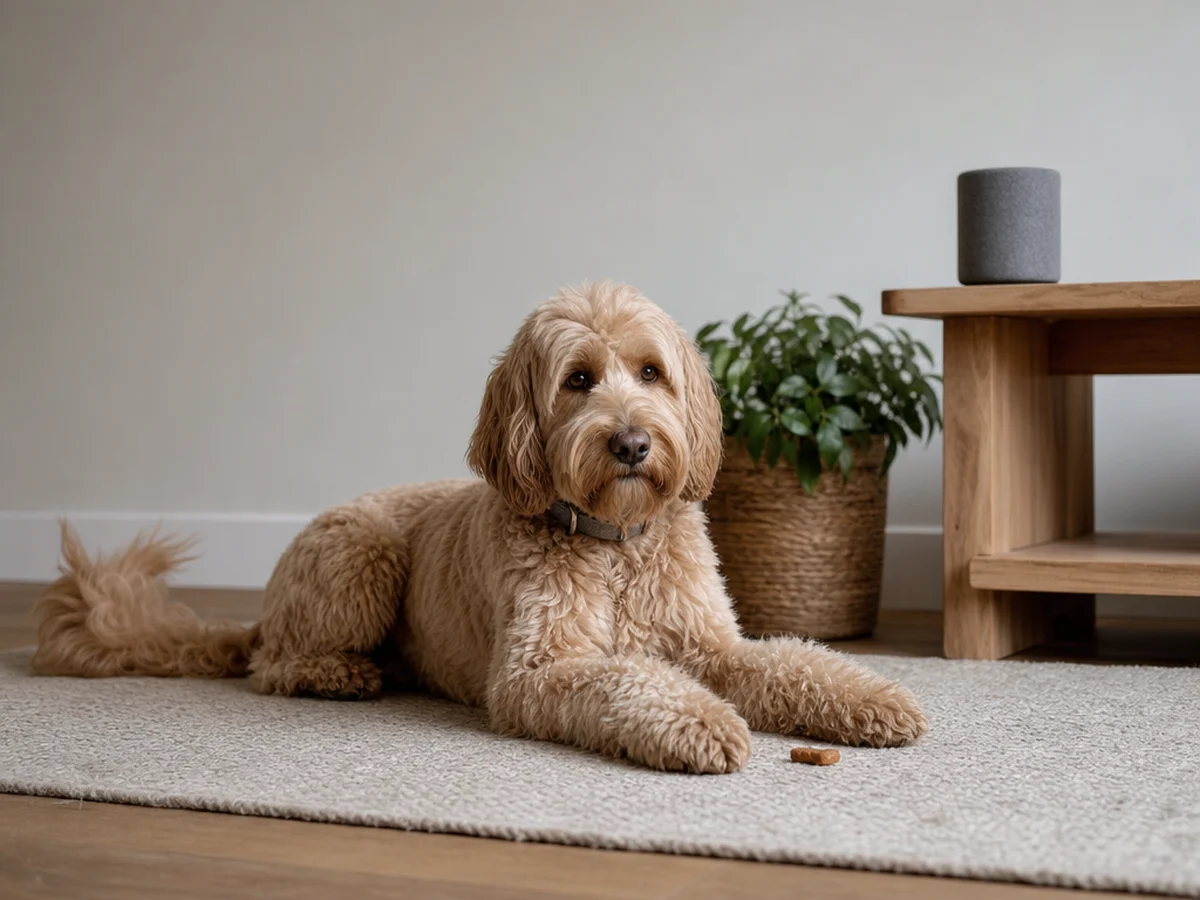
Reward-based work also keeps the body calmer. In a 2020 PLOS ONE study that measured 92 pet dogs, the reward-trained group displayed fewer stress signs and lower post-session cortisol than dogs from schools using mostly aversive methods.
Food Value and Timing
Pick food worth more than the sound is scary. Cocker Spaniels are described as readily motivated by food rewards, games and approval, and a cross may inherit that. Soft, tiny pieces are eaten at once, so you can pay after every sound.
Both the Poodle and Labrador profiles rate playfulness 5 of 5. A short game of tug can pay as well as food after a sound.
Deliver the treat the instant the sound happens, with a short marker word first if you use one. If you wait until the dog has already worried, you pay for the worry. When they refuse food, the sound was too strong, so lower the volume or add distance.
Does Comfort Reinforce Fear?
You may hear that comforting a scared dog rewards the fear. A calm voice, a hand resting on their side and an offered treat do not, because fear is a feeling and not a trick performed for attention. What backfires is a frantic flurry of petting and high-pitched reassurance, which tells the dog something terrible just happened.
Offer the comfort your dog invites. If they lean in, let them, and if they head for the den, let them go.
Noise Gear and Safe Spaces for Sound Sensitivity
Gear and rooms lower the sound before your dog hears it, which makes them tools for a sound-sensitive Australian Labradoodle and not extras. Test every item on a quiet day, so it has a good history before you need it.
Ear Protection and Calming Wear
If you use ear covers or a snug calming wrap, introduce them like any new object. Show the item, treat, remove it, and add a little time as the dog stays loose. If they freeze, paw at it or refuse food, put it away and try another day. Ask your groomer or vet about fit.
Check the coat under anything you add. Fine, curly or changing coats can mat quickly, in some cases within hours, particularly around the ears, and wraps or harnesses rub the chest and armpits where mats collect. Dogs wrestling and slobbering on each other's ears can cause bad tangles too, so comb the ears.
Many owners prefer a metal comb to a slicker brush on a curly coat. Some dogs dislike the slicker, and the comb reaches the skin.
Building a Sound-Dampened Den
Choose a crate or a corner and make it soft. Drape a blanket over part of a crate, add a bed and a chew, and set it against an interior wall. Quiet comes from distance and soft surfaces, not from silence. Serve meals and chews there so the den predicts good things.
Leave the door open during a scare. A dog who can choose to come and go uses the den more willingly.
Choosing the Quietest Room
Pick an interior room away from the front door, the washer and the garage. Add a gate or door, a bed, a chew and a low radio or white-noise machine, so sudden sounds arrive against a steady background. Keep windows shut and curtains drawn on noisy days.
Pick the room before you buy the bed, and set it up before the first storm. Stand inside and listen, because what you hear is close to what your dog hears.
Australian Labradoodle Sound Sensitivity Practice Plan
Practice starts on a good day, with a dog who is settled and eating. Prevention keeps today's noise small, and this plan builds what your dog can handle next month. Change one variable per session, either volume, distance or length, never two together. Repeat each step several times before you climb.
Starting Below Reaction Level
Pick a sound the dog barely notices. A recording of a household sound, played at low volume from far away, works well because you control it. Sound first, one treat second, every time. If the dog stops eating, the volume or distance was wrong, so drop back.
Breed profiles rate the Poodle and Labrador 5 of 5 for trainability and the Cocker 4 of 5. Quick learners absorb a bad scare as fast as a good lesson.
Raising Volume in Small Steps
The table lists the steps from easiest to hardest. Each row changes one thing and names the reward and the sign that it is time to advance.
| Step | Sound setup | Reward | Advance when |
|---|---|---|---|
| Quiet | Low volume, far away | One treat after each sound | The dog stays loose and keeps eating |
| Nearer | Same volume, closer | Treat plus a short game | The dog glances at the source, then back to you |
| Louder | Same distance, slightly more volume | Treat plus praise | The dog recovers without your help |
| Longer | Same volume, sound lasts longer | Treats during the sound | The dog keeps eating all the way through |
| Machines | Dryer or clippers off the body, then near, then touching | One treat per touch | The dog accepts touch without pulling away |
Climb only after the dog stays easy through every repeat of a row. After any bad day, drop back one row and rebuild the win. Adolescence can bring a backslide even in a dog who coped well, and a step back belongs to the plan.
Moving to Real-Life Sounds
Toss a treat at the doorbell before anyone opens the door, and announce the vacuum before it starts. The real sound now predicts food.
Brushing and clipper work teach the same lesson with hands and machines. Owners make brushing tolerable with one treat per stroke, a sticky lick mat, a cue word or a raised surface, and some report their dog now only mildly dislikes it. Dogs who run, jump away, mouth or nip are telling you the step was too big, not that they are bad.
Owners who start early report easier grooming later. They introduce machine noise near the body, gentle touch, closed scissors near the eyes and a free nail-trim visit at the groomer. Our guide to grooming a wiggly dog covers the small steps.
Daily Routines for Sound Sensitivity
Run the loud chores at the same hours each day, and your dog learns when to expect them. Breed profiles rate adaptability 4 of 5 for the Poodle and Cocker and 5 of 5 for the Labrador, so a cross may handle change fairly well. Even so, a sensitive dog gains from a steady pattern of meals, walks and rest.
Planned Quiet Time
Schedule rest after exercise and ahead of the noisiest part of the day. A cross may inherit the Lab's need for plenty of daily exercise, and a dog with energy left over settles poorly in any room. Offer a chew or lick mat in the den so rest has a reward attached.
Let the dog sleep undisturbed in the den after exercise. Ask visitors and children to leave them alone there until they come out.
Prep for Storms, Deliveries and Fireworks
Check the forecast and the calendar. Before a storm or fireworks, exercise the dog earlier, close the curtains, start the radio and keep the treat pouch full. For deliveries, move the dog to the retreat room before the courier arrives, so the knock never lands on a relaxed dog.
Storms often hit while you are out. Practice short absences with the same log, so a dog who settles alone carries one less worry.
Signs of Sound Sensitivity Progress
Compare the same sound at the same distance, using your notebook, because one good day proves little. Progress looks like a shorter recovery, not a dog who ignores everything.
- Recovery time shrinks, and the dog returns to sniffing, playing or lying down sooner after the same sound.
- The dog takes treats near a noise they used to avoid, and eats a meal with the dishwasher running.
- Ears and body stay relaxed, with soft ears and loose shoulders, and the dog glances at the source before looking back to you instead of freezing or bolting.
- They choose the retreat room on their own and settle there.
- Handling gets easier, and brushing, ear touching and dryer noise end without mouthing, nipping or leaving.
A setback looks like the old reaction coming back: refusing food, hiding, trembling or a recovery longer than your log predicts. It often follows a loud event, a move, an illness or a skipped step. Respond by dropping back one row, keeping sessions easy, and adding distance and softer treats until the dog eats again.
Judge the trend over weeks, not single days. A bad afternoon after a thunderstorm does not erase weeks of steady gains.
Professional Help for Your Australian Labradoodle
Call for help when the fear is severe or the plan stalls, and do not wait for a bite or an injury. Start with your veterinarian, then ask about a qualified behavior professional. Regular vet visits belong on the calendar every year anyway, and if your dog starts reacting to noise very differently than before, book an extra one.
Signs You Need Help
Watch for panic that lasts long after the sound, refusal of food for hours, and injury or a wrecked room from trying to escape. Growling, mouthing or biting when touched while scared is another flag. So is no improvement after weeks of steady work, or fears that spread to new sounds, places or people, which matters for a cross whose Poodle parent's standard lists shyness or sharpness as a major fault.
Your vet can rule out pain or illness first, which matters for a dog who suddenly seems jumpier. That visit also gives you a medical baseline before behavior work begins.
What Help Looks Like
Check credentials, because the label "behaviorist" is used loosely. A veterinarian carries ACVB board certification to earn it, yet a trainer can use the same word with no education required. Ask which methods they use, and expect treats, play and praise.
For fear that tips into aggressive behavior, guided behavior modification is described as the safest, most effective treatment, and it works by rewarding good behavior. Expect a written plan, management steps, graded practice and homework that looks much like this article, adapted to your dog.
This is general information, not medical advice. Check with your veterinarian about any sudden change in how your dog reacts to sound, and before trying any product, supplement or treatment.
Your Australian Labradoodle's Two Weeks
Manage first, then reward gradual practice: that order is the whole approach. It suits a cross who may inherit softness from the Poodle and Cocker side and a willingness to work from the Lab side. Here is the plan, week by week.
- Early in week one, choose the retreat room, build the den, and teach everyone the same calm response.
- Fix the easy triggers by closing doors, warning the dog before machines start, and running the dryer and vacuum while the dog is elsewhere.
- Start the notebook, and after every startle note the sound, the distance and how long until the dog sniffs, eats or plays again.
- In week two, hold short sessions on good days only, at the quiet row of the table, with one treat per sound.
- Change one thing, either slightly closer or slightly louder, and go back a step if the dog stops eating. Add one handling session a day with a comb on the ears and other trouble spots, a treat per stroke and a machine running at a distance.
- At the end of week two, read the log. If recovery is not getting shorter or the fear is severe, book the vet visit and ask about a qualified professional.
Two weeks will not finish the job, but they will show whether recovery is getting faster, and that is the number to follow. Managing the noise keeps your dog below the level of panic, and rewarded calm gives them something better to do. Keep sessions easy, keep the log honest, and lean on the love of praise and treats this cross may inherit, because a dog who enjoys working for you learns calm quickly when the noise stays small.
 BehaviorTeaching an Australian Labradoodle a Four-Paws-Down Hello
 BehaviorBored Australian Labradoodle: Chewing, Digging and Zoomies
 Puppy trainingFrom Pup to Trained Australian Labradoodle by Age Two