 Australian Labradoodle
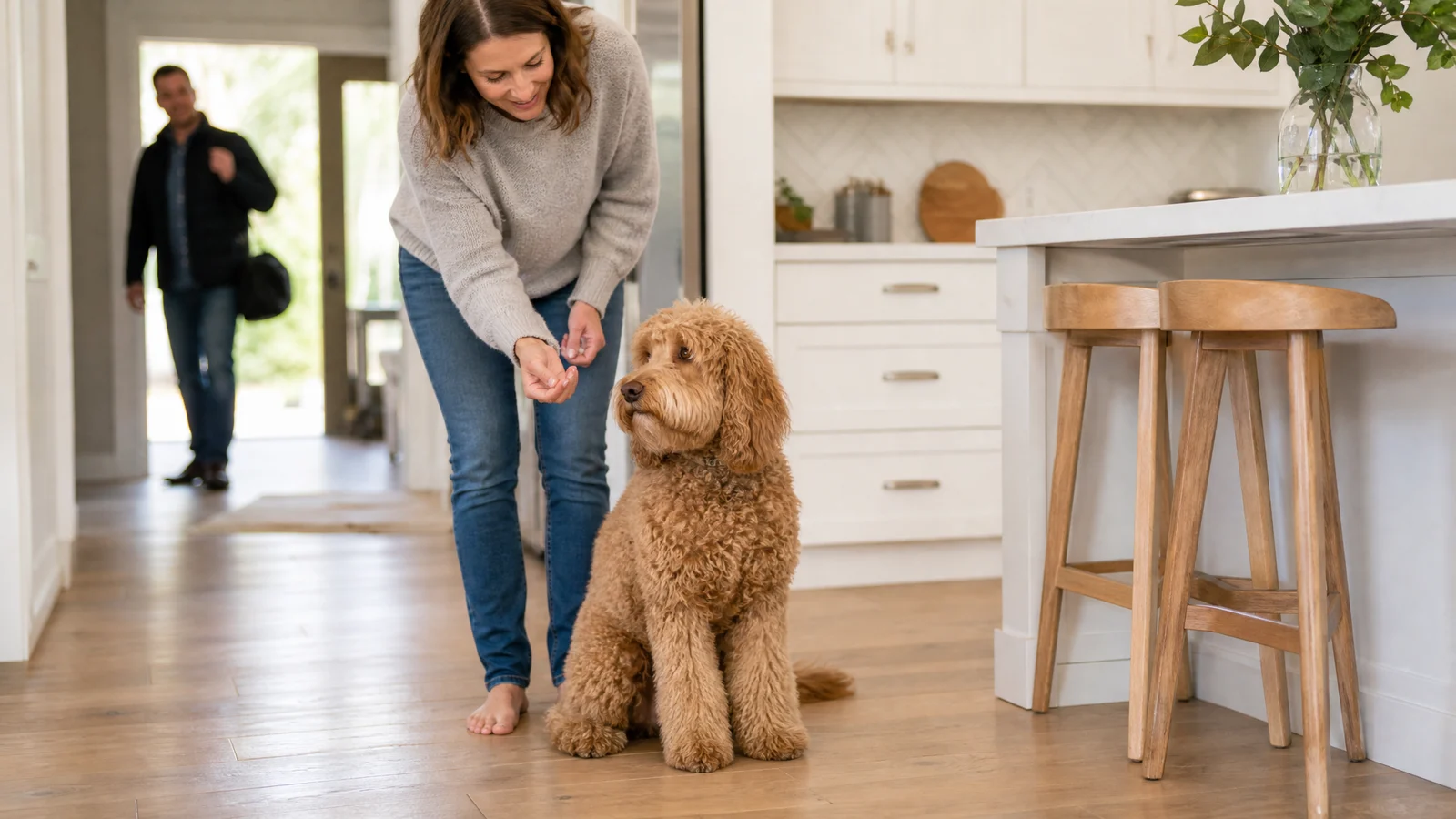
People often expect an Australian Labradoodle to arrive almost pre-trained: clever like a Poodle, willing like a Labrador, and eager to be near the family. The contrast appears when the dog learns a cue quickly in the kitchen, then seems to forget it as soon as a visitor walks through the door. That expectation makes ordinary distraction look like a character flaw instead of a training variable.
That gap does not make the breed unintelligent or stubborn. A cross may inherit strong trainability along with high playfulness, energy, and interest in people. Learning can be fast while attention remains fragile, especially when the setting is exciting. Separating those abilities keeps the plan fair and shows which part actually needs practice.
This article looks at Australian Labradoodle temperament through three useful contrasts: quick learning against bouncy focus, family affection against generalization, and eagerness against overarousal. We will turn those contrasts into a reward plan and a two-week way to read the dog in front of you.
Temperament, Trainability and Attention
The parent-breed evidence supports optimism without guaranteeing an easy dog. Labrador Retrievers and Poodles each rate 5 of 5 for trainability, while Cocker Spaniels rate 4 of 5. Those scores describe the parents, not every Australian Labradoodle, so the sensible prediction is potential rather than certainty. The individual dog's response in several settings remains the better test.
What Clicks Quickly
A dog who may inherit Poodle intelligence or Labrador willingness can connect a marker, an action, and a reward with impressive speed. The Cocker side may add ready motivation through food, play and praise. Clear timing lets that ability show because the dog can tell exactly which choice earned the result.
Fast learning is easiest to see in a quiet room. Ask for one simple action, mark the instant it happens, and deliver the reward promptly. Several clean successes teach more than a long session in which enthusiasm turns into guessing, grabbing, or offering every known behavior at once. Stop while the response is accurate, then return later with the same clear arrangement.
What Breaks Focus
The same parent profiles also point toward distraction. Labrador Retrievers rate 5 of 5 for energy, while Labrador Retrievers and Poodles both rate 5 of 5 for playfulness. A cross may therefore understand the cue and still lose access to it when motion, a new person, or a possible game raises excitement.
We treat that as a setup problem before a knowledge problem. Move farther from the distraction, ask for an easier version, and reward sooner. Repeating a cue into rising excitement only teaches that the first request is optional, while changing the setting gives the dog a realistic chance to answer.
Australian Labradoodle Family Affection
Family affection can make training feel unusually connected. Labrador Retrievers and Poodles each rate 5 of 5 for affection with family, and the Labrador is described as needing inclusion in family activities. An Australian Labradoodle may watch people closely and enjoy learning as a shared activity. That social attention is useful, but it still has to become a dependable skill.
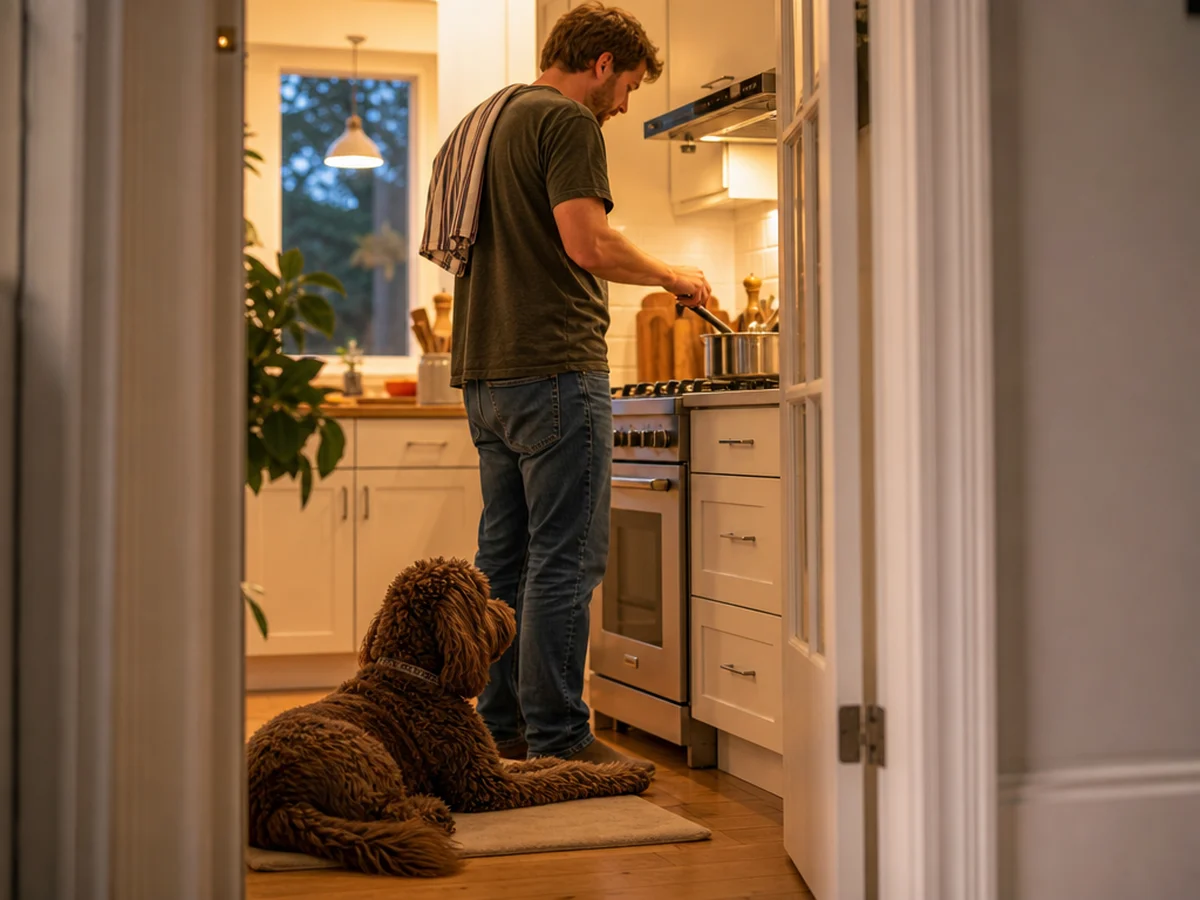
Learning Beside the Family
Closeness helps when the household notices and rewards useful choices. A dog who lies down while dinner is prepared, checks in during play, or follows a familiar cue can be paid with food, praise, or access to the next activity. Reward-based training makes those choices more likely to happen again.
Affection can also hide weak independence. A dog may perform beautifully while one person stands close, then struggle when that person moves away. Practice the same behavior with small changes in distance and with different family members, so attachment supports the lesson without becoming part of the cue.
Working Beyond the Kitchen
Generalization means learning that one cue has the same meaning in different places. Dogs do not automatically treat a kitchen sit, a yard sit, and a sidewalk sit as the same task. The affectionate learner who watches you indoors still needs the lesson rebuilt where smells, movement, and unfamiliar people compete. Each successful change adds another version of the cue to the dog's understanding.
Begin the new setting below the dog's excitement limit. Use an easy cue, pay generously, and leave before focus dissolves. Our Australian Labradoodle loose-leash guide applies this idea to walks, where distance from a possible greeting often matters more than repeating the word.
Australian Labradoodle Eagerness and Overarousal
Eagerness is useful only while the dog can think. The Labrador parent is described as friendly, outgoing, and high-spirited, while the Poodle is active and very smart. An Australian Labradoodle may rush toward the work, but speed, jumping, barking, or frantic treat taking can show that excitement has outrun learning.
Overarousal changes the lesson. A dog who can no longer pause, eat normally, or turn back toward you is not ready for a harder request. Add distance, slow the activity, or switch to a familiar settle. The aim is not to drain all enthusiasm, but to keep enough calm for the dog to notice consequences.
The recovery after excitement is as informative as the excitement itself. Watch whether your dog can sniff, take a reward softly, and reconnect after the visitor sits down or the moving dog passes. A quick recovery supports the next small challenge. A dog who stays frantic needs more space and a simpler pattern, even if the same dog learns rapidly at home.
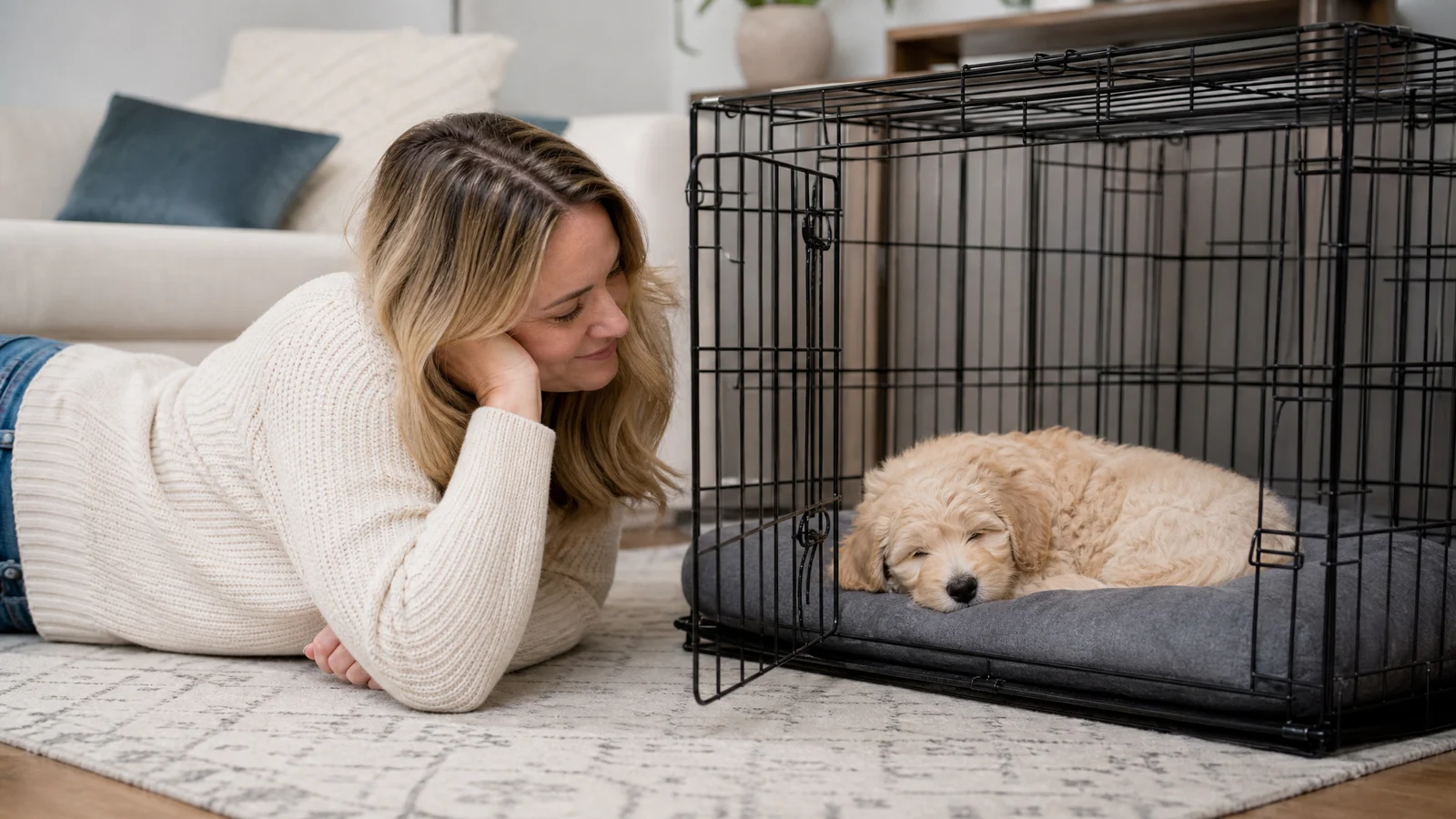
A crate or resting area can support downtime, but it should not be used as the sole answer to separation distress. Professional guidance belongs in that situation. A calm station is most useful when it has already been taught as a comfortable place to relax.
Australian Labradoodle Motivation
No single reward proves whether this breed is easy to train. The Cocker parent may be motivated by food, play, and praise, while the people-oriented Poodle is quick to please when routines are fun, positive, and consistent. The individual dog's preference can also change with the setting.
Food is precise and quick, which makes it useful for new behaviors. Play can restore energy when repetition becomes flat. Praise works best after it has gained meaning through shared activity. A real-life reward, such as permission to greet, can be powerful when friendly enthusiasm is the exact distraction you are teaching around.
Test rewards rather than assuming one will always win. In a quiet room, compare a small food reward, a brief toy game, and warm praise after the same easy response. Then repeat in a slightly busier place. The reward the dog can take calmly and return from is often more useful than the one that creates the biggest burst of excitement. A workable reward supports another thoughtful repetition instead of ending the lesson in a scramble.
Timing matters more than the size of the payment. PetMD's puppy guidance illustrates the principle by recommending that people praise and treat promptly after outdoor toileting. Across skills, the dog needs the reward close enough to the behavior to connect the two.
Temperament in Daily Training
A useful daily plan alternates activation and recovery. Train a small skill, let the dog move or play, then reward a settle. This rhythm fits a cross who may inherit energy, playfulness, affection, and strong mental stimulation needs, and it teaches that calm behavior belongs inside the training session rather than after it.
Household Practice
\nKeep the household's rules simple enough to repeat. The complete Australian Labradoodle training plan expands the system, but temperament becomes easier to read when everyone starts with the same few habits:
- Mark one clear behavior at a time and deliver the reward where you want the dog to remain. If you are teaching a settle, place the food between the paws rather than pulling the dog upright toward your hand. Reward placement is part of the information, so every family member should pay in the same place until the picture is clear.
- Practice a known cue in more than one room before expecting it in a busy public place. Change one detail at a time, such as the person giving the cue, your distance, or the room. If the response weakens, make the next repetition easier instead of treating the lapse as defiance.
- Use distance when greetings or movement make food, play, or your voice lose value. The useful distance is where your dog can notice the distraction and still turn back without straining. Work there until the return becomes easy, then close the gap gradually across separate sessions.
- End while the dog can still think, then offer an appropriate movement or sniffing break. Stopping on a successful response preserves confidence and keeps the next session inviting. A break also helps you distinguish mental fatigue from a cue the dog has not yet understood.
- Reward voluntary calm as deliberately as sits, recalls, and other active responses. Notice the unprompted sigh, the choice to stay on a mat, or the glance back from a distraction. Quiet choices can disappear beneath a bouncy personality unless the household makes them worth repeating.
Regular veterinary checkups matter because a sudden change in focus, willingness, or tolerance can reflect discomfort rather than temperament. When behavior shifts abruptly, pause the training assumptions and speak with your veterinarian before increasing the difficulty.
A Two-Week Temperament Test
Use the next two weeks to observe three separate abilities. First note how quickly your dog learns in a quiet room. Then check whether the same response survives a change of room or person. Finally, watch how long it takes your dog to reconnect after play, movement, or a possible greeting raises excitement. Keep the challenge modest enough that recovery can improve across the observation period.
Change only one feature at a time, and record the setting, reward, and response in plain language. A fast learner who loses focus outdoors needs generalization work, not more drilling indoors. A willing dog who becomes frantic needs easier arousal practice, while a dog who stays engaged but learns slowly may simply need clearer timing.
Australian Labradoodles can be highly trainable without being effortless. Their strongest contrast may be a bright, affectionate learner inside a bouncy, social body. Read both sides, reward what you want, and set the environment so eagerness remains available for learning across calm, moderate, and busy settings.
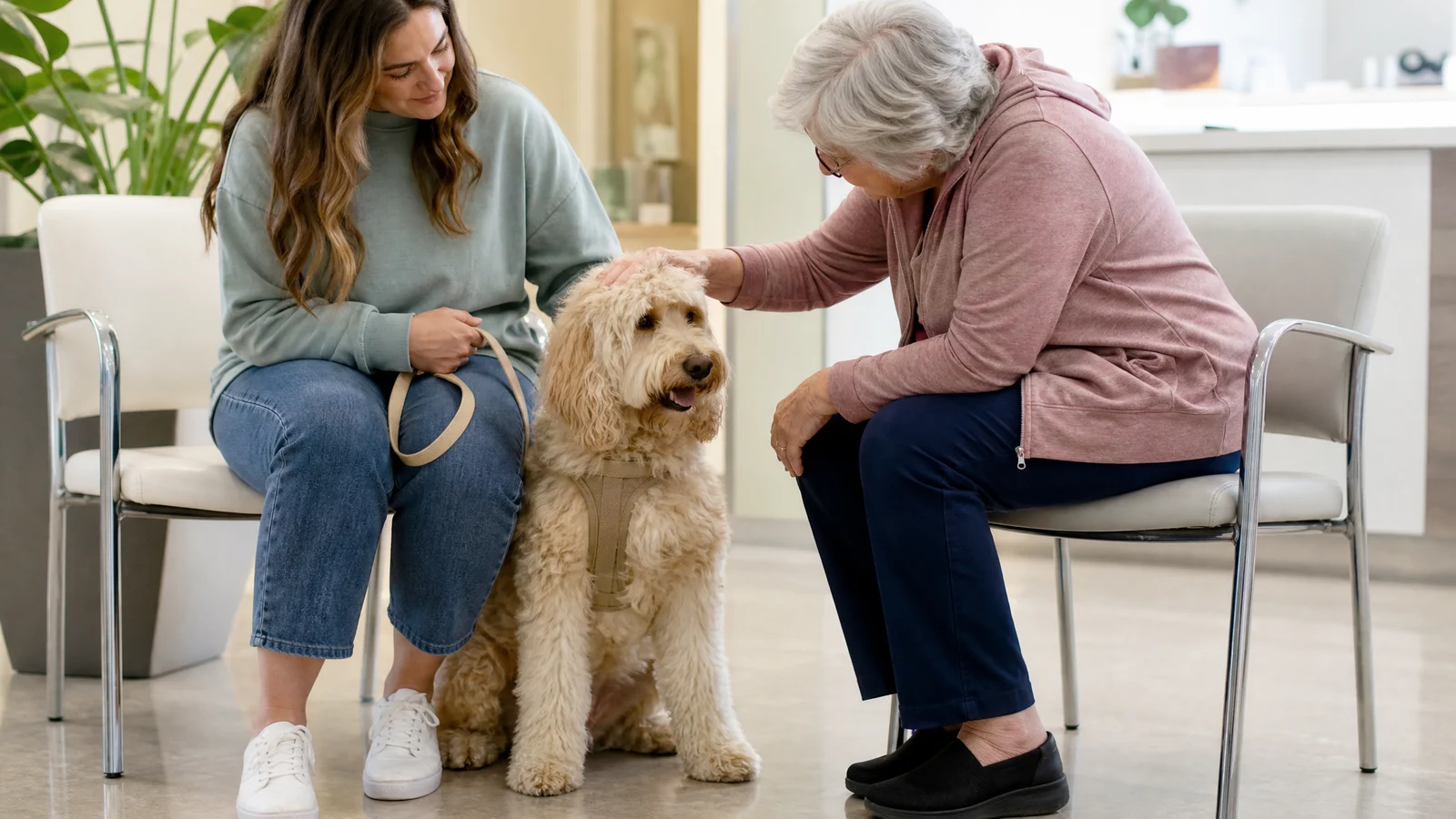 Exercise and jobsWhich Therapy Dog Skills Come Easily to an Australian Labradoodle?
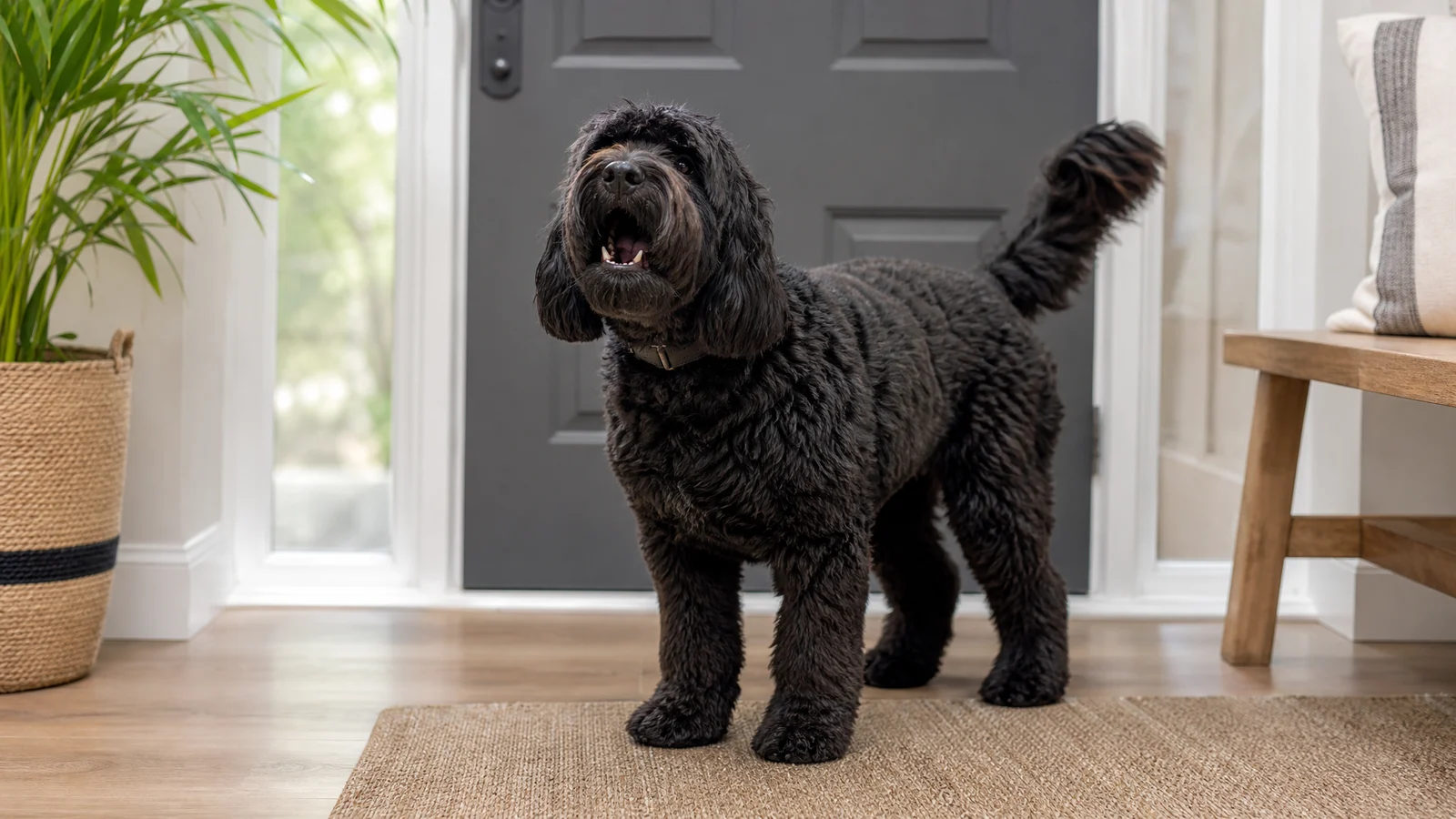 BehaviorWhy Does My Australian Labradoodle Bark at the Door?
 Training basicsCrate Training a Velcro Australian Labradoodle Puppy