 Australian Labradoodle
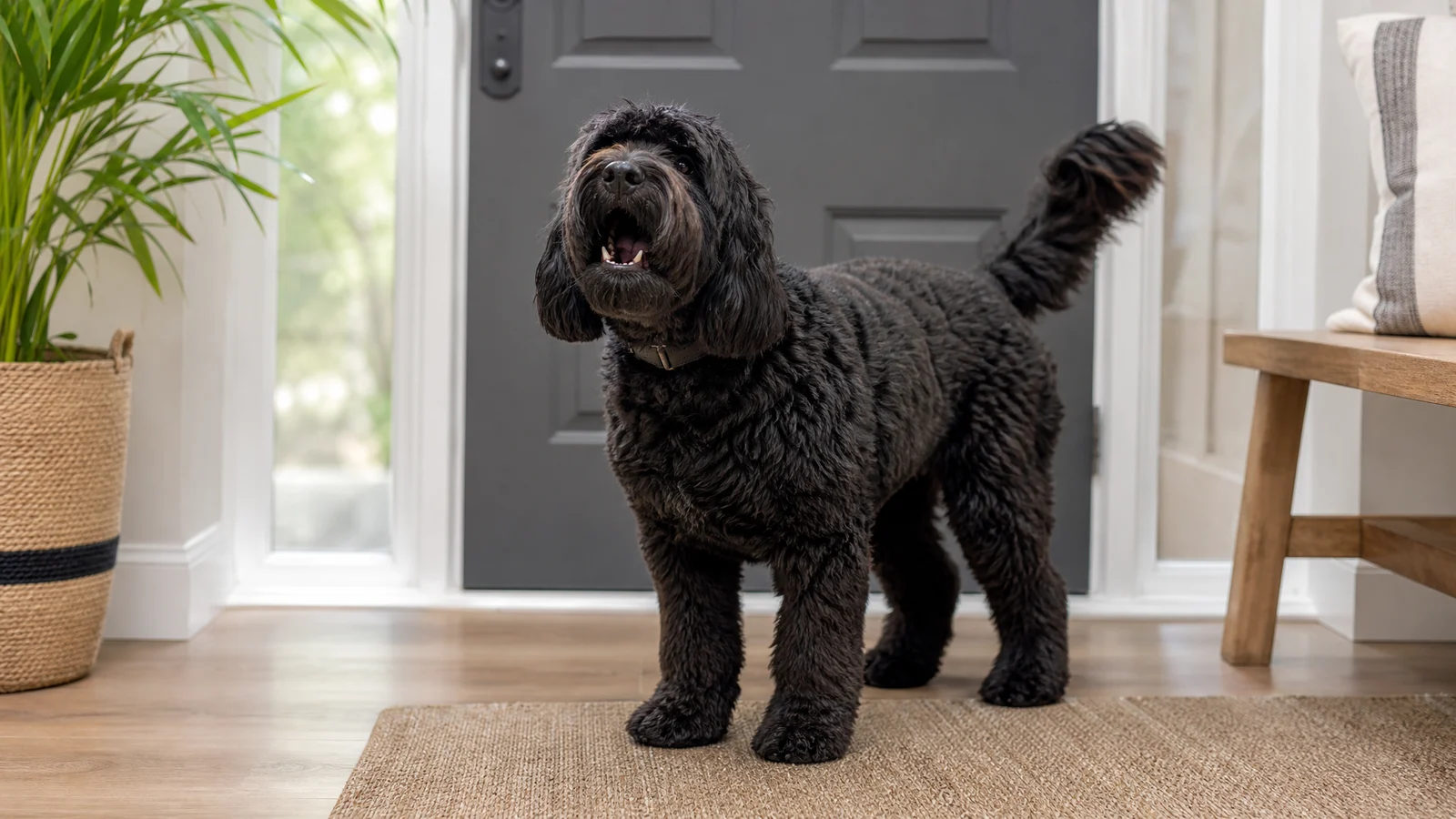
Standard breed descriptions and everyday advice tend to sort dogs into two camps. A watchdog sounds the alarm and stays wary of strangers, while a friendly, outgoing dog barely speaks up at all.
Australian Labradoodle owners describe both at once: a loud alert the second the bell rings, followed by a wiggling, whole-body welcome for the very person who set it off. Many say their dog is calm all day, then comes unglued when someone walks in.
We have specialized in this breed's behavior and training for a long time, and this pattern is among the most predictable we know. This article looks at barking from the first puppy yips to the senior years, so you can build a go-to-mat routine, teach a calm-greeting cue, reward quiet, and keep jumping in check. Handled badly, the doorway becomes a daily frenzy. Handled well, you get a brief heads-up and a happy hello.
Early Barking in the Australian Labradoodle Puppy
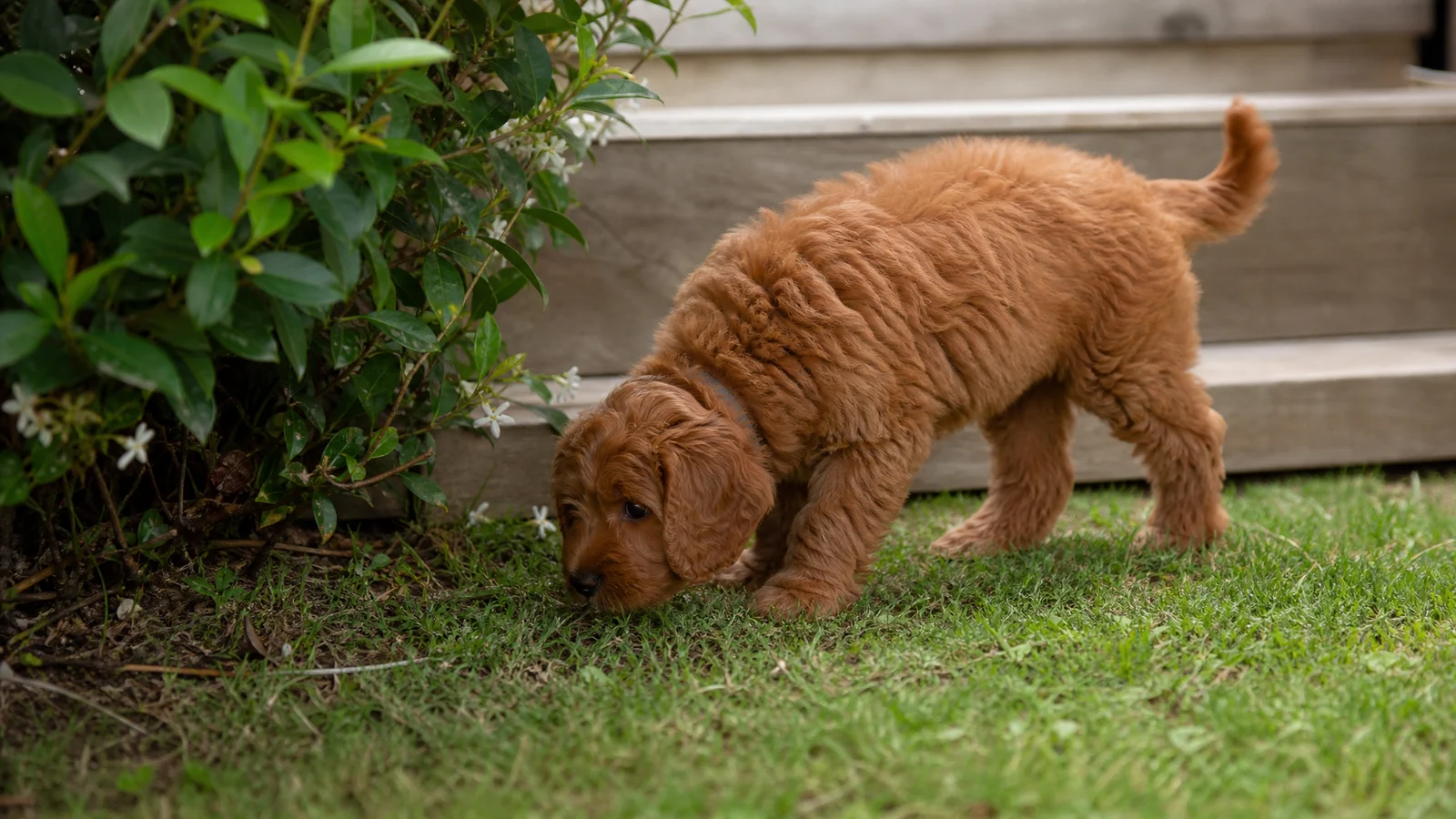
Early barks are often alerting: a yip at footsteps in the hall, a woof when a car door thumps outside, a startled squeak at the vacuum. Your puppy is sorting the sounds of a new home into familiar and strange. The Poodle parent is rated 4 of 5 for barking, so a puppy who comments on everything is showing their ancestry, not a flaw.
Some barks deserve a closer look. Excited barking in play and demand barking from behind a gate are learned fast if they get results. Answer a true alert with a calm word and a treat once the puppy stops. Wait out a demand bark until there is a pause, then hand over the attention. Make a habit of rewarding natural quiet during the day, so your puppy learns that silence earns your company.
Evenings bring their own racket. Many owners report intense late-day wild spells in young puppies, full of zoomies, barking and mouthing, and some say the display frightens a small child in the house even though the puppy means no harm. Plan those hours before they arrive. Give children a gated space, hand the puppy a stuffed chew or a snuffle mat, and wind the whole household down together.
Keep regular vet visits on the calendar through puppyhood, and mention it if your puppy's noise level changes suddenly.
Doorbell Barking Takes Shape in Adolescence
Sometime as they grow, the puppy connects the dots. The bell rings, they bark, the door swings open, and people pour in cooing. Both the Poodle and the Labrador are rated 5 of 5 for openness to strangers, so to your dog that sequence is a party and the bark is the invitation. Owners almost never mean to reward it, yet the accidental payoffs stack up fast: you hurry to the door, you hiss a flustered shh, and the guest crouches down for a cuddle.
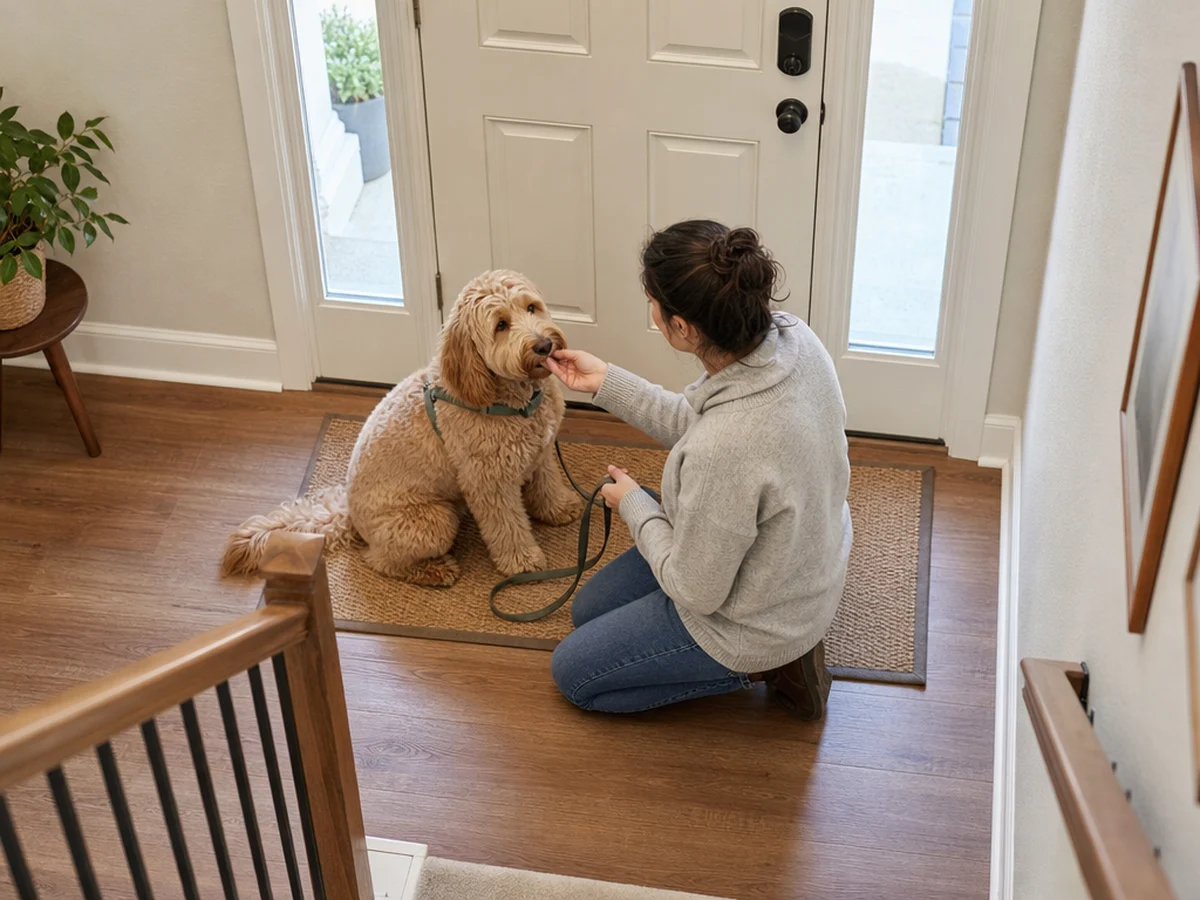
Size may change how the scene feels more than whether it happens. A smaller dog's jump may be easier to laugh off, which makes it easy to reward by mistake. A larger dog's bounce can be harder to ignore and harder to block with your knees. The routine is the same for any size, and the best time to teach it is now, before the habit sets.
Sound advice is to keep dogs from greeting people at the door and to teach a mat routine where they wait quietly until invited. Build it in small steps:
- Teach the mat far from the door. Reward your puppy for stepping on it, then for lying down, and pick a release word that means they may get up.
- Stretch the stay gradually by dropping treats onto the mat while your puppy remains settled.
- Play a doorbell recording quietly while your puppy rests on the mat, treat calm behavior, and raise the volume over many brief sessions.
- Move the mat toward the door, then add a knock, then the real bell with a family member outside.
- Release your puppy to greet only once they are relaxed, so the party becomes the payment for calm.
Adolescent Door Barking and Wild Greetings in Australian Labradoodles
Door barking and wild greetings can get harder as dogs grow and gain confidence, and it can catch owners off guard. The puppy who sat so politely last month may seem to have deleted every cue. A bigger body, higher confidence and the Labrador side's bounce can all add to the scene.
A Lab-type dog who lacks exercise tends to find hyperactive outlets, so an under-exercised adolescent may bark more and greet harder. Walks, sniffing and brain games come before any door lesson.
At the Front Door
Many owners find that arrival excitement makes sit-for-a-treat only partly effective, producing a half-sit and a bounce. That is arousal outrunning skill, not stubbornness. Lower the temperature before you ask. Send your dog to the mat, have guests walk in calmly and ignore the dog until they relax, and pay for staying put rather than for a flawless sit.
If your dog does jump, turning your back and calmly walking away shows that jumping has the opposite effect to what they wanted. Reward the instant all four paws land. Then add a calm-greeting cue, a phrase like say hi that means you may greet now, given only when your dog is settled.
Greeting Dogs on Walks
The same wildness appears with other dogs. Some Australian Labradoodles treat every dog they see as a playmate and turn frantic when told they cannot go. Greeting dogs needs the same practice as greeting people. Begin far enough back that treats still matter to your dog, reward soft, calm looks, then turn and stroll away together.
Greet only when the other owner agrees and your dog is loose and relaxed. Plenty of walks should end with no greeting at all, so that spotting a dog stops being a promise of play. For safe introductions to kids, dogs and strangers, see our guide to raising a social butterfly.
Why Alert Barking and Friendly Greetings Coexist
It looks like a contradiction until you line up the parents. The Poodle is rated 5 of 5 for watchdog nature and 4 of 5 for barking. The Poodle and the Labrador are each rated 5 of 5 for openness to strangers, and the Cocker 4 of 5.
Your dog can inherit a sentry's attention and a socialite's heart, and uses both within seconds of each other. The Labrador and Cocker sides each sit at 3 of 5 for barking and watchdog nature, so how much of each shows up varies from dog to dog.
The bark is a news bulletin, not hostility. Your dog is announcing that something happened, then discovering who it is and abandoning the sentry post for the celebration. Treating that bark as aggression misreads them. So does the popular line that a friendly dog will simply outgrow it. We disagree. Friendly dogs repeat whatever pays, and a party at the door pays extremely well.
Brains matter here too. The Poodle parent is rated 5 of 5 for mental stimulation needs, playfulness and trainability. A dog who needs a job will appoint themselves doorman unless you offer something better. The mat is that better job, and a clever, eager-to-please dog takes to it quickly when sessions stay fun and consistent.
Barking in Adulthood, When Habits Set
By adulthood, the door routine has been rehearsed so many times that it runs on autopilot. The bell rings, your dog launches into the bark, spins once, and heads for the visitor. The Poodle is rated 4 of 5 for adaptability, which means your dog readily adopts whatever routine you actually run, including the one you never meant to teach. Every unplanned greeting still counts as practice.
Other habits harden alongside it. Window watching, barking at deliveries, and a regular bout of demand barking when you sit down to dinner all become fixtures. They usually trace back to a time the barking got a result, such as a glance, a laugh or a snack to quiet things down. Notice what each habit earns, then quietly stop paying for it.
Habits do change, but expect more repetition than puppyhood needed. Daily practice over several weeks usually shifts a settled routine, and a household where everyone follows the same rules matters more than any clever technique. Keep sessions short and bright. Dogs with a Poodle's eagerness stay keen when training feels like play.
Managing Barking in the Adult Australian Labradoodle
An adult routine works because it is dull: identical every time and identical for everyone in the home. The aim is not silence. It is a short alert, a quick thanks, a trip to the mat and a calm greeting on your terms. These points make up the routine:
- A good walk and some sniffing time before expected visitors lower your dog's starting energy, which counts for a lot in a breed with Labrador-side drive.
- Thank the alert with a calm word and cue the mat before the barking gains momentum.
- Deliver treats to the mat in a slow trickle while guests enter and sit down, so staying put pays better than rushing.
- Ask guests to ignore your dog until released, with no eye contact, no baby talk and no outstretched hands.
- Release with the calm-greeting cue, leash on at first, and have guests turn away if jumping starts.
- If your dog cannot settle, a short break behind a gate with a chew lets everyone reset. Treat it as a pause, nothing more.
A crate can double as a mat spot for some dogs. Just know that crates and separation anxiety call for professional guidance, so a crate is not the tool for handling distress when you leave.
If evening zoomies persist, keep your dog's wild hour apart from young children's time or give both a calm structure. A reliable calm greeting also pays off beyond your doorway, because it underpins the Australian Labradoodle therapy dog skills many of these dogs pick up easily.
Living Long Term With a Barking Australian Labradoodle
Realistic expectations make this easier. Your dog will probably always announce visitors, because the watchdog streak is part of who they are, and so is the wiggly joy at the end of the announcement. You cannot delete the alert, but you can shape how long it lasts and how the greeting looks. The table shows what tends to fade, what tends to stay, and what keeps each one manageable.
| Behavior | Over the years | What keeps it manageable |
|---|---|---|
| Evening zoomies | Often ease as the dog matures | Exercise, a calm wind-down, separate space for small children |
| Door alert bark | Stays, but can become brief | The same mat routine every time |
| Greeting excitement | The wiggles stay, jumping fades with practice | A calm-greeting cue and guests who follow the rules |
| Excitement about other dogs | Eagerness stays | Distance, rewards and plenty of walks that simply pass by |
As your dog ages, keep up regular veterinary checkups. A sudden change in barking, much more or much less, deserves a visit rather than a guess.
Over the long term, the alert bark never fully vanishes. A consistent door routine keeps it brief and the greeting manageable for life, and the dog who once ricocheted around the hallway becomes the one who offers a quick woof, trots to their mat and waits for the invitation to say hello.
 Training basicsCrate Training a Velcro Australian Labradoodle Puppy
 Exercise and jobsAustralian Labradoodle Energy Level: Apartment Brain Games
 Training basicsPotty Training a Fluffy Australian Labradoodle Puppy