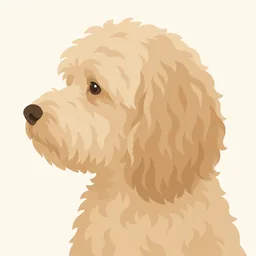
 Australian Labradoodle
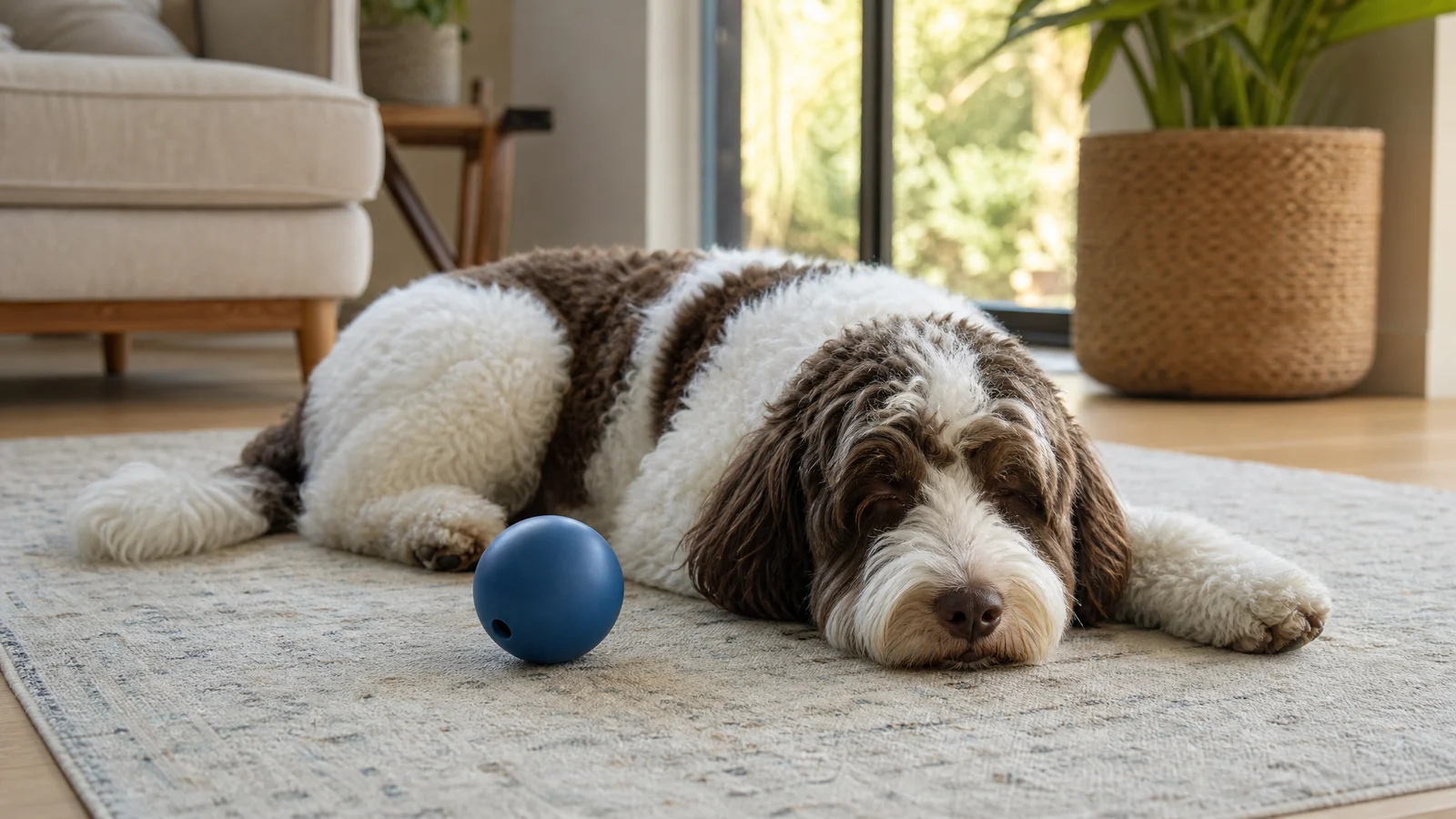
Some apartment Australian Labradoodles spend the afternoon flopped on the rug after a morning of sniffing and a puzzle breakfast. Others shred the cushions the same week despite long walks, and their owners can't work out what went wrong. Same breed, similar square footage, very different afternoons.
The parent breeds explain much of it. The Labrador side is rated 5 of 5 for energy and the Poodle side 5 of 5 for mental stimulation needs, and a cross may inherit either, both or a gentler mix. Our work centers on Australian Labradoodle behavior, and the gap between those two afternoons is rarely about miles walked. It is about whether body and mind both got a job.
This guide covers exercise in a small home, from reading the first energy signs and tracing chewing to a daily routine, scent games and a calmer evening.
Australian Labradoodle Energy Signs
Your dog greets you at the door with a toy in their mouth, spins twice, and an hour later is still hunting for the next game. That is the breed's energy talking. The Labrador parent is rated 5 of 5 for energy and the Poodle parent 4 of 5. The Poodle also earns a full 5 for mental stimulation needs, which means a dog who wants real work to do each day. Your dog may show all of that or only a little, so it helps to know what the signs look like in a living room.
Bouncing and Constant Play Mode
Many owners describe young dogs who seem to be in play mode nearly all the time, pouncing on socks, grabbing toys and treating the hallway as a racetrack. Reactions differ a great deal. A few owners love the full-tilt, very quick zoomies and enjoy the show, while others find the same energy hard to live with indoors.
Both reactions are fair. Both parent breeds are rated 5 of 5 for playfulness, so play comes with the package. The trouble starts when that play has no good outlet and lands on your hands, shoes and furniture instead.
Pacing and Shadowing
The quieter signs are pacing from window to couch, following you from room to room and dropping a toy in your lap every few minutes. These usually mean your dog has energy left and no plan for it.
The Poodle parent is rated 5 of 5 for affection with family, so many dogs ask you to be the plan. You can answer without giving in to every nudge. Scatter a few treats on a mat, run a quick training game, or send your dog to a chew on their bed, then reward them for settling there.
What Calm Looks Like
A settled Australian Labradoodle sprawls, sighs and picks a spot on their own, often near you but not on top of you. Their face softens, their body goes loose, and they can watch you walk past without launching off the floor.
Calm does not mean tired. It means your dog has learned that resting pays too, so quietly mark and reward it whenever it appears. Long stretches of this in the afternoon are a good sign your mix of movement and thinking work is close to right, even if a burst still arrives at dusk.
Exercise Gaps Behind Destructive Habits
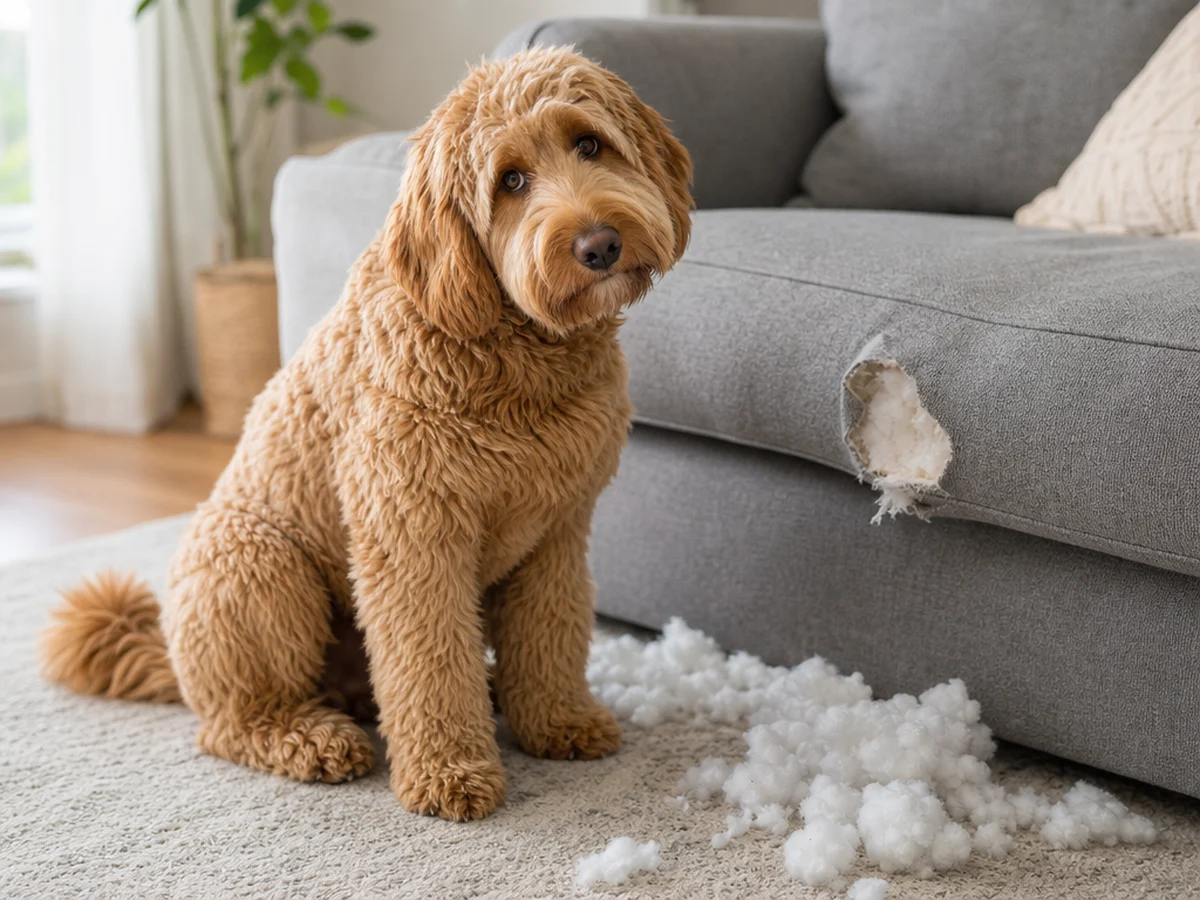
You come home to cushion stuffing spread across the living room, and the first thought is usually that your dog was being naughty. A kinder and more accurate thought is that they had nowhere to put their day. A Labrador, one of the parent breeds, that is short on exercise is likely to turn hyperactive or destructive, and a cross may inherit that tendency. Each habit below has its own usual cause and fix, and none of them means you have a difficult dog.
Chewing and Cushion Shredding
Chewing is the most common outlet in a small home, because soft furniture is right there and mouths are busy. The cause is usually energy with too little to do, and in puppies, plain curiosity.
The fix is a better job for the mouth. Many owners hand out treat-finding toys, bully sticks and bones when their dog is wound up, and they find it channels the energy well. Rotate the options so they stay interesting, supervise anything new, and trade a stolen cushion for a chew with plenty of praise.
Digging and Scratching at Floors
Apartment dogs cannot dig up a yard, so the urge shows up as scratching at carpet, pawing the couch or churning bedding into a nest. It often appears after a quiet day, when your dog is looking for something to work on.
Give the digging a legal home, such as a cardboard box with a towel and a few treats buried inside. Reward your dog for using it. Most catch on fast because the payoff is built into the game.
Hyperactivity, Mouthing and Barking
Mouthing and nipping often turn out to be a request. Owners notice their dog gets bitey when they need attention or something to play with, so the useful question is what your dog is asking for. Hand over a toy, start a short game, and reward the quiet that follows.
Barking at the window or at you can come from being excited or frustrated rather than worried, which fits an energetic dog with a dull afternoon. The Poodle parent is rated 4 of 5 for barking, so expect some commentary.
If a habit appears suddenly or seems unlike your dog, call your veterinarian. Regular vet visits are the best way to rule out pain or illness before you assume the cause is boredom.
Apartment Exercise Routine
Plenty of Australian Labradoodles do well in apartments, and the parents give some reasons why. The Poodle is rated 4 of 5 and the Labrador 5 of 5 for adaptability, so your dog may accept a smaller home gracefully as long as body and mind get daily work.
Sizes in this breed vary, and owners report quite different amounts of exercise working for their dogs, with some covering around 3 miles a day. Treat distance as adjustable and let your dog's evening behavior be your measure.
Morning
Start with a sniff-heavy walk where your dog sets part of the pace and stops whenever something needs checking. A slow, nosy outing leaves many dogs more settled than a brisk march, and it is gentler on a young dog's joints.
Back home, serve breakfast from a puzzle feeder or scatter it across a mat. A stretch of quiet work for the nose and brain often does more for the morning than another lap of the block.
Midday
The middle of the day is where apartment dogs most often get stuck. Plan a break, whether that is you, a walker or a trusted neighbor. A well-trained adult dog is normally comfortable alone for about three hours, and shutting any dog in a crate for the whole workday is not fair to them. Puppies need breaks more often still.
When you return, fit in a short training game and a potty trip before you sit down yourself.
Evening
Evenings are when neighbors hear you, so save the loud, fast games for earlier. Thumping fetch on hard floors and roaring tug sessions travel through walls. Lay a rug where the play happens and keep the late games low and slow.
A friendly heads-up to nearby neighbors that your dog is young and learning goes a long way. A relaxed leash walk, a lick mat on the settle spot and a calm chew make a better last act than a final round of chase.
Australian Labradoodle Brain Games
Thinking work is like exercise for the part of your dog a walk never reaches, which makes sense for a cross whose Poodle parent is rated 5 of 5 for trainability and 5 of 5 for mental stimulation needs. A few minutes of effort in the right place can leave your dog more settled than extra distance would, and brain games take no extra floor space. Pay every game with treats, praise or play.
Scent Games
Start with "find it": toss a treat on the floor, say the cue and let your dog hunt. Then hide treats around a room, then in a box, then under a towel. Nose work suits almost any dog and helps high-energy dogs learn to focus.
The Poodle parent also has a history as a truffle hunter, so a good nose is plausible in this cross. A scent game in the living room is one of the best apartment tools you have.
Puzzle Feeders
Food puzzles, snuffle mats and lick mats turn a quick meal into a longer job. Begin on the easiest setting so your dog wins early, and raise the difficulty only when the current level is solved smoothly.
If your dog starts chewing the toy in frustration, drop back a level and rebuild confidence. A puzzle also pairs nicely with a resting spot, because it teaches your dog that quiet moments can be pleasant.
Short Training Sessions
Poodles tend to be eager to please when sessions stay upbeat and rewarding, and consistency in what you ask matters. Stop each session while your dog is still eager. Try touching a target, carrying a soft toy to your hand, naming favorite toys or settling on a mat.
These skills grow into bigger jobs, as our piece on Australian Labradoodle therapy dog skills shows. Rotate games through the week so none gets stale.
Australian Labradoodle Restlessness at Night
Around dusk, even a dog with a full day behind them may tear around the living room, bark at you and grab everything in reach. Many owners describe this, including young puppies who bark and bite during evening bursts. Some who cover around 3 miles a day still watch backyard zoomies at the end of it. Wild evenings are not proof that you under-exercised, and they are not a sign that something is wrong with your dog.
We would push back on a common instinct here. A longer, harder run right before bed often just builds fitness and winds some dogs up further. A planned wind-down tends to work better than a bigger finale. Try this order:
- Finish active play and fast games earlier in the evening.
- Take a calm leash walk with plenty of sniffing and a last potty stop.
- Offer a lick mat or a chew on the settle spot and reward your dog for lying down.
- Dim the lights, lower your own voice, and repeat the same sequence each night so it becomes a cue.
Young children deserve special planning. An evening burst can frighten a small child even when the dog means no harm, so give your dog a gated space or a chew during those hours and keep the child's routine calm.
Whining or wakefulness after bed often eases when the last activity is a sniffing or chewing job rather than a chase. If night waking is new or persistent, check with your veterinarian.
One Exercise Change Today
Whether your dog settles after a morning of sniffing or shreds cushions despite long walks, the breed's story is the same. They are built for energy and for thinking, and an apartment suits them when both get a daily outlet. Distance matters less than variety, and rewarded calm matters as much as play. Individual dogs vary, so let your own dog's evenings tell you how much is enough.
Your move for today is small. Add a ten-minute scent or puzzle game right before the evening wind-down. Hide a few treats around a room or pour part of dinner into a food puzzle, let your dog work, then move into your calm routine. Watch how they settle afterward and adjust tomorrow.
 Training basicsPotty Training a Fluffy Australian Labradoodle Puppy
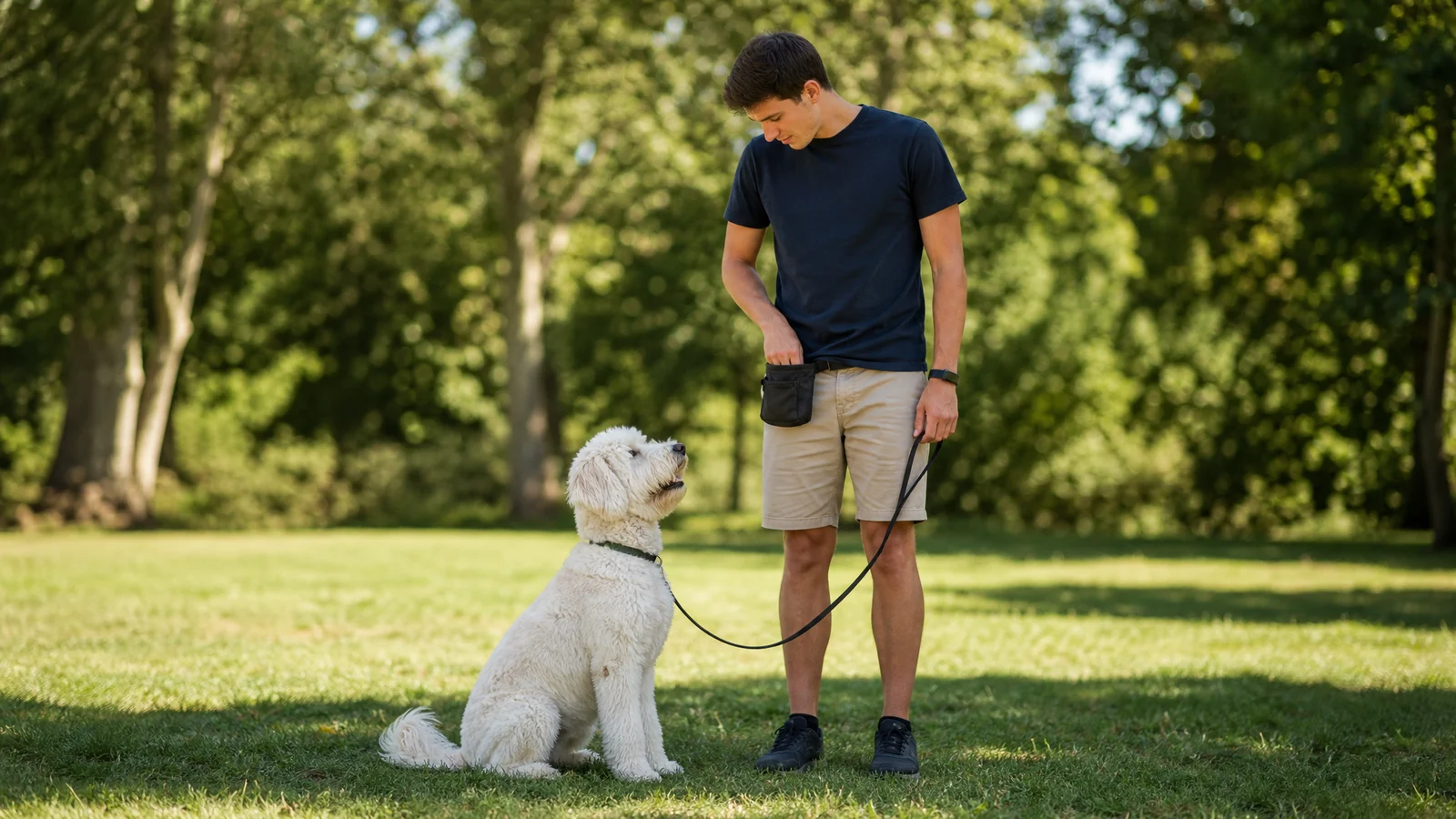 Training basicsAustralian Labradoodle Training: A Reward-Based Plan
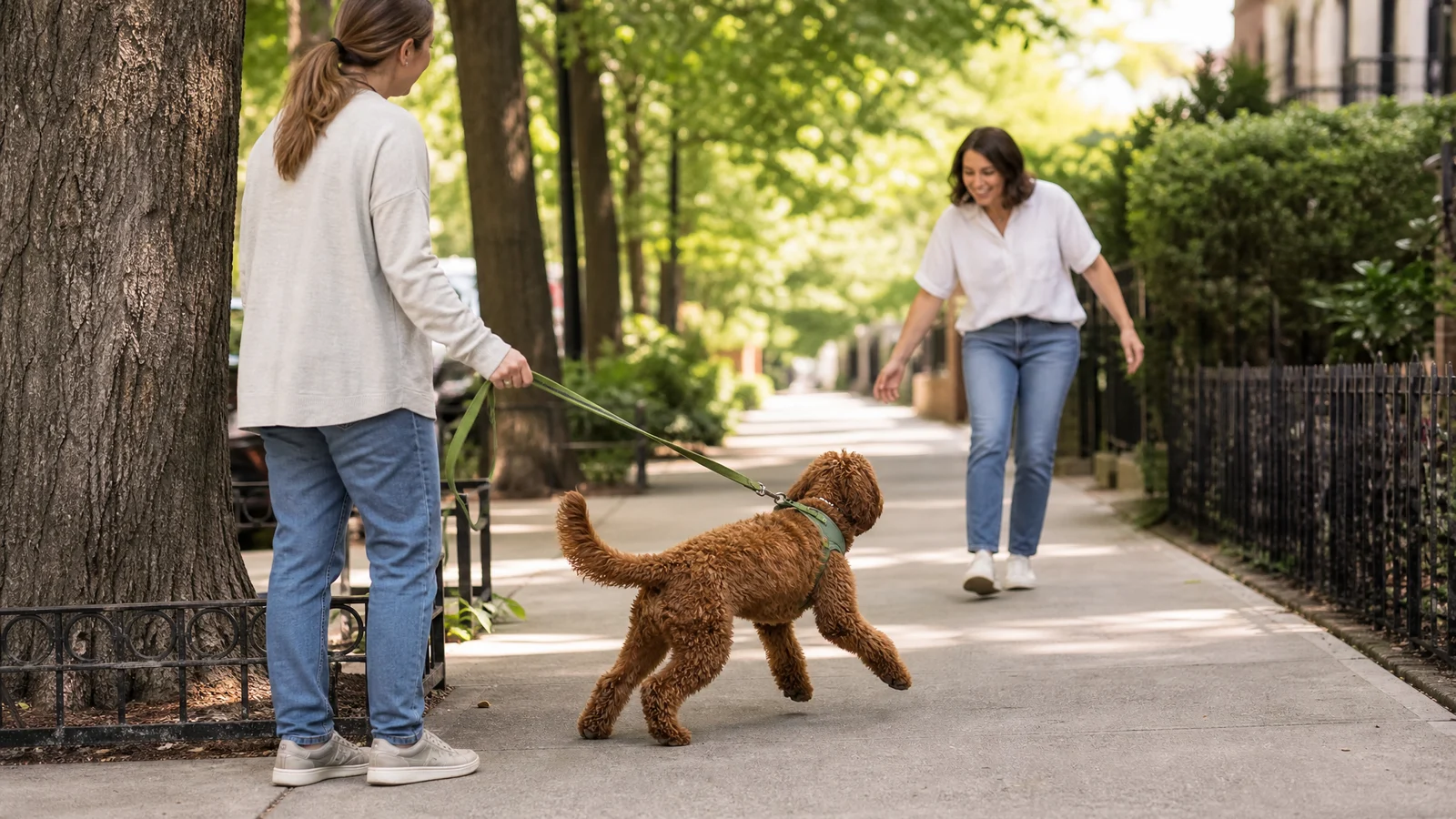 Training basicsLoose-Leash Walking for an Australian Labradoodle Who Pulls